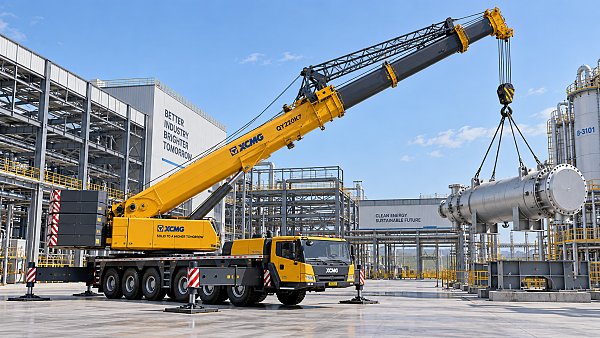
How crane jib length affects lifting capacity at different radii




How Crane Jib Length Affects Lifting Capacity at Different Radii
Crane jib length directly affects lifting capacity because a longer jib places the load farther from the crane's center of rotation.
For technical evaluators, the governing question is not whether a crane has enough nominal capacity, but whether its rated load chart supports the required lift radius.
As jib length and operating radius increase, allowable loads usually decrease sharply due to overturning moment, structural deflection, boom angle, and configuration limits.
A sound evaluation therefore compares the planned load, hook block, rigging, wind allowance, crane configuration, and actual working radius against the correct chart entry.
Why Longer Crane Jib Length Usually Reduces Available Capacity
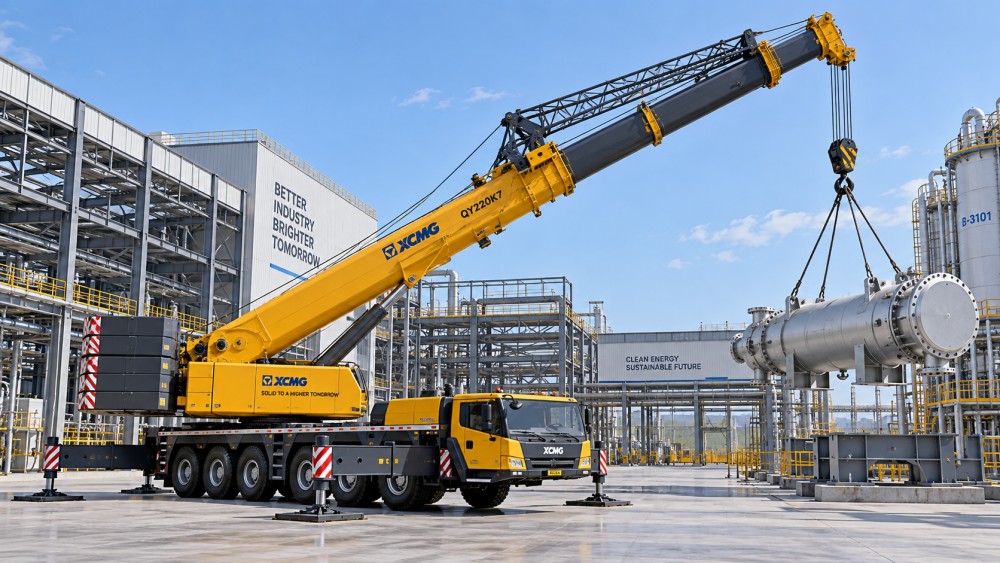
Crane jib length increases the horizontal distance a load can reach, but greater reach creates a larger turning effect around the crane's tipping axis.
This turning effect is commonly called load moment. It is calculated by multiplying the lifted load by the horizontal operating radius.
For example, a ten-tonne load lifted at ten metres creates a lower moment than the same load lifted at thirty metres.
The crane must resist that moment through its counterweight, outrigger footprint, carrier stability, structural strength, and hydraulic or mechanical lifting system.
When crane jib length is extended, the boom often operates at a flatter angle. The hook then moves farther outward even without changing the load weight.
That geometry explains why a crane may lift a substantial load close to the machine, yet become unsuitable when the load must clear an obstacle.
Technical evaluators should treat maximum jib length as a reach specification, not as evidence that maximum rated capacity remains available throughout the working envelope.
Operating Radius Matters More Than Boom Length Alone
Boom or jib length and operating radius are related, but they are not interchangeable measurements. Load charts are generally organized around operating radius.
Operating radius is the horizontal distance from the crane's center of rotation to the load's vertical line, usually measured at ground level.
A crane with the same jib length can work at different radii depending on boom angle, hook height, ground elevation, and load placement.
Raising the boom angle brings the hook closer to the crane and can improve rated capacity, although it may reduce clearance or installation reach.
Lowering the boom angle moves the hook outward. This increases radius, reduces capacity, and may introduce restrictions on boom angle or working range.
For this reason, evaluators should request lift geometry rather than relying on a stated reach requirement from a project team or equipment supplier.
The geometry should include crane location, load pickup point, set-down point, obstacle height, required hook height, tail swing, and minimum clearance distances.
How to Read a Crane Load Chart Correctly
A crane load chart is the primary document for determining whether a planned lift is feasible. It must match the exact crane configuration.
Before reading capacity values, confirm the crane model, boom or jib configuration, counterweight, outrigger position, track width, and operating mode.
Charts may differ between fully extended outriggers, intermediate outrigger settings, on-rubber operation, crawler travel conditions, and restricted slew sectors.
Next, identify the planned boom length and the actual operating radius. Use the chart row and column that correspond to both conditions.
The rated capacity shown is rarely the payload available to the project. Hook blocks, headache balls, lifting beams, slings, shackles, and rigging consume capacity.
Many charts state whether deductions have already been applied. Evaluators should never assume that published capacities are net allowable payload values.
Also review chart notes carefully. They may impose limits for wind speed, boom deflection, lifting attachments, telescoping operations, and side loading.
Structural Capacity and Stability Capacity Can Produce Different Limits
Crane capacity is limited either by structural strength or by stability. Understanding the active limit helps evaluators assess how sensitive a lift is.
Structural limits protect the boom, jib, slew ring, hoist system, and supporting components from excessive stress, bending, compression, or line pull.
Stability limits protect against overturning. These limits become increasingly important as the radius grows and the load moment approaches the crane's resisting moment.
Load charts often identify stability-rated capacities with symbols, notes, or percentage references. These entries deserve closer attention during critical lift reviews.
A stability-limited lift can be particularly sensitive to setup variation, including soft ground, outrigger settlement, incorrect leveling, or unaccounted rigging weight.
Structural capacity may dominate at shorter radii, while stability usually becomes more restrictive at longer radii. The transition depends on crane design.
This is why two cranes with similar maximum capacities can perform very differently at the radius that matters for a specific industrial installation.
Jib Extensions Create Additional Planning Variables
Fixed jibs, lattice fly jibs, hydraulic offsets, and luffing jibs expand reach, but they introduce additional capacity tables and operating restrictions.
A fly jib is normally lighter than the main boom system, yet its extended geometry can substantially reduce allowable loads at long working radii.
Luffing jib configurations can offer superior height and radius flexibility for tall structures, but their selection requires detailed chart and clearance verification.
Jib offset angle is especially important. Changing the offset affects hook position, effective radius, boom-jib geometry, and the permissible load at that condition.
Evaluators should confirm whether the chart applies to the main boom only, main boom with fixed jib, or a specific luffing jib combination.
Do not extrapolate from a main-boom chart to a jib-assisted lift. The attachment itself adds weight, changes structural loading, and alters the permitted envelope.
For refinery, power plant, wind, and industrial maintenance work, attachment selection should be evaluated alongside access constraints and lifting capacity requirements.
Use the Actual Lift Radius, Not the Drawing Radius
Early project drawings often show approximate crane positions and load locations. Those dimensions are useful, but they are not enough for final capacity verification.
Actual lift radius can change because of crane mats, outrigger beam length, access restrictions, foundation offsets, temporary works, and revised equipment locations.
Hook position also changes during the lift. A load may be picked at one radius, travel through another radius, and set down at a third.
The critical condition is usually the largest radius encountered while supporting the full suspended load, not simply the radius at the final installation point.
Consider boom deflection as well. Under load, the boom can deflect and increase the actual radius beyond the nominal unloaded geometry shown in planning tools.
Experienced lift planners also account for load rotation, rigging length, center-of-gravity uncertainty, and possible changes caused by tag line control or wind.
For high-value or high-consequence lifts, a three-dimensional lift study can validate clearances and identify radius increases that two-dimensional drawings may hide.
What Technical Evaluators Should Compare Between Crane Options
When comparing cranes, start with the required net load at the governing radius. Maximum rated capacity is only a secondary screening metric.
Create a configuration-specific comparison table that includes gross load, rigging deductions, required hook height, boom length, radius, and available chart capacity.
Also compare setup footprint. A crane with stronger long-radius performance may require larger outriggers, heavier mats, more counterweight, or greater transport complexity.
Site access can reverse the preferred choice. A technically capable large crane may be impractical if road limits, ground bearing pressure, or assembly space are constrained.
Availability matters as well. A crane with adequate capacity but rare attachments, long mobilization lead times, or limited qualified support may create schedule exposure.
For procurement decisions, evaluate the complete lifting package: crane, attachments, operators, transport, rigging, engineering, permits, and contingency requirements.
This approach prevents a low day-rate selection from becoming the higher-cost option after mobilization changes, failed lift attempts, or repeated reconfiguration.
Key Risks When Jib Length Is Selected for Reach Alone
Selecting crane jib length solely to achieve reach can leave insufficient capacity margin after accounting for the actual lifted load and accessories.
A common error is using the equipment weight from a datasheet while overlooking shipping frames, temporary supports, lifting lugs, insulation, and preservation materials.
Another risk is assuming the load remains centered. An offset center of gravity can increase rigging complexity, require a lifting beam, or alter lifting orientation.
Wind becomes more important with long booms and jibs because it affects both suspended-load control and the crane's allowable operating conditions.
Ground conditions are equally critical. Increased radius magnifies overturning forces, making proper ground assessment, crane mats, and outrigger support essential.
Evaluate whether the crane can safely telescope, slew, travel, or derrick with the load suspended. Charts may allow a static lift but restrict movement.
These factors should be documented in the lift plan, reviewed by competent personnel, and verified against the manufacturer-approved operating information.
A Practical Evaluation Workflow for Long-Radius Lifts
Begin by defining the gross lifted weight, including the load, hook block, lifting devices, slings, shackles, spreader beams, and all temporary attachments.
Map the complete load path from pickup through travel and placement. Identify the maximum radius, required hook height, and any obstacle-clearance constraints.
Select candidate crane configurations based on chart capacity at the governing radius, rather than choosing a crane from nominal capacity or boom length alone.
Check configuration notes for counterweight, outrigger setting, jib type, line parts, wind limits, ground requirements, and restrictions on operational movements.
Apply the project safety standard and required capacity margin. Critical lifts may require additional engineering review, tighter controls, and independent verification.
Validate the final setup using current manufacturer documentation. Generic crane calculator outputs and historical charts are useful references, but not final authority.
Finally, conduct a pre-lift review with the crane operator, lift supervisor, rigging team, and site representatives to confirm that field conditions match planning assumptions.
Conclusion: Evaluate Capacity at the Required Radius
Crane jib length expands reach, but it almost always reduces available lifting capacity as the operating radius increases and load moment rises.
The correct evaluation method is to determine the governing radius, calculate the full gross load, and verify net capacity using the exact manufacturer chart.
Technical evaluators should also consider configuration, stability, structural limits, ground support, wind, attachment restrictions, and the full movement of the load.
When these variables are assessed together, crane selection becomes a defensible engineering decision rather than a broad comparison of maximum capacity and reach.
- Last One:No more articles
- Next Article:How to match construction equipment to Middle East heat and dust conditions2026-09-21
Related News
 How crane jib length affects lifting capacity at different radiiHeavy Lifting Systems AnalystCrane jib length affects lifting capacity as radius increases. Learn how to read load charts, assess lift geometry, and select the right crane configuration safely.
 How to match construction equipment to Middle East heat and dust conditionsConstruction Equipment SpecialistConstruction equipment Middle East guide: match cooling, filtration, hydraulics, and local service support to heat and dust for reliable uptime.
 What is driving consolidation in the global equipment supplier market?IEG Heavy Machinery & Automation AnalystGlobal equipment supplier market consolidation is accelerating through technology, service, and supply-chain demands. Discover how buyers can capture value while managing risk.
 When does capital equipment investment pay back in manufacturing?IEG Heavy Machinery & Automation AnalystCapital equipment investment manufacturing: learn when equipment truly pays back by evaluating full costs, cash flow, ramp-up, operational risks, and lifecycle value.
 When does a distribution center need an automated pallet handling system?Heavy Lifting Systems AnalystPallet handling systems help distribution centers overcome labor shortages, bottlenecks, safety risks, and storage constraints. Discover the key signs it’s time to automate.
 How to build a machinery investment plan around payback periodIEG Heavy Machinery & Automation AnalystMachinery investment planning manufacturing guide: build a credible payback plan with full costs, ramp-up assumptions, lifecycle risks, and scenario-based cash benefits.
 What to Ask a Bulk Material Dust Control Supplier Before Ordering a SystemHeavy Lifting Systems AnalystBulk material dust control supplier checklist: learn the critical questions on airflow, containment, filtration, installation, and performance before ordering your system.
 Is a Cobot Palletizer Worth It for High-Mix, Low-Volume Production Lines?Robotics EngineerCobot palletizer ROI: discover whether flexible automation delivers value for high-mix, low-volume lines. Compare costs, changeovers, labor, and integration factors.
 Calculating Palletizing ROI: Labor Savings, Throughput Gains, and Payback RisksIEG Heavy Machinery & Automation AnalystROI of palletizing: learn how to calculate labor savings, throughput gains, installed costs, and payback risks for a stronger automation investment case.
 How to Specify a Modular Packaging Line for Fast Changeovers and Scalable OutputRobotics EngineerModular packaging line specification guide: achieve faster changeovers, scalable output, reliable controls, and lower lifecycle costs with practical planning.
 How industrial IoT devices reduce unplanned downtime in factoriesRobotics EngineerIndustrial IoT devices help factories detect early equipment issues, plan maintenance, and reduce costly unplanned downtime before production is disrupted.
 What is driving industrial machinery market demand in manufacturing?IEG Heavy Machinery & Automation AnalystIndustrial machinery market manufacturing demand is rising as factories pursue automation, energy efficiency, resilient supply chains, and lifecycle productivity gains.