How to avoid overload failures in heavy duty power transmission systems




In heavy duty power transmission systems, overload failures usually do not come from one dramatic mistake. More often, they build up from small operating problems that maintenance teams see every day: a coupling that runs slightly out of alignment, a gearbox that starts to vibrate after a production change, a conveyor that is loaded unevenly, or a drive that is asked to handle more torque than it was sized for. When those signs are ignored, the system eventually crosses a limit it can no longer absorb.
For maintenance personnel, the real challenge is that overload is not always obvious at the moment it starts. A shaft, chain, belt, gearbox, or coupling may survive short-term abuse, but repeated stress cycles shorten service life and increase the chance of sudden failure. In industrial environments where uptime matters, preventing overload is less about reacting to alarms and more about recognizing where the load path is weakening.
Where overload failures usually begin
In power transmission systems, overload rarely means “too much load” in a simple sense. It often means the system is experiencing load conditions outside the range it was designed to handle continuously. That can happen because production demand changed, start-stop frequency increased, lubrication degraded, or downstream equipment began to resist motion more than expected.
The most common failure chain starts with resistance. Bearings lose smoothness, gears develop surface damage, belts slip, chains elongate, or couplings harden and lose flexibility. As resistance rises, torque demand increases. If the drive, reducer, or connected components cannot absorb that extra stress, temperature climbs and wear accelerates. What looks like a mechanical overload may actually be an early maintenance issue that was left unresolved long enough to become structural.
That is why overload protection should not be treated only as an electrical or control problem. It is also a mechanical condition problem.
Watch the load path, not just the motor
Many teams focus on the motor because it is the easiest point to monitor, but overload failures often originate elsewhere. A motor can appear healthy while the gearbox, belt drive, or coupling is carrying abnormal stress. If the driven machine is binding, the motor current may only tell part of the story.
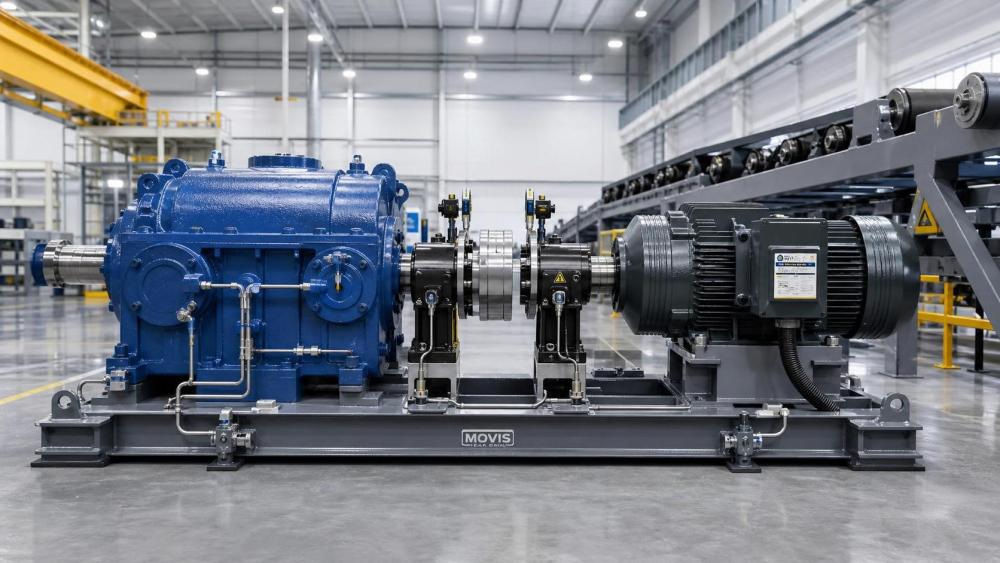
For heavy duty power transmission systems, maintenance checks should follow the load path from input to output: power source, coupling, reducer, shafting, transmission element, and driven equipment. Any restriction in that chain can create overload symptoms. A conveyor with a jammed roller, for example, may overload a gearbox long before the motor protection trips. A misaligned pump drive may create continuous side loading that destroys bearings gradually rather than causing an immediate shutdown.
That is why abnormal noise, heat, and vibration matter. They are often the earliest signs that load is no longer being transferred efficiently.
Alignment and installation quality matter more than many teams expect
One of the most preventable causes of overload failure is poor alignment. Even when a system is correctly specified, installation errors can create extra radial, axial, or torsional stress. In heavy duty applications, small deviations become expensive because the equipment runs under high torque for long hours.
Coupling misalignment can overload bearings. Belt tension that is too high can overload shafts and pulleys. Chain drives that are too tight increase friction and heat. Gearboxes installed on unstable foundations may experience repeated shock loading. These issues often do not show up during initial commissioning, which is why they are easy to underestimate.
After any maintenance intervention, alignment verification should be part of the return-to-service process. Replacing a worn part without restoring geometry often shifts the overload to another component rather than solving it.
Lubrication problems often hide behind overload symptoms
When a gearbox or bearing begins to run hotter, the first assumption is often overload. In practice, inadequate lubrication can create the same symptoms. Oil degradation, contamination, incorrect viscosity, blocked lines, or poor relubrication intervals all increase friction and force the transmission system to work harder.
In heavy duty environments, lubrication failure is especially dangerous because it can accelerate damage quietly. Metal surfaces begin to wear, friction rises, and the system draws more power to deliver the same output. Maintenance teams may only notice the issue once vibration increases or the component has already started to score.
Routine oil analysis, grease condition checks, and seal inspections are not optional in demanding duty cycles. They are one of the most practical ways to reduce overload-related breakdowns because they reveal whether the system is losing mechanical efficiency before the damage becomes visible.
Load spikes are often a process issue, not a component issue
In production settings, overload failures are frequently caused by operating conditions rather than hardware defects. Sudden starts under full load, repeated reversing, blocked discharge points, and inconsistent feeding can create torque spikes that exceed the system’s normal duty range. Even a properly selected drive train can fail if the process repeatedly forces it into shock loading.
This is especially relevant for conveyors, crushers, mixers, hoists, mills, and other machines with variable resistance. Maintenance teams should understand how the machine is being used, not just how it was designed. A change in product size, material density, throughput target, or shift pattern can turn a stable system into an overload risk.
When failures repeat after component replacement, the root cause is often a process condition upstream or downstream. In those cases, replacing parts without addressing the operating pattern only delays the next breakdown.
Use monitoring to catch deterioration early
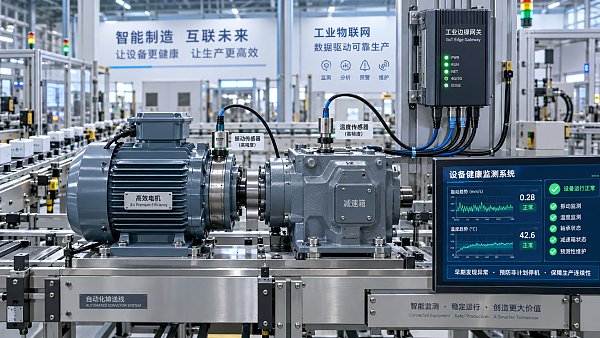
Condition monitoring is one of the most effective tools for preventing overload failures in heavy duty power transmission systems. Vibration trends, temperature rise, motor current fluctuation, and oil condition can reveal whether the load path is changing before failure becomes severe.
What matters is not one reading, but the trend. A gearbox that always runs warm may still be normal for that application. A gearbox that is getting progressively hotter under the same load deserves attention. The same applies to current draw, bearing noise, and vibration spectrum changes. Maintenance teams do not need overly complex analytics to benefit from monitoring; they need consistent baseline data and a disciplined response when patterns shift.
In plants with limited instrumentation, handheld inspections still provide value if they are repeated on a schedule and recorded properly. A simple trend log is often enough to show when overload stress is becoming chronic.
Protection settings should match real operating conditions
Overload protection devices are only useful when they are set for the actual operating profile. If protection thresholds are too high, the system may suffer damage before tripping. If thresholds are too low, nuisance trips can hide a deeper mechanical problem or encourage operators to bypass safety functions.
This is a common issue after process changes. A drive train that once handled intermittent loading may now run continuously. A motor protection relay that was suitable for light cycling may no longer match peak torque demand. When production increases, protection settings should be reviewed along with the mechanical load calculations.
The same logic applies to clutching, torque limiters, shear elements, and soft-start systems. They should protect the system without masking recurring overload behavior. If a protection device trips often, the question is not only whether the setting is right, but why the equipment is being asked to run at that limit so often.
Maintenance teams should pay attention to recurring damage patterns
One broken part is a repair. Two similar failures in the same location are a warning. Repeated overload failures in heavy duty power transmission systems usually point to a persistent mismatch between operating demand and system capability.
That mismatch may be mechanical, such as undersized components or incorrect alignment. It may be operational, such as frequent shock loading. It may be environmental, such as dust, heat, or contamination increasing resistance. It may even be organizational, such as delayed maintenance intervals or incomplete operator feedback.
The best maintenance teams do not just replace the failed component. They ask why that specific component was carrying excessive stress in the first place. That question usually leads to the true failure mechanism.
Practical habits that reduce overload risk
For demanding industrial applications, a reliable prevention routine is usually more effective than occasional troubleshooting. Keep a close record of load changes, startup behavior, lubrication condition, and alignment corrections. Verify that any replaced component matches the original duty rating, especially after production upgrades. Inspect couplings, belts, chains, and shafts for early signs of stress, not just visible breakage. If a system begins to run hotter or noisier after a process change, treat it as a load problem until proven otherwise.
One of the most useful habits is to compare current operating behavior with the machine’s historical baseline. If a conveyor, reducer, or drive suddenly needs more power to do the same work, something in the system is changing. That change may be minor at first, but it is rarely harmless.
For sites running around the clock, small deviations become expensive quickly. Preventing overload failure is therefore less about one-time inspection and more about disciplined observation across the full service life of the equipment.
When maintenance teams think this way, heavy duty power transmission systems become more predictable. Failures are still possible, but the most expensive overload events can often be avoided long before they turn into downtime.
Related News
 What is driving consolidation in the global equipment supplier market?IEG Heavy Machinery & Automation AnalystGlobal equipment supplier market consolidation is accelerating through technology, service, and supply-chain demands. Discover how buyers can capture value while managing risk.
 When does capital equipment investment pay back in manufacturing?IEG Heavy Machinery & Automation AnalystCapital equipment investment manufacturing: learn when equipment truly pays back by evaluating full costs, cash flow, ramp-up, operational risks, and lifecycle value.
 When does a distribution center need an automated pallet handling system?Heavy Lifting Systems AnalystPallet handling systems help distribution centers overcome labor shortages, bottlenecks, safety risks, and storage constraints. Discover the key signs it’s time to automate.
 How to build a machinery investment plan around payback periodIEG Heavy Machinery & Automation AnalystMachinery investment planning manufacturing guide: build a credible payback plan with full costs, ramp-up assumptions, lifecycle risks, and scenario-based cash benefits.
 How to Specify a Modular Packaging Line for Fast Changeovers and Scalable OutputRobotics EngineerModular packaging line specification guide: achieve faster changeovers, scalable output, reliable controls, and lower lifecycle costs with practical planning.
 How industrial IoT devices reduce unplanned downtime in factoriesRobotics EngineerIndustrial IoT devices help factories detect early equipment issues, plan maintenance, and reduce costly unplanned downtime before production is disrupted.
 What is driving industrial machinery market demand in manufacturing?IEG Heavy Machinery & Automation AnalystIndustrial machinery market manufacturing demand is rising as factories pursue automation, energy efficiency, resilient supply chains, and lifecycle productivity gains.
 316L Stainless Steel Pipe Tube Technical Factors That Shape Buyer DecisionsCNC Machining AnalystA technical analysis for 316L stainless steel pipe tube buyers, covering corrosion expectations, pipe route choice, tolerance, surface, and inspection.
 How ground conditions determine crawler piling equipment selectionConstruction Equipment SpecialistCrawler piling equipment selection starts with ground conditions. Learn how soil, rock, groundwater and site constraints shape safer, more productive piling solutions.
 3300mm CNC Beam Saw Sheet Capacity: Layout Checks Before PurchaseCNC Machining AnalystZhongding ZD330 beam saw specifications: assess 3300mm sheet capacity, layout clearances, handling flow, and acceptance checks before buying.
 How Bucket Chain Diamond Dredgers Meet ISO 12100 Safety Requirements in Alluvial Mining ProjectsMining Infrastructure ExpertBucket chain diamond dredger safety made real: how ISO 12100 compliance ensures operator protection, reliability & zero lost-time injuries in alluvial mining.
 Modular Packaging for High-Mix Automotive Assembly Lines: How Standardized Load Units Reduce Line Changeover Time by 37% — Case Study from Tier-1 Supplier in GuangdongHeavy Lifting Systems AnalystModular packaging slashes automotive line changeover time by 37%—discover how standardized load units boost OEE, cut labor costs, and enable seamless high-mix assembly.