What Hoist Safety Features Are Mandatory on Construction Sites?




The short answer is that a construction hoist must be able to lift, stop, hold, and lower its rated load without exposing people to uncontrolled movement, falling loads, crushing points, or electrical hazards. The exact legal requirements vary by jurisdiction and by hoist type, but the core safety features expected on modern construction sites are consistent: rated-load control, dependable brakes, upper and lower travel limits, emergency stopping, guarded moving parts, secure load attachment, clear operating controls, and a documented inspection system.
When people ask, “What hoist safety features are mandatory on modern construction sites?”, they are often trying to distinguish between a feature that is merely convenient and one that is necessary for safe, compliant operation. That distinction matters during equipment selection. A low purchase price does not compensate for missing protections, difficult inspections, unavailable parts, or controls that operators cannot use reliably under jobsite conditions.
Safety starts with the correct hoist, not an add-on feature list
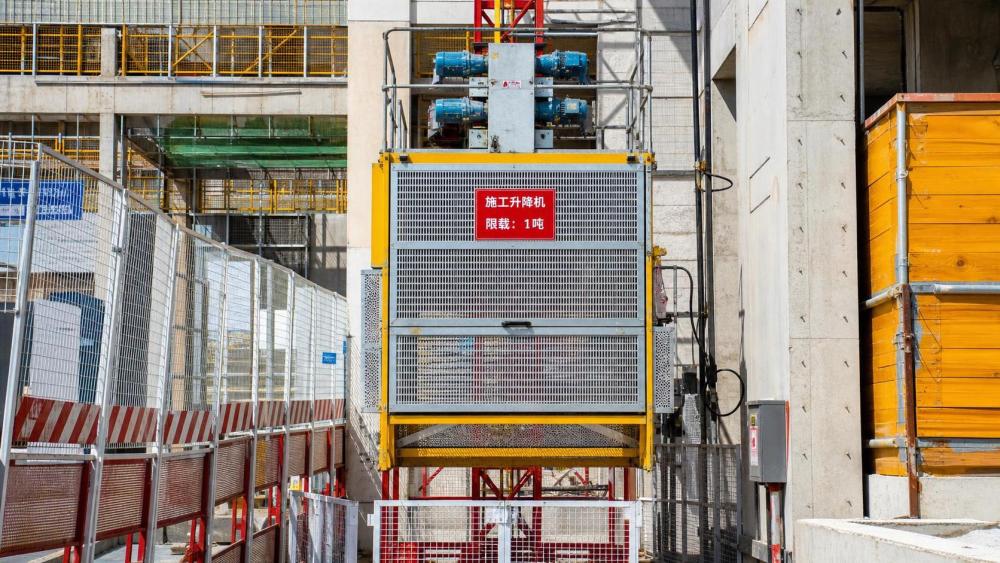
A hoist is not one single category of equipment. A construction material hoist, personnel-and-material hoist, chain hoist, wire-rope hoist, builder's hoist, and temporary lifting arrangement face different risks. A personnel hoist requires substantially more protection than a device used only to move materials, because people are riding in the carrier. Likewise, a hoist installed on a scaffold, mast, gantry, crane, or temporary support structure must be assessed together with that supporting system.
Still, every installation should begin with the same question: can the complete lifting system safely control the intended load throughout its full path of travel? “Complete system” includes the hoist, wire rope or chain, hook or carrier, slings and rigging, anchorage, power supply, controls, structure, landing areas, and the people operating it. A compliant hoist attached to an unsuitable support is not a safe lifting system.
Core hoist safety features that should be present
Overload protection and a visible rated capacity
Every hoist needs a clearly marked rated capacity, and the load must never exceed it. This sounds basic, but overloading is not limited to one oversized item. It can result from bundled materials, wet concrete forms, unknown pallet weights, attached rigging, or a load that catches on a structure while the hoist continues to pull.
Modern hoists commonly use overload protection that prevents lifting when the load exceeds the permitted limit or signals the operator before an unsafe lift develops. The system must be suitable for the hoist’s operating arrangement. It is not enough to rely on an operator’s estimate, particularly where loads are assembled on site or weights vary during the workday.
Capacity markings should remain readable from the operating position and at loading points. They should describe the usable lifting capacity, not just the nominal rating of one component. If hooks, slings, lifting beams, or carriers have lower capacities than the hoist itself, the lowest-rated component governs the lift.
Primary braking and a reliable load-holding function
A hoist must stop and hold a suspended load when the operator releases the control. Braking systems are therefore a fundamental safety requirement, not a secondary option. Depending on the hoist design, this may involve an electromechanical brake, a mechanical load brake, or another engineered load-holding arrangement.
The important operational test is straightforward: if power is interrupted or the control is released, the load must not drift, run away, or descend unexpectedly. For personnel-carrying applications, braking arrangements generally require additional safeguards because the consequence of a brake failure is much higher.
Brake condition is also a maintenance issue. Wear, contamination, poor adjustment, overheating, damaged wiring, and improper replacement parts can reduce braking performance without producing an obvious warning during light-duty use. A hoist that appears to lift normally may still have an unacceptable stopping or holding problem.
Upper and lower limit switches
Limit switches stop travel before a hook block, carrier, or moving mechanism reaches an unsafe end position. An upper limit helps prevent over-travel that could damage the rope, drum, sheaves, mast, or top structure. A lower limit can prevent excessive unwinding, chain runout, or contact with a landing or base area.
These switches should be treated as protective devices, not normal operating controls. Repeatedly driving a hoist into a limit switch can damage it or disguise a control problem. Operators need a normal stop command that is easy to reach and clearly different from the emergency stop function.
Where a hoist travels between floors or along a mast, travel limits should work with the landing arrangement and any required interlocks. The carrier should not be able to move into an area where loading or unloading would create a fall, crush, or collision hazard.
Emergency stop controls
An emergency stop must allow an operator or an exposed worker to halt hazardous motion quickly. It should be conspicuous, accessible, protected from accidental activation where practical, and clearly identified. The control should stop the dangerous motion in a way that leaves the load securely held by the braking system.
Emergency stop buttons are not a substitute for good operating controls, correct rigging, or routine inspection. They are a last line of control when a load snags, a person enters a danger zone, a control sticks, or another abnormal condition develops. Construction teams should confirm that emergency stops are functional at the locations where people actually work, rather than assuming a button on a remote panel is sufficient.
Hook latches, secure load attachment, and anti-drop protection
A lifting hook needs a functioning latch or another suitable means of preventing a sling, shackle, or lifting attachment from unintentionally coming off the hook. The latch does not make an improperly rigged load safe; it reduces the chance that a properly seated attachment is dislodged by slack rope, snagging, or movement during travel.
The hook itself must be compatible with the connection method. Forcing multiple sling eyes onto an undersized hook, using improvised hardware, or side-loading a hook can defeat the design of the lifting point. If a hoist uses a carrier, cage, platform, or material bucket rather than a hook, doors, gates, retaining devices, and load restraints become equally important.
For chain and wire-rope hoists, the suspension medium also needs protection against loss of load control. That includes correct reeving, sound rope or chain condition, secure end terminations, appropriate drum winding, and protection from sharp edges, abrasion, and crushing. A safety feature at the control station cannot compensate for damaged wire rope or a chain operating beyond its intended condition.
Guards around moving and electrical components
Gears, drums, couplings, rotating shafts, chain drives, and other moving parts can create entanglement and pinch-point hazards. Effective guards keep hands, clothing, tools, and loose material away from these areas while still allowing necessary maintenance access. Guards should not be removed simply because a task is temporary or because the hoist is operating at low speed.
Electrical safety is equally practical. Construction hoists often work in rain, dust, mud, vibration, and areas with frequent temporary power changes. Enclosures, cable routing, strain relief, grounding arrangements, damaged-cable protection, and accessible disconnects all affect whether the equipment can be isolated and maintained safely. Controls should return to a safe state after a power interruption rather than restarting unexpectedly when power is restored.
Personnel hoists require additional protections
When workers ride in the hoist, the safety threshold changes. The carrier must provide suitable enclosure and access protection, including secure gates or doors. Landing gates need to prevent people from stepping into an open hoistway, and the system must prevent travel when protective gates are not properly closed where the design requires interlocking.
Other critical functions may include overspeed protection, anti-fall or safety gear, landing-level controls, communication capability, and controls that prevent unsafe movement during loading. The details depend on the equipment and local rules, but the principle is consistent: a personnel hoist should not rely on one brake, one operator action, or one unprotected opening to prevent a serious fall.
A material hoist should never be treated as a personnel lift simply because a worker can stand on its platform or carrier. A platform that can physically carry a person is not automatically designed, equipped, or authorized for passenger use.
Inspection controls are part of the safety system
Mandatory safety features do not remain effective by existing on a specification sheet. A hoist needs inspection before use, planned periodic examination, maintenance records, and a process for removing defective equipment from service. The inspection should cover more than the hook and pendant control.
- Check the hook, latch, chain or wire rope, reeving, end connections, and visible signs of wear or deformation.
- Test normal controls, emergency stopping, brakes, and travel limits without placing people beneath a suspended load.
- Inspect guards, electrical cables, connectors, enclosures, warning labels, and isolation controls.
- Confirm that the supporting structure, anchorage points, mast ties, runway, or suspension point remain sound and appropriate for the work.
- Verify that landing zones and travel paths are clear of workers, stored material, openings, and overhead obstructions.
The most useful inspection programs also define who can authorize repairs and who can return equipment to service. A tag or verbal assurance is weak control when a hoist has a brake problem, damaged rope, failed limit switch, or altered electrical connection. The equipment should remain unavailable until the defect is corrected and the relevant functions are checked again.
Features that are often confused with mandatory protection
Remote controls, variable-speed drives, load displays, cameras, fleet telematics, and automated diagnostics can improve productivity or visibility. In some applications, they can materially reduce risk. They do not replace the core protections described above.
For example, a load display helps an operator understand what is being lifted, but it does not stop a falling load if the brake or hook connection fails. A camera may improve visibility at a blind landing, but it does not replace barriers, exclusion zones, and proper signaling. A remote pendant can keep the operator farther from the load, but it must still provide positive control, emergency stopping, and protection against unintended operation.
This matters during procurement because feature-rich equipment can appear safer than a simpler model with stronger fundamentals. Evaluate the protective functions first, then compare convenience, automation, monitoring, and lifecycle support.
A practical procurement check before the hoist arrives
Project managers and buyers should confirm the intended lifting duty before selecting equipment: what will be lifted, how often, how far, through which travel path, and whether people will ever be carried. The answer affects capacity, lifting speed, duty cycle, control location, environmental protection, and the required landing or support arrangement.
Industrial Edge Global approaches lifting equipment as a lifecycle decision rather than a catalog comparison. For a construction project, the useful questions extend beyond rated capacity: Can the supplier support inspection and maintenance? Are replacement brake, rope, chain, control, and limit-switch components available? Is the equipment compatible with the planned structure and workflow? These questions influence uptime, but they also determine whether essential safety functions can remain dependable through the project.
Common site failures are usually control failures
Unsafe hoist incidents are often traced to ordinary decisions made under schedule pressure: bypassing a limit switch, using damaged rigging “for one lift,” letting an untrained worker operate the pendant, parking a load overhead, or allowing workers to pass beneath a suspended load. The equipment may have the correct features, but the site has removed the layers that make those features effective.
Set a clear lifting plan for repetitive or complex work. Define the load, route, landing point, exclusion zone, communication method, and stop conditions before movement begins. For straightforward lifts, this can be brief. For unusual loads, restricted spaces, tandem lifting, or lifts near occupied areas, the planning and supervision need to be more deliberate.
Frequently asked questions
Is an overload limiter enough to make a hoist safe?
No. It addresses excessive load, but not failed brakes, poor rigging, uncontrolled travel, damaged rope or chain, missing guards, or workers entering the drop zone. It is one part of a layered safety system.
Can a limit switch be used as the normal stopping method?
No. Limit switches are intended to prevent unsafe over-travel. Routine stopping should be done with the standard operating controls so the protective switch remains available for abnormal conditions.
Does a hook latch prevent every dropped load?
No. It helps keep a correctly fitted lifting attachment from slipping off, but it cannot correct an overloaded lift, damaged sling, side-loaded hook, unsuitable connection, or unstable load.
What should happen after a hoist safety device fails?
The hoist should be removed from service until the fault is repaired and the affected safety function is tested. Continuing to operate with a bypassed brake, limit switch, emergency stop, or guard changes a manageable fault into a serious site risk.
The most defensible selection decision is to choose a hoist whose basic protective functions match the load, travel path, environment, and personnel exposure, then support it with competent installation, inspection, maintenance, and operating discipline. Safety features are mandatory because construction lifting is never controlled by equipment alone.
Related News
 What is driving consolidation in the global equipment supplier market?IEG Heavy Machinery & Automation AnalystGlobal equipment supplier market consolidation is accelerating through technology, service, and supply-chain demands. Discover how buyers can capture value while managing risk.
 When does capital equipment investment pay back in manufacturing?IEG Heavy Machinery & Automation AnalystCapital equipment investment manufacturing: learn when equipment truly pays back by evaluating full costs, cash flow, ramp-up, operational risks, and lifecycle value.
 When does a distribution center need an automated pallet handling system?Heavy Lifting Systems AnalystPallet handling systems help distribution centers overcome labor shortages, bottlenecks, safety risks, and storage constraints. Discover the key signs it’s time to automate.
 How to build a machinery investment plan around payback periodIEG Heavy Machinery & Automation AnalystMachinery investment planning manufacturing guide: build a credible payback plan with full costs, ramp-up assumptions, lifecycle risks, and scenario-based cash benefits.
 How to Specify a Modular Packaging Line for Fast Changeovers and Scalable OutputRobotics EngineerModular packaging line specification guide: achieve faster changeovers, scalable output, reliable controls, and lower lifecycle costs with practical planning.
 How industrial IoT devices reduce unplanned downtime in factoriesRobotics EngineerIndustrial IoT devices help factories detect early equipment issues, plan maintenance, and reduce costly unplanned downtime before production is disrupted.
 What is driving industrial machinery market demand in manufacturing?IEG Heavy Machinery & Automation AnalystIndustrial machinery market manufacturing demand is rising as factories pursue automation, energy efficiency, resilient supply chains, and lifecycle productivity gains.
 316L Stainless Steel Pipe Tube Technical Factors That Shape Buyer DecisionsCNC Machining AnalystA technical analysis for 316L stainless steel pipe tube buyers, covering corrosion expectations, pipe route choice, tolerance, surface, and inspection.
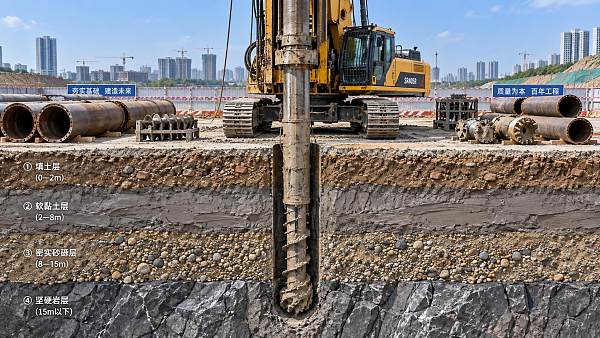
 How ground conditions determine crawler piling equipment selectionConstruction Equipment SpecialistCrawler piling equipment selection starts with ground conditions. Learn how soil, rock, groundwater and site constraints shape safer, more productive piling solutions.
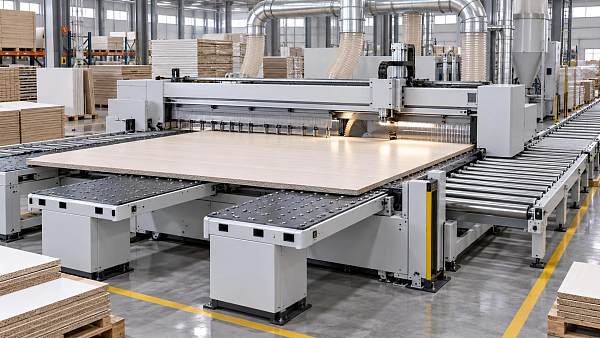
 3300mm CNC Beam Saw Sheet Capacity: Layout Checks Before PurchaseCNC Machining AnalystZhongding ZD330 beam saw specifications: assess 3300mm sheet capacity, layout clearances, handling flow, and acceptance checks before buying.
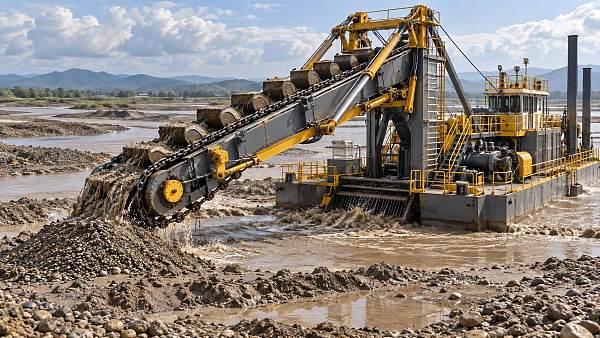
 How Bucket Chain Diamond Dredgers Meet ISO 12100 Safety Requirements in Alluvial Mining ProjectsMining Infrastructure ExpertBucket chain diamond dredger safety made real: how ISO 12100 compliance ensures operator protection, reliability & zero lost-time injuries in alluvial mining.
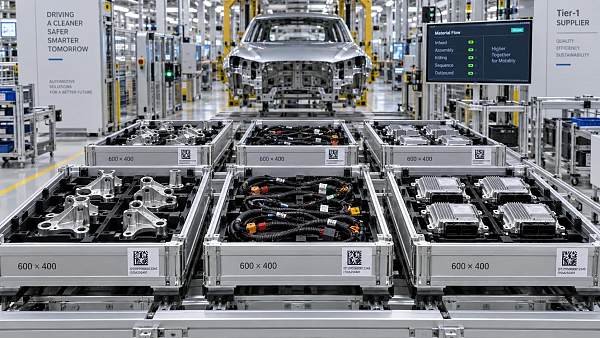
 Modular Packaging for High-Mix Automotive Assembly Lines: How Standardized Load Units Reduce Line Changeover Time by 37% — Case Study from Tier-1 Supplier in GuangdongHeavy Lifting Systems AnalystModular packaging slashes automotive line changeover time by 37%—discover how standardized load units boost OEE, cut labor costs, and enable seamless high-mix assembly.