How Does Mining Equipment Performance Data Enable Automated Decisions?




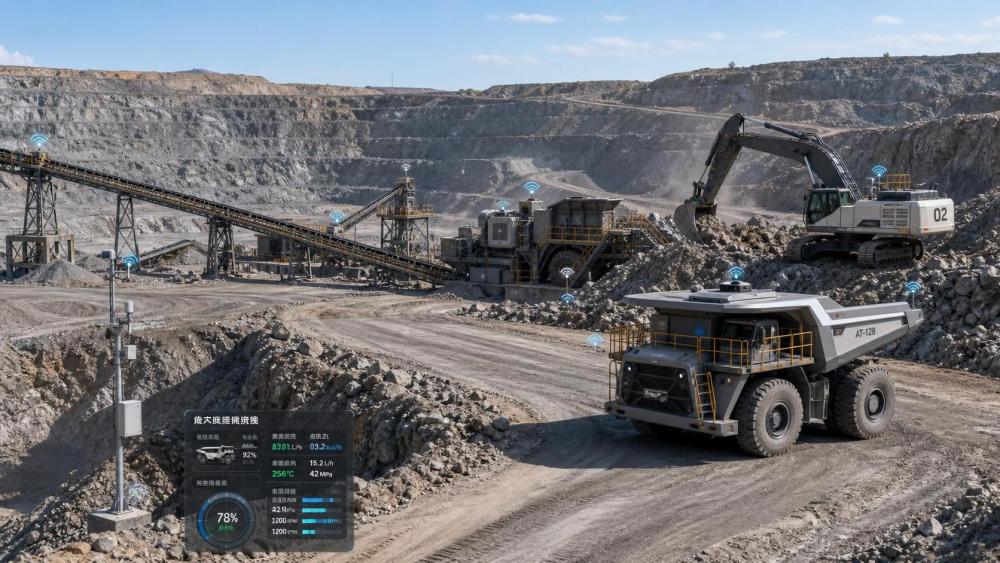
Mining operations have always generated data: engine hours, payload records, fuel use, maintenance logs, dispatch tickets, operator reports, and production figures. What has changed is the ability to collect these signals continuously, interpret them quickly, and connect them to an operational response without waiting for a supervisor to reconcile multiple reports.
For enterprise leaders, the important question is not whether mining equipment can produce performance data. Most modern fleets already do. The practical question is whether that data is reliable, connected to a defined decision process, and valuable enough to justify changing how maintenance, dispatch, energy management, and production planning are run.
When performance data deployment is done well, automation does not simply create more alerts. It enables controlled decisions: rerouting a truck fleet when cycle times deteriorate, scheduling service before a component failure interrupts production, reducing idle time in a loading zone, or escalating a safety issue when machine behavior departs from expected limits. The objective is to turn machine information into repeatable operational action.
Why machine data has become an operational issue, not only an engineering issue
A mining truck, drill rig, excavator, crusher, conveyor, and dewatering pump each operate within a larger production system. Their individual condition matters, but their interaction often matters more. A high-performing excavator cannot compensate for inadequate truck availability. A well-maintained truck fleet cannot offset a crusher bottleneck. A conveyor fault can constrain an entire processing chain even when mobile equipment utilization appears healthy.
This is why equipment performance data increasingly sits at the intersection of operations, maintenance, finance, and safety. Site teams want to know why output is behind plan. Maintenance teams need earlier evidence of failure risk. Finance leaders need a clearer view of asset utilization and lifecycle cost. Management needs to distinguish a temporary operating disruption from a structural capacity problem.
Automation can make those responses faster, but only when the underlying data reflects the real operating environment. A dashboard that reports utilization without separating productive work from queuing, idling, refueling, planned maintenance, and operator delays may create a false impression of fleet performance. Similarly, an automated maintenance trigger based only on engine hours can miss the effects of load factor, haul-road condition, ambient temperature, operator behavior, and duty cycle.
In practice, the strongest programs use performance data to explain operational context, not merely to record equipment activity.
What automated decisions can realistically do
There is a tendency to describe mine automation as an immediate route to autonomous fleets or fully self-optimizing operations. Those applications are important, but they are not the only, or necessarily the first, value case. For many operators, the nearer-term opportunity is decision automation around existing equipment and workflows.
These decisions can be grouped into several levels:
The distinction between “recommend,” “automate,” and “execute” is critical. A system may automatically identify a likely hydraulic fault, but a maintenance planner may still need to decide whether to remove the machine from service. A dispatch system may propose a truck allocation, while a shift supervisor retains authority because road conditions, blasting schedules, or geological conditions are changing. Automated decisions should therefore be designed around operational authority, not only technical capability.
For high-consequence decisions involving personnel safety, equipment isolation, or production-critical controls, the approval path and exception process should be explicit. Automation is most dependable when its boundaries are known.
The data foundation is usually harder than the algorithm
Mining companies often begin with a question about analytics software, artificial intelligence, or remote monitoring platforms. These tools matter, but deployment failures more often begin earlier: inconsistent machine data, disconnected systems, incomplete maintenance records, weak site connectivity, or unclear ownership of data quality.
A mixed fleet creates a common challenge. Original equipment manufacturers may offer proprietary telematics platforms, while older machines may rely on retrofit sensors, manual inspections, or separate condition-monitoring tools. Equipment can report similar measurements in different formats, with different sampling intervals and different definitions. “Idle time,” for example, may be calculated differently across systems. Without normalization, comparing fleet performance can become misleading.
Enterprise buyers should assess whether a data architecture can connect, at minimum, fleet-management systems, maintenance systems, production reporting, machine control data, and selected environmental or energy data. Full integration is not always necessary at the start. What matters is that each early use case has access to the information required for a reliable decision.
Data governance also deserves more attention than it usually receives. Operators need to establish who owns equipment data, what access suppliers and contractors retain, how long records are stored, and how data is protected when it moves between the mine site, cloud environment, and external service providers. These are commercial and operational questions as much as IT questions.
Start with a bottleneck that has a measurable cost
The most credible automation deployments usually begin with a narrow production or maintenance problem. Examples include recurring unplanned downtime on a critical loading unit, excess truck queue time at a crusher, high fuel use on a specific haul route, or repeated delays caused by parts not being ready when planned maintenance begins.
A useful starting point is to define a decision in operational terms: “When should this asset be taken out of service?” “Which truck should be reassigned?” “Which condition signal requires an inspection within the next shift?” “Which pump can reduce energy use without compromising drainage capacity?”
That framing is stronger than a broad goal such as “improve visibility” because it identifies the users, inputs, action, and business measure. It also exposes the real constraints. If a maintenance alert cannot lead to action because technicians, spare parts, or shutdown windows are unavailable, the automation has limited practical value.
Before selecting a platform or expanding sensors, decision-makers should ask:
- Is the problem caused by missing information, slow decision-making, poor execution discipline, or physical capacity limits?
- Can the relevant data be captured at a frequency and quality suitable for the decision?
- Who is accountable for acting on the output during each shift?
- What happens when the data is unavailable, contradictory, or outside expected operating conditions?
- Can the financial result be measured through downtime avoided, throughput protected, fuel saved, maintenance cost reduced, or risk exposure lowered?
This approach also prevents a common mistake: automating an inefficient process before its root cause has been understood. If dispatch delays stem from deteriorated haul roads, automated fleet allocation may redistribute the symptoms without fixing the constraint. If component failures result from improper maintenance practices, predictive models may identify risk but cannot replace corrective maintenance discipline.
Condition-based maintenance is valuable, but prediction has limits
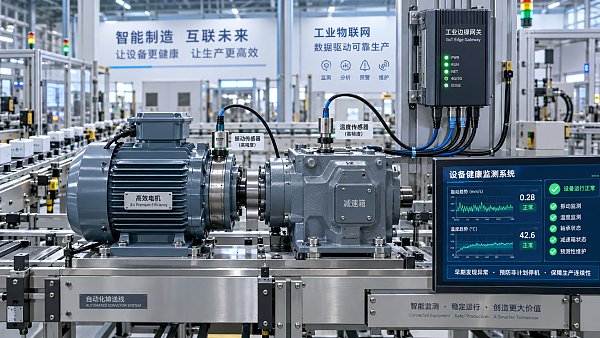
Condition-based maintenance is often the most accessible application of equipment performance data. Sensors and onboard systems can track temperature, pressure, vibration, contamination, fault patterns, and other indicators that may precede a failure. Instead of servicing equipment strictly by calendar date or operating hours, teams can prioritize intervention based on condition and operational criticality.
The potential benefit is substantial because unplanned failure in mining rarely affects one asset alone. It can interrupt loading, hauling, processing, labor allocation, and planned maintenance schedules. In remote operations, downtime may extend further if specialist labor or parts are not immediately available.
However, predictive maintenance should not be treated as a guaranteed failure-prevention system. Models can identify patterns associated with elevated risk; they do not eliminate uncertainty. False positives can lead to unnecessary interventions, while false negatives can create unwarranted confidence. Performance also depends on whether historic failure records are accurate and whether the machine operates under conditions similar to those used to develop the model.
For this reason, the initial goal should often be improved maintenance prioritization rather than fully automatic maintenance decisions. A good system can help planners rank work, prepare parts earlier, and coordinate equipment downtime with production requirements. As confidence grows, selected low-risk workflows can be automated further.
Deployment must account for the mine, not just the equipment
Mining sites are difficult environments for digital systems. Connectivity may be uneven across pits, underground areas, processing plants, workshops, and remote infrastructure. Dust, vibration, moisture, electromagnetic interference, and temperature extremes can affect sensors and communications equipment. Shift structures and contractor arrangements can complicate access to systems and accountability for action.
These realities make edge computing relevant. Rather than sending every raw data point to a remote platform before any action can occur, edge systems can process selected data close to the machine or site network. This can reduce latency, preserve essential functionality during connectivity interruptions, and limit unnecessary data transmission. But edge deployment also adds requirements around device management, cybersecurity, software updates, configuration control, and technician capability.
Decision-makers should avoid assuming that all equipment needs the same degree of connectivity. A critical crusher drive, autonomous haul unit, or high-capacity dewatering system may justify more robust monitoring than a low-utilization support asset. The appropriate architecture depends on asset criticality, operational risk, maintenance consequences, and expected lifecycle value.
Interoperability should be part of procurement discussions from the beginning. Suppliers should be able to explain which data can be accessed, whether it can be exported in usable formats, how application programming interfaces are governed, and what limitations apply to third-party systems. In a fleet that will evolve over many years, locked data can become a strategic constraint.
The human operating model determines whether automation sticks
Automated recommendations can fail when they arrive outside the normal rhythm of a mine. A control-room alert that is not tied to a dispatch workflow may be ignored. A maintenance notification with no work-order integration can create duplicate effort. A production planner may reject a system recommendation because it does not account for a planned blast, an ore-quality issue, or a contractor constraint not visible in the data.
Effective programs define how automated output enters daily work. That includes alert thresholds, escalation rules, approval authority, response times, and post-event review. Frontline operators and maintenance personnel should be involved in setting these rules because they understand the site conditions that data alone may not capture.
Trust is earned through explainability. Users do not need to see every detail of a model, but they do need to understand why a machine was flagged, what evidence supports the recommendation, and what action is expected. Systems that generate opaque instructions tend to be bypassed when production pressure rises.
What leaders should watch as the market develops
The direction of travel is clear: mining equipment is becoming more connected, and investment decisions increasingly depend on lifecycle data rather than purchase price alone. Buyers will place greater weight on telematics access, remote support capability, automation readiness, software maintenance, cybersecurity practices, and the supplier’s ability to support mixed-fleet environments.
At the same time, the most meaningful gains may come from better coordination rather than more sophisticated algorithms. Linking equipment health to spare-parts planning, dispatch decisions to actual bottlenecks, and energy data to production schedules can improve performance without requiring a fully autonomous mine.
For enterprise leaders, the decision is therefore less about buying “automation” as a category and more about building a disciplined capability: trustworthy equipment data, a small number of high-value use cases, clear operating ownership, and technology partners that can work across the realities of the site. When those elements are in place, mining equipment performance data becomes more than a reporting asset. It becomes a practical basis for faster, more controlled operational decisions.
Related News
 What is driving consolidation in the global equipment supplier market?IEG Heavy Machinery & Automation AnalystGlobal equipment supplier market consolidation is accelerating through technology, service, and supply-chain demands. Discover how buyers can capture value while managing risk.
 When does capital equipment investment pay back in manufacturing?IEG Heavy Machinery & Automation AnalystCapital equipment investment manufacturing: learn when equipment truly pays back by evaluating full costs, cash flow, ramp-up, operational risks, and lifecycle value.
 When does a distribution center need an automated pallet handling system?Heavy Lifting Systems AnalystPallet handling systems help distribution centers overcome labor shortages, bottlenecks, safety risks, and storage constraints. Discover the key signs it’s time to automate.
 How to build a machinery investment plan around payback periodIEG Heavy Machinery & Automation AnalystMachinery investment planning manufacturing guide: build a credible payback plan with full costs, ramp-up assumptions, lifecycle risks, and scenario-based cash benefits.
 How to Specify a Modular Packaging Line for Fast Changeovers and Scalable OutputRobotics EngineerModular packaging line specification guide: achieve faster changeovers, scalable output, reliable controls, and lower lifecycle costs with practical planning.
 How industrial IoT devices reduce unplanned downtime in factoriesRobotics EngineerIndustrial IoT devices help factories detect early equipment issues, plan maintenance, and reduce costly unplanned downtime before production is disrupted.
 What is driving industrial machinery market demand in manufacturing?IEG Heavy Machinery & Automation AnalystIndustrial machinery market manufacturing demand is rising as factories pursue automation, energy efficiency, resilient supply chains, and lifecycle productivity gains.
 316L Stainless Steel Pipe Tube Technical Factors That Shape Buyer DecisionsCNC Machining AnalystA technical analysis for 316L stainless steel pipe tube buyers, covering corrosion expectations, pipe route choice, tolerance, surface, and inspection.
 How ground conditions determine crawler piling equipment selectionConstruction Equipment SpecialistCrawler piling equipment selection starts with ground conditions. Learn how soil, rock, groundwater and site constraints shape safer, more productive piling solutions.
 3300mm CNC Beam Saw Sheet Capacity: Layout Checks Before PurchaseCNC Machining AnalystZhongding ZD330 beam saw specifications: assess 3300mm sheet capacity, layout clearances, handling flow, and acceptance checks before buying.
 How Bucket Chain Diamond Dredgers Meet ISO 12100 Safety Requirements in Alluvial Mining ProjectsMining Infrastructure ExpertBucket chain diamond dredger safety made real: how ISO 12100 compliance ensures operator protection, reliability & zero lost-time injuries in alluvial mining.
 Modular Packaging for High-Mix Automotive Assembly Lines: How Standardized Load Units Reduce Line Changeover Time by 37% — Case Study from Tier-1 Supplier in GuangdongHeavy Lifting Systems AnalystModular packaging slashes automotive line changeover time by 37%—discover how standardized load units boost OEE, cut labor costs, and enable seamless high-mix assembly.