Machine Safety Systems: Common Compliance Mistakes




Machine Safety Systems: Common Compliance Mistakes
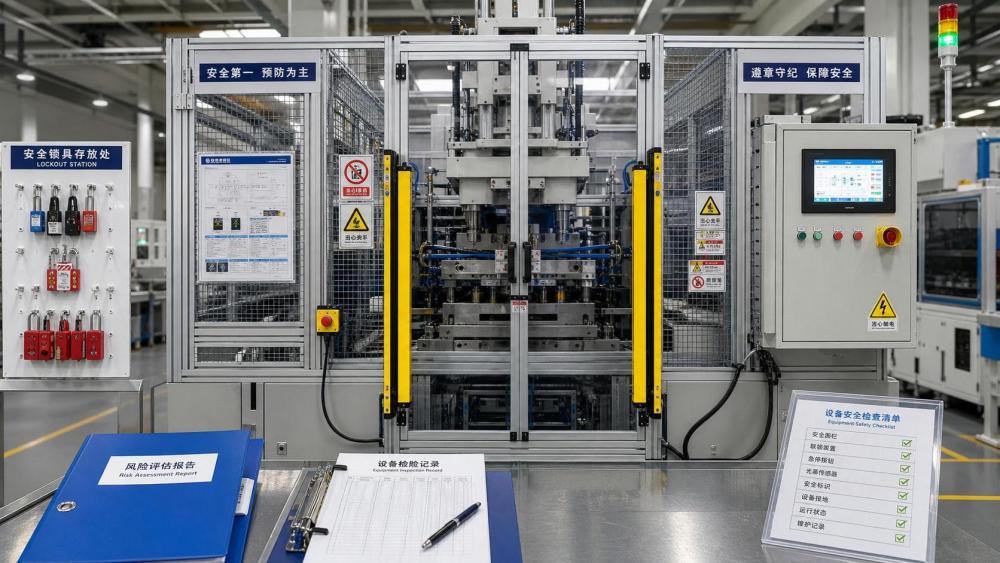
Machine safety systems are essential for protecting workers, reducing downtime, and meeting regulatory demands, yet many companies still make avoidable compliance mistakes.
For quality and safety managers, knowing where these failures happen is critical to better audits, stronger machine performance, and more reliable operations.
This article explains the most common compliance gaps and what industrial teams should do to strengthen machine safety systems in a practical way.
In many plants, compliance issues do not begin with one major violation.
They usually start with small decisions, missing records, outdated designs, or assumptions that a machine is already safe enough.
That is where machine safety systems often break down.
The problem is not only legal exposure.
Weak machine safety systems also create production interruptions, maintenance conflicts, higher incident risk, and poor confidence during customer or third-party audits.
From a business standpoint, compliance is not separate from productivity.
A well-designed safety strategy supports uptime, repeatability, and long-term asset value.
Why Machine Safety Systems Fail During Compliance Reviews
Most audit failures are not caused by one missing guard alone.
They come from gaps between engineering intent, actual machine condition, and documented proof.
This is especially common in mixed production environments.
Older machines, retrofits, add-on automation, and rushed process changes often leave machine safety systems inconsistent across one line.
Recent regulatory attention has made this more visible.
Auditors increasingly expect risk assessment records, validation evidence, lockout procedures, and safety control logic to match real operating conditions.
That also means informal fixes are no longer enough.
If machine safety systems were changed on the floor but not updated in the documentation, the compliance risk remains.
Mistake 1: Skipping a Real Risk Assessment
One of the most common mistakes is treating risk assessment like a formality.
Some companies reuse old templates without reviewing how operators actually interact with the machine.
That creates blind spots in machine safety systems.
A proper assessment should cover setup, production, cleaning, maintenance, troubleshooting, and foreseeable misuse.
It should also consider access points, stored energy, restart behavior, and human intervention during abnormal conditions.
In practice, weak risk assessments usually show these warning signs:
- Hazards are listed broadly, without machine-specific detail.
- Maintenance tasks are excluded or only briefly mentioned.
- Operator behavior is assumed to be ideal.
- New tooling or automation changes are not reassessed.
- No one can explain how risk levels were assigned.
If the risk assessment is weak, every following decision becomes weaker.
That includes safeguarding selection, control architecture, training, and validation planning.
Mistake 2: Using Guards Without Validating the Whole Safety Function
A machine may look protected and still fail compliance.
This happens when companies focus on visible hardware but ignore how the full safety function performs.
For example, an interlocked door may exist, but the stop time is too long.
A light curtain may be installed, but the minimum safety distance was never recalculated.
This is a classic machine safety systems issue.
Compliance depends on the complete function, not one device.
That function includes sensor input, logic processing, output behavior, fault response, reset method, and final machine stop.
When this chain is not validated, a plant may pass an internal walkaround but fail a formal audit.
What to check
- Stopping performance under real load conditions.
- Manual reset behavior after an interruption.
- Fault detection in relays, drives, or PLC safety logic.
- Bypass controls during setup or servicing.
- Consistency with ISO 13849, IEC 62061, or applicable regional rules.
Mistake 3: Poor Documentation and Change Control
Many machine safety systems are more compliant in theory than in reality.
The design file says one thing, while the machine on the floor shows another.
This usually happens after upgrades, urgent repairs, or integration of new tooling.
Documentation gaps are often underestimated because the machine still runs.
But during a compliance review, undocumented changes create immediate credibility problems.
A solid machine safety systems file should include risk assessments, electrical drawings, safety logic, validation records, operating instructions, and maintenance procedures.
It should also show revision history.
If a safety parameter changed, the reason, approval path, and test result should be easy to trace.
Simple control measures
- Require review before any safety-related hardware or software change.
- Link maintenance actions to document updates.
- Keep one approved version of each safety file.
- Retest affected machine safety systems after modification.
Mistake 4: Weak Lockout, Restart, and Human Access Control
Another common failure appears around intervention tasks.
People enter guarded areas to clear jams, inspect product quality, change tools, or adjust sensors.
If machine safety systems do not manage these moments well, the highest risk is often created during non-routine work.
This is where lockout and unexpected restart controls matter most.
The issue is not only whether procedures exist.
The real question is whether the procedures match machine design and daily behavior.
In actual operations, teams often find these gaps:
- Stored pneumatic, hydraulic, or gravitational energy is overlooked.
- Reset buttons are placed where the hazard zone is not fully visible.
- Temporary bypasses become routine practice.
- Contractors follow different methods than site employees.
- Restart sequences are not tested after line integration changes.
These issues are serious because they expose a gap between written compliance and real machine safety systems performance.
Mistake 5: Inadequate Training and Ownership
Even strong machine safety systems weaken when people do not understand them.
Training is often delivered once and then treated as complete.
That approach rarely works in changing industrial environments.
Operators, technicians, engineers, and supervisors interact with hazards in different ways.
They need role-specific guidance, especially after process changes, retrofit projects, or new equipment commissioning.
Ownership is just as important.
When no one clearly owns machine safety systems, findings remain open, responsibilities drift, and audit actions move too slowly.
A practical model is to define responsibility across three levels:
How to Strengthen Machine Safety Systems in a Practical Way
Improving machine safety systems does not always require a full line replacement.
In many cases, the biggest gains come from better review discipline and sharper technical follow-through.
A useful starting sequence looks like this:
- Reassess high-risk machines based on current tasks, not old assumptions.
- Validate complete safety functions, including stop time and reset logic.
- Review lockout points and stored energy controls on the floor.
- Clean up documentation so drawings and machine condition match.
- Assign owners and deadlines for every open compliance issue.
- Repeat training after modifications, incidents, or recurring near misses.
This process improves both audit readiness and operating stability.
It also helps industrial teams connect machine safety systems with reliability, maintenance planning, and production confidence.
Final Takeaway
Most compliance mistakes in machine safety systems are preventable.
They usually come from weak risk assessment, incomplete validation, poor change control, weak intervention safeguards, or unclear ownership.
The stronger signal is this: safe machines are usually better managed machines.
When machine safety systems are reviewed as part of lifecycle performance, compliance becomes easier to sustain.
That means fewer surprises in audits, fewer unsafe workarounds, and a more dependable production environment.
The most effective next step is simple.
Choose one high-risk machine, review the full safety function, verify the records, and correct what no longer matches reality.
That kind of focused action is often where stronger machine safety systems begin.
Related News
 What is driving consolidation in the global equipment supplier market?IEG Heavy Machinery & Automation AnalystGlobal equipment supplier market consolidation is accelerating through technology, service, and supply-chain demands. Discover how buyers can capture value while managing risk.
 When does capital equipment investment pay back in manufacturing?IEG Heavy Machinery & Automation AnalystCapital equipment investment manufacturing: learn when equipment truly pays back by evaluating full costs, cash flow, ramp-up, operational risks, and lifecycle value.
 When does a distribution center need an automated pallet handling system?Heavy Lifting Systems AnalystPallet handling systems help distribution centers overcome labor shortages, bottlenecks, safety risks, and storage constraints. Discover the key signs it’s time to automate.
 How to build a machinery investment plan around payback periodIEG Heavy Machinery & Automation AnalystMachinery investment planning manufacturing guide: build a credible payback plan with full costs, ramp-up assumptions, lifecycle risks, and scenario-based cash benefits.
 How to Specify a Modular Packaging Line for Fast Changeovers and Scalable OutputRobotics EngineerModular packaging line specification guide: achieve faster changeovers, scalable output, reliable controls, and lower lifecycle costs with practical planning.
 How industrial IoT devices reduce unplanned downtime in factoriesRobotics EngineerIndustrial IoT devices help factories detect early equipment issues, plan maintenance, and reduce costly unplanned downtime before production is disrupted.
 What is driving industrial machinery market demand in manufacturing?IEG Heavy Machinery & Automation AnalystIndustrial machinery market manufacturing demand is rising as factories pursue automation, energy efficiency, resilient supply chains, and lifecycle productivity gains.
 316L Stainless Steel Pipe Tube Technical Factors That Shape Buyer DecisionsCNC Machining AnalystA technical analysis for 316L stainless steel pipe tube buyers, covering corrosion expectations, pipe route choice, tolerance, surface, and inspection.
 How ground conditions determine crawler piling equipment selectionConstruction Equipment SpecialistCrawler piling equipment selection starts with ground conditions. Learn how soil, rock, groundwater and site constraints shape safer, more productive piling solutions.
 3300mm CNC Beam Saw Sheet Capacity: Layout Checks Before PurchaseCNC Machining AnalystZhongding ZD330 beam saw specifications: assess 3300mm sheet capacity, layout clearances, handling flow, and acceptance checks before buying.
 How Bucket Chain Diamond Dredgers Meet ISO 12100 Safety Requirements in Alluvial Mining ProjectsMining Infrastructure ExpertBucket chain diamond dredger safety made real: how ISO 12100 compliance ensures operator protection, reliability & zero lost-time injuries in alluvial mining.
 Modular Packaging for High-Mix Automotive Assembly Lines: How Standardized Load Units Reduce Line Changeover Time by 37% — Case Study from Tier-1 Supplier in GuangdongHeavy Lifting Systems AnalystModular packaging slashes automotive line changeover time by 37%—discover how standardized load units boost OEE, cut labor costs, and enable seamless high-mix assembly.