How maintenance affects equipment reliability in mining drills




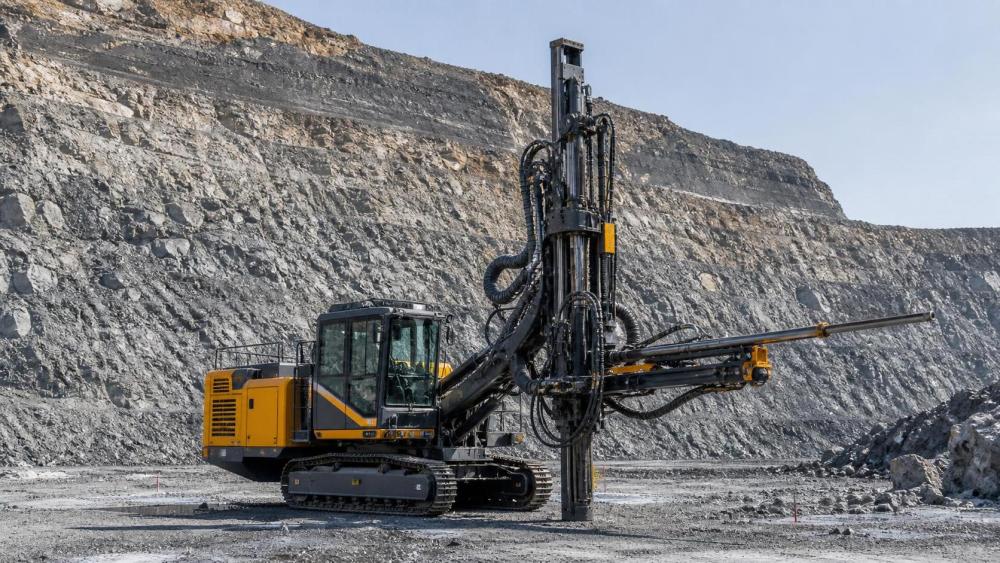
Maintenance has a direct and compounding effect on equipment reliability in mining drills. In abrasive rock, high vibration, repeated shock loading, heat, and contamination can turn a minor defect into a costly failure quickly. A drill may continue operating with a worn hose, loose feed-chain tension, poor lubrication, or declining hydraulic pressure, but its output, hole quality, and safety margin can deteriorate well before a complete breakdown occurs.
For after-sales maintenance teams, reliability is not simply the absence of failure. It is the drill’s ability to deliver predictable penetration, positioning, rotation, flushing, and feed performance across a planned operating interval. Good maintenance protects that consistency. Poorly timed or poorly executed maintenance often shifts cost from a short scheduled intervention to lost production, damaged components, emergency transport, and unplanned troubleshooting underground or at a remote bench.
Reliability starts with controlling the conditions that cause wear
Mining drills work in conditions that accelerate normal mechanical wear. Rock dust enters exposed areas, drill cuttings affect flushing systems, hydraulic circuits experience temperature cycling, and structural components absorb constant vibration. The maintenance task is therefore less about performing a generic service at a fixed calendar date and more about controlling the conditions that produce failure on a particular machine.
A drill operating in dry, highly abrasive rock may need much closer attention to seals, filters, sliding surfaces, and lubrication points than an otherwise similar unit working in less aggressive ground. A machine drilling deep holes at sustained load can show different symptoms from one performing short, frequent production holes: elevated hydraulic oil temperature, reduced rotation torque, feed irregularity, or accelerated wear in the drifter mounting and boom joints. Service intervals need to account for duty cycle, ambient temperature, rock conditions, operator practices, and the quality of consumables used.
That distinction matters because maintenance plans based only on engine hours can miss the equipment’s actual stress level. Hour-based schedules remain useful as a control framework, but the service team should add condition checks for the systems that most directly influence drill availability: rock-drilling tools, hydraulic power, flushing, feed, structural alignment, and safety interlocks.
Small inspection findings are often early reliability signals
Many mining drill failures are preceded by visible or measurable warning signs. A slow response from a boom function, a slight leak at a fitting, irregular rod handling, unusual drifter noise, or a recurring alarm may appear manageable during a busy shift. In isolation, each symptom can look minor. Left unresolved, it can increase loading on adjacent parts and create a much larger repair scope.
Inspection discipline helps maintenance teams separate routine wear from emerging failure. The most useful inspections focus on changes over time rather than a simple pass-or-fail check. A hydraulic hose that has begun to rub against a guard, for example, may still be intact, but its future failure mode is already visible. A feed beam with growing play in wear pads may still produce holes, yet reduced rigidity can affect drilling accuracy and accelerate component wear. A damaged thread on a drill rod or shank adapter can transfer abnormal impact loads through the rock-drilling system.
A practical inspection routine should make it easy to capture these early changes. That usually means documenting observations in a way that connects the symptom to a specific machine, location, operating hours, and action taken. The record does not need to be elaborate, but it should enable the next technician to see whether a condition is stable, worsening, or repeatedly returning after repair.
- Check hydraulic hoses, fittings, clamps, and protective sleeves for leakage, chafing, heat damage, and movement.
- Inspect drill steel, shank adapters, couplings, threads, and flushing passages for wear, cracking, deformation, and contamination.
- Monitor feed-chain or feed-cylinder condition, carriage movement, wear pads, and end-stop function.
- Look for looseness, cracking, or abnormal movement at boom pivots, mounting points, mast structures, and fasteners.
- Review guards, emergency stops, alarms, lights, and interlocks as functional reliability items, not only compliance items.
Visual checks should be paired with basic performance observations. Technicians can often identify developing problems by comparing normal and abnormal operating behavior: how consistently the drill holds pressure, whether rotation speed is stable under load, whether flushing is sufficient, whether the feed reacts smoothly, and whether the machine returns to position without drift. These observations are especially valuable when a failure has not yet produced a diagnostic code.
Lubrication and contamination control protect the most expensive systems
Lubrication is frequently treated as a routine task, but it has a disproportionate influence on the life of a mining drill. The wrong lubricant, an empty reservoir, blocked line, failed automatic lubrication device, or skipped manual point can allow wear to advance rapidly in pins, bushings, drifters, rock tools, and moving feed components. In high-load applications, insufficient lubrication also raises friction and heat, which can distort the apparent cause of a fault.
The maintenance team should verify delivery, not simply reservoir level. A filled grease tank does not prove that lubricant reaches every intended point. Lines can be damaged, fittings can be blocked, and distribution systems can fail unevenly. During planned service, confirming grease delivery at representative points is often more informative than adding lubricant alone.
Hydraulic contamination deserves the same attention. Dust ingress, water, degraded oil, damaged seals, and poorly controlled top-up practices can affect pumps, valves, motors, and cylinders long before a major component fails. When hydraulic performance declines, replacing a suspect valve or pump without checking fluid condition and contamination sources may only postpone the next failure.
For this reason, filter changes should not become a substitute for diagnosis. If a filter loads unusually quickly, the team needs to ask what is generating or admitting contamination. Possible causes include internal component wear, a damaged breather, improper handling of replacement oil, deteriorated hose material, or ingress during repair work. Replacing the filter restores flow temporarily; finding the source protects reliability.
Maintenance affects drilling quality as well as uptime
Equipment reliability in mining drills is often discussed in terms of availability, but the effect reaches the drilling result itself. A drill can remain operational while producing poor collaring, inconsistent hole direction, reduced penetration, excessive tool consumption, or inadequate hole cleaning. These problems can disrupt blasting patterns, increase rework, and complicate downstream production even when the drill has not formally failed.
Mechanical alignment and rock-drilling parameters are central here. Wear in boom joints, feed guides, mounting points, or centralizers can make accurate positioning more difficult. Weak or inconsistent flushing can leave cuttings in the hole, increase tool wear, and reduce drilling efficiency. Deterioration in the drifter, rotation unit, or feed system may lead operators to compensate with unsuitable settings, which then puts additional strain on the machine and consumables.
Maintenance teams should therefore treat reports of lower penetration or unusual hole deviation as reliability inputs. They should not assume the issue is purely geological or operational. Ground conditions certainly matter, but changes in drilling behavior deserve a structured check of consumables, flushing, feed pressure, rotation performance, alignment, and hydraulic condition before the drill is returned to heavy production.
Planned replacement is usually cheaper than running a worn part to failure
After-sales teams often face pressure to keep a component in service until it fails. This can appear economical when the part remains functional, especially when production schedules are tight. The calculation changes when a worn item can damage associated components or create a difficult field repair.
Wear parts should be managed according to their failure consequence, not only their purchase cost. A relatively low-cost seal, hose, bushing, filter, or wear pad may protect components with far greater replacement cost and longer lead time. Planned replacement during a scheduled service can also reduce exposure to emergency downtime, access restrictions, and rushed troubleshooting.
This does not justify changing every component early. Excessive preventive replacement adds material cost and can introduce installation errors. The better approach is to define replacement triggers using measurable wear limits, inspection evidence, operating history, and the component’s role in the wider system. Parts with sudden-failure characteristics or safety implications generally warrant more conservative replacement decisions than parts whose degradation is gradual and easily observed.
Spare-parts planning is part of the same reliability discipline. A maintenance strategy that identifies likely failures but cannot obtain the required seals, hoses, filters, sensors, drill tools, or critical hydraulic components will still produce extended downtime. Teams should distinguish between routine service stock and machine-specific critical spares. The latter should be selected based on failure impact, lead time, installation complexity, and whether a temporary workaround is safe and technically acceptable.
Data helps only when it leads to a maintenance decision
Modern drills may provide operating hours, alarm history, pressure readings, temperature data, and fault messages. These records can improve maintenance planning, but raw data alone does not improve reliability. The value comes from connecting a recurring warning or changing parameter to a specific inspection and corrective action.
For example, recurring high-temperature alarms should lead to a review of the cooling circuit, hydraulic load, filter condition, and oil health. Repeated feed-related faults should prompt inspection of the physical feed system as well as electrical connectors and control settings. Clearing an alarm without documenting the operating conditions and corrective action makes it harder to identify a developing pattern later.
A useful maintenance record answers a few practical questions: what failed or changed, what work was performed, which parts were used, what was found during inspection, and did the repair restore normal performance? Over time, this information helps teams identify repeat faults, adjust service intervals for severe duty, and decide whether a component issue is caused by wear, installation quality, operating practice, or a wider system problem.
Reliability improves when operators and service teams share the same fault language
Operators are often the first people to notice a change in drilling behavior, while maintenance personnel have the tools and technical responsibility to interpret it. Reliability suffers when operator reports are too vague to act on, or when technicians receive the machine only after a condition has become a breakdown.
Short, consistent fault descriptions can make the handover far more effective. “Rotation speed falls under load after several holes,” “feed hesitates when the boom is extended,” or “leak returns at the same hose clamp after a shift” gives a technician a starting point that “drill is weak” does not. Training should therefore include symptom recognition, basic pre-start checks, and clear escalation rules, alongside safe operating practice.
The maintenance team also needs to close the loop. When a recurring issue is linked to insufficient flushing, damaged thread handling, missed lubrication, incorrect pressure settings, or a particular operating condition, that finding should be communicated in practical terms. Reliability improves when both groups understand which symptoms require immediate shutdown, which can be monitored, and which require planned intervention before the next production cycle.
A reliable mining drill is maintained through many small decisions made before a failure becomes visible to production. The strongest programs combine condition-based inspection, contamination control, disciplined lubrication, sensible replacement triggers, useful service records, and clear communication from the operator to the workshop. This approach does more than keep the machine running: it preserves drilling quality, protects high-value components, and gives maintenance teams greater control over downtime instead of reacting to it.
Related News
 What is driving consolidation in the global equipment supplier market?IEG Heavy Machinery & Automation AnalystGlobal equipment supplier market consolidation is accelerating through technology, service, and supply-chain demands. Discover how buyers can capture value while managing risk.
 When does capital equipment investment pay back in manufacturing?IEG Heavy Machinery & Automation AnalystCapital equipment investment manufacturing: learn when equipment truly pays back by evaluating full costs, cash flow, ramp-up, operational risks, and lifecycle value.
 When does a distribution center need an automated pallet handling system?Heavy Lifting Systems AnalystPallet handling systems help distribution centers overcome labor shortages, bottlenecks, safety risks, and storage constraints. Discover the key signs it’s time to automate.
 How to build a machinery investment plan around payback periodIEG Heavy Machinery & Automation AnalystMachinery investment planning manufacturing guide: build a credible payback plan with full costs, ramp-up assumptions, lifecycle risks, and scenario-based cash benefits.
 How to Specify a Modular Packaging Line for Fast Changeovers and Scalable OutputRobotics EngineerModular packaging line specification guide: achieve faster changeovers, scalable output, reliable controls, and lower lifecycle costs with practical planning.
 How industrial IoT devices reduce unplanned downtime in factoriesRobotics EngineerIndustrial IoT devices help factories detect early equipment issues, plan maintenance, and reduce costly unplanned downtime before production is disrupted.
 What is driving industrial machinery market demand in manufacturing?IEG Heavy Machinery & Automation AnalystIndustrial machinery market manufacturing demand is rising as factories pursue automation, energy efficiency, resilient supply chains, and lifecycle productivity gains.
 316L Stainless Steel Pipe Tube Technical Factors That Shape Buyer DecisionsCNC Machining AnalystA technical analysis for 316L stainless steel pipe tube buyers, covering corrosion expectations, pipe route choice, tolerance, surface, and inspection.
 How ground conditions determine crawler piling equipment selectionConstruction Equipment SpecialistCrawler piling equipment selection starts with ground conditions. Learn how soil, rock, groundwater and site constraints shape safer, more productive piling solutions.
 3300mm CNC Beam Saw Sheet Capacity: Layout Checks Before PurchaseCNC Machining AnalystZhongding ZD330 beam saw specifications: assess 3300mm sheet capacity, layout clearances, handling flow, and acceptance checks before buying.
 How Bucket Chain Diamond Dredgers Meet ISO 12100 Safety Requirements in Alluvial Mining ProjectsMining Infrastructure ExpertBucket chain diamond dredger safety made real: how ISO 12100 compliance ensures operator protection, reliability & zero lost-time injuries in alluvial mining.
 Modular Packaging for High-Mix Automotive Assembly Lines: How Standardized Load Units Reduce Line Changeover Time by 37% — Case Study from Tier-1 Supplier in GuangdongHeavy Lifting Systems AnalystModular packaging slashes automotive line changeover time by 37%—discover how standardized load units boost OEE, cut labor costs, and enable seamless high-mix assembly.