What to compare when selecting mining drills in India




Selecting mining drills in India is rarely a simple comparison of penetration rate, engine power, and quoted price. A drill that appears economical in a supplier quotation can become expensive when it struggles with local rock conditions, spends too long waiting for consumables, or requires specialist technicians who are not available near the mine. For procurement teams, the useful question is not “Which drill is best?” but “Which drill will produce the required holes, safely and consistently, at this site and with this support model?”
That distinction matters across iron ore, limestone, coal, bauxite, aggregate, and hard-rock metal mining operations. Indian mining sites can vary sharply in bench geometry, monsoon exposure, haul-road quality, rock competence, dust conditions, altitude, and access to power or fuel. The right machine for a large, established opencast mine may be a poor fit for a smaller quarry or a project with limited maintenance infrastructure.
Start with the drilling job, not the machine category
Before comparing brands, define the drilling task in operating terms. “Blast-hole drilling” is too broad for a serious buying decision. The procurement specification should clarify hole diameter, target depth, inclination requirements, bench height, expected rock types, required drilling accuracy, annual production plan, and shift pattern. It should also state whether the rig will work in primary production drilling, pre-splitting, buffer drilling, exploration support, or secondary breaking applications.
A rotary blasthole drill may suit high-volume production work where large-diameter holes and deep benches justify its size and capital cost. Down-the-hole, or DTH, drills are often considered where hard rock, straighter holes, and reliable penetration in variable formations are priorities. Top-hammer rigs can be relevant for smaller hole diameters, quarry work, and certain development tasks. None of these categories is automatically superior. The key is whether the chosen drilling method matches the actual blast design and geology.
A common procurement mistake is specifying a machine around the largest hole ever required rather than the hole size used most of the time. This can lead to an oversized rig with higher fuel use, more difficult transport, and unnecessary operating expense. Conversely, selecting a compact unit based only on average conditions may create bottlenecks when the pit advances into harder zones or deeper benches.
Compare performance in the rock you actually have
Rock properties should shape the evaluation. Hardness alone is not enough. Buyers should consider abrasiveness, fracturing, water ingress, weathered overburden, cavities, layered formations, and the risk of hole deviation. In mixed ground, a drill that looks fast during a short demonstration in favourable material may not remain productive across the full mining block.
Ask suppliers to explain the relationship between the rig, drill string, bit type, compressor or flushing arrangement, and expected ground conditions. For DTH drilling, air delivery and pressure must be assessed together with hammer and bit selection. For rotary drilling, torque, pull-down force, rotation speed, feed control, and bit design all affect how the machine behaves in different formations. The headline drilling speed does not tell the whole story.
The more useful measure is metres drilled per productive shift, after allowing for collaring, rod changes, repositioning, hole cleaning, planned checks, and ordinary delays. Suppliers may not be able to guarantee production in every geological condition, but they should be able to show how their equipment is configured for comparable applications and what assumptions sit behind any performance estimate.
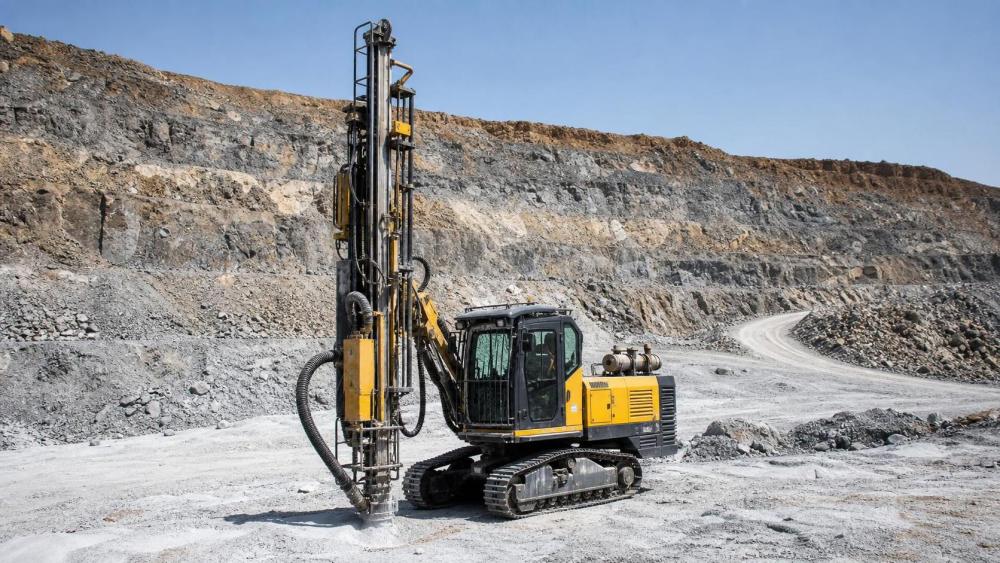
Where possible, conduct a structured site trial rather than relying on a yard demonstration. Record hole depth, hole quality, drilling time, fuel or electricity use, consumable wear, availability, and operator comments. A trial should include representative ground, not only the easiest bench. It is also worth involving the blasting team: poor hole accuracy or incomplete cleaning can affect fragmentation and downstream loading, crushing, and processing costs.
Look beyond rated power: hydraulic and compressor capability matter
Engine power is easy to compare because it is clearly shown in brochures. It is not, by itself, a reliable indicator of drilling output. The real question is whether the powertrain, hydraulic system, compressor, and drilling package can maintain performance through a normal shift without excessive heat, pressure loss, or fuel consumption.
For diesel-powered mining drills, compare fuel consumption under representative operating load, not merely at idle or under nominal conditions. High fuel use may be acceptable where the drill completes significantly more useful metres per shift, but it should be evaluated against production output. A lower-priced machine that consumes more fuel and requires frequent compressor attention can lose its initial price advantage quickly.
Electric drill options may be attractive at mines with stable power infrastructure and predictable operating areas. They can reduce dependence on diesel handling, but buyers need to assess cable management, electrical protection, site distribution capacity, relocation procedures, and recovery arrangements in difficult weather. In remote or changing pits, the operational convenience of diesel may still outweigh the apparent benefit of an electric configuration.
Mobility, stability, and monsoon readiness are practical selection issues
A drill is productive only when it can reach and set up at the intended drilling location. Track design, ground clearance, gradeability, machine weight, and centre of gravity all influence how the rig behaves on benches, uneven quarry floors, and poorly maintained access roads. A heavier machine may offer better stability during drilling, yet create transport and ground-pressure concerns at some sites.
India’s seasonal conditions deserve explicit attention in the specification. During monsoon periods, water management, slippery benches, reduced visibility, and soft ground can disrupt drilling. Buyers should inspect the protection of electrical enclosures, routing of hoses and cables, corrosion resistance, drainage around service areas, and the accessibility of filters and daily inspection points. These are not glamorous specification items, but they can determine whether a machine is manageable during difficult months.
Also check transport dimensions and weight in the exact configuration being offered. A mast, carousel, cab, dust collector, or optional compressor package can change transport requirements. If the rig must move between leases or across public roads, local transport planning should be considered before the purchase order is released, not after delivery.
Dust control and operator safety should be specified, not assumed
Dust suppression is closely linked to both safety and machine reliability. Depending on the drilling method and site conditions, the proposed system may use dry dust collection, water injection, or another arrangement. The appropriate solution depends on the material being drilled, water availability, climate, and operating practice. Buyers should ask what maintenance the dust-control system requires, which filters or components are consumable, and how performance is monitored in daily operation.
The operator environment also warrants a detailed review. Visibility to the mast, drilling area, and travel path matters more than cab appearance. Evaluate access steps, handrails, emergency stops, fire suppression provisions where required by site rules, noise exposure, guarding around rotating equipment, mast lock arrangements, and interlocks. Site safety rules and applicable local requirements should be checked against the final configuration rather than relying on generic statements in a catalogue.
A comfortable, well-protected operator station can affect production indirectly. If operators can work with less fatigue and better visibility, they are more likely to maintain hole alignment, recognise abnormal drilling conditions, and carry out routine checks properly. That is particularly relevant on long shifts and high-output production benches.
Maintenance access and parts support often decide lifecycle cost
For mining drills India buyers should treat service capability as a technical evaluation category, not a commercial footnote. A machine may have strong engineering credentials, but the operating risk changes if filters, seals, hoses, rock tools, electronic modules, and major components must be sourced from far away with uncertain lead times.
Ask each supplier for a practical support map: service locations, field technician coverage, parts stocking points, escalation process, diagnostic capability, and training arrangements. It is reasonable to request a recommended initial spares list based on the intended duty cycle. This should distinguish between routine maintenance items, critical breakdown spares, and high-wear drilling consumables. A vague promise of “full after-sales support” is not enough for a capital asset expected to work every day.
Maintenance access is equally important. Can technicians safely reach filters, lubrication points, hydraulic test ports, batteries, compressor components, and the engine bay? Are service intervals clearly documented? Does the design require specialised tooling or software for routine fault diagnosis? The lowest-maintenance machine on paper is not necessarily the easiest machine to maintain in a mine workshop.
Evaluate automation by operational readiness, not by feature count
Many modern drill rigs can offer automated drilling functions, hole-navigation assistance, remote monitoring, fleet data, and machine-health alerts. These features can be useful, especially where mines want better drilling consistency, maintenance planning, and production reporting. But procurement teams should avoid buying automation simply because it is available.
The important questions are whether the mine has reliable connectivity, who will use the data, how information will fit into dispatch or planning systems, and whether operators and maintenance personnel will receive sufficient training. A basic, well-supported telemetry system that helps identify idle time, fuel use, alarms, and service needs may deliver more practical value than a sophisticated platform that nobody uses after commissioning.
Industrial equipment intelligence platforms such as Industrial Edge Global are useful in this stage because they help teams compare automation, maintenance, energy, and lifecycle issues alongside basic machine specifications. This broader view is especially valuable when several suppliers appear similar on paper but differ in support model or integration capability.
Make the commercial comparison fair
A disciplined bid comparison should separate the base machine from options, commissioning, training, warranties, consumables, initial spares, freight, and site support. Otherwise, a lower initial quotation may simply exclude items that another supplier has already included. Clarify what is needed to place the drill into productive service on the mine bench.
It is also wise to agree acceptance criteria before delivery. These may cover configuration, documentation, safety equipment, operator training, commissioning support, and a reasonable method for confirming that the machine functions as specified. Production commitments should be handled carefully because actual results depend on rock conditions, operator practice, maintenance, blast design, and site logistics.
The final decision should weigh acquisition cost against expected availability, consumable demand, energy or fuel use, maintenance labour, parts exposure, and the operational consequence of downtime. In a production mine, a drill is not just another mobile asset. It sits near the beginning of the material flow. If drilling falls behind, blasting, loading, hauling, and plant feed can all feel the effect.
The strongest purchase decision is usually the one supported by a clear duty profile, representative site evidence, a transparent parts and service plan, and realistic ownership-cost assumptions. Compare mining drills in India on that basis, and the chosen rig is far more likely to remain a productive asset after the sales presentation is forgotten.
Related News
 What is driving consolidation in the global equipment supplier market?IEG Heavy Machinery & Automation AnalystGlobal equipment supplier market consolidation is accelerating through technology, service, and supply-chain demands. Discover how buyers can capture value while managing risk.
 When does capital equipment investment pay back in manufacturing?IEG Heavy Machinery & Automation AnalystCapital equipment investment manufacturing: learn when equipment truly pays back by evaluating full costs, cash flow, ramp-up, operational risks, and lifecycle value.
 When does a distribution center need an automated pallet handling system?Heavy Lifting Systems AnalystPallet handling systems help distribution centers overcome labor shortages, bottlenecks, safety risks, and storage constraints. Discover the key signs it’s time to automate.
 How to build a machinery investment plan around payback periodIEG Heavy Machinery & Automation AnalystMachinery investment planning manufacturing guide: build a credible payback plan with full costs, ramp-up assumptions, lifecycle risks, and scenario-based cash benefits.
 How to Specify a Modular Packaging Line for Fast Changeovers and Scalable OutputRobotics EngineerModular packaging line specification guide: achieve faster changeovers, scalable output, reliable controls, and lower lifecycle costs with practical planning.
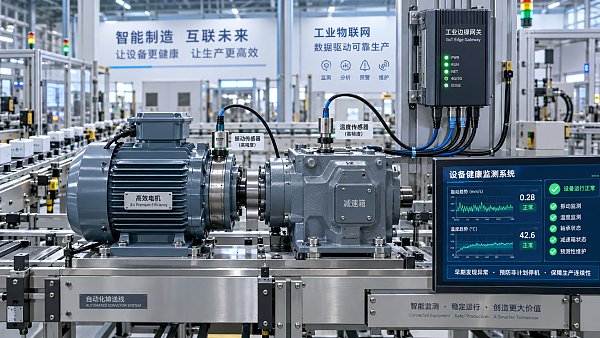
 How industrial IoT devices reduce unplanned downtime in factoriesRobotics EngineerIndustrial IoT devices help factories detect early equipment issues, plan maintenance, and reduce costly unplanned downtime before production is disrupted.
 What is driving industrial machinery market demand in manufacturing?IEG Heavy Machinery & Automation AnalystIndustrial machinery market manufacturing demand is rising as factories pursue automation, energy efficiency, resilient supply chains, and lifecycle productivity gains.
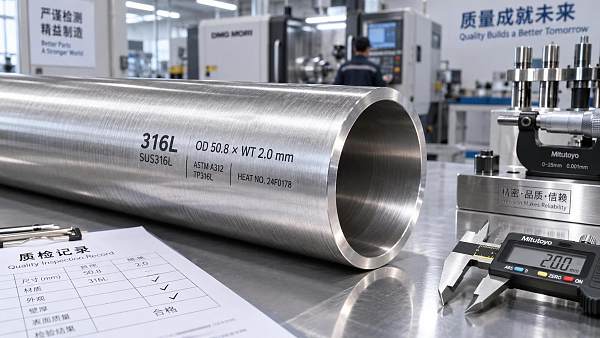
 316L Stainless Steel Pipe Tube Technical Factors That Shape Buyer DecisionsCNC Machining AnalystA technical analysis for 316L stainless steel pipe tube buyers, covering corrosion expectations, pipe route choice, tolerance, surface, and inspection.
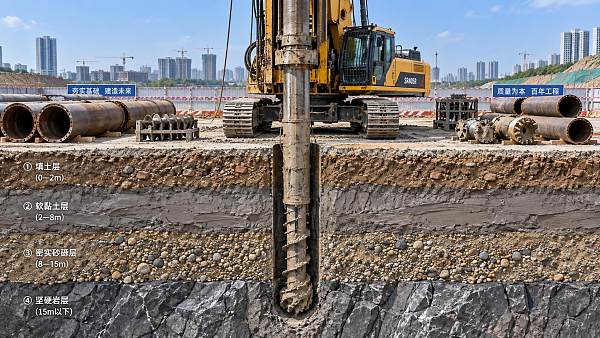
 How ground conditions determine crawler piling equipment selectionConstruction Equipment SpecialistCrawler piling equipment selection starts with ground conditions. Learn how soil, rock, groundwater and site constraints shape safer, more productive piling solutions.
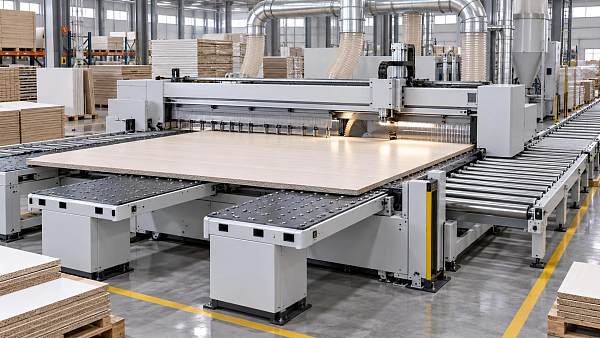
 3300mm CNC Beam Saw Sheet Capacity: Layout Checks Before PurchaseCNC Machining AnalystZhongding ZD330 beam saw specifications: assess 3300mm sheet capacity, layout clearances, handling flow, and acceptance checks before buying.
 How Bucket Chain Diamond Dredgers Meet ISO 12100 Safety Requirements in Alluvial Mining ProjectsMining Infrastructure ExpertBucket chain diamond dredger safety made real: how ISO 12100 compliance ensures operator protection, reliability & zero lost-time injuries in alluvial mining.
 Modular Packaging for High-Mix Automotive Assembly Lines: How Standardized Load Units Reduce Line Changeover Time by 37% — Case Study from Tier-1 Supplier in GuangdongHeavy Lifting Systems AnalystModular packaging slashes automotive line changeover time by 37%—discover how standardized load units boost OEE, cut labor costs, and enable seamless high-mix assembly.