316L Stainless Steel Pipe Tube Technical Factors That Shape Buyer Decisions




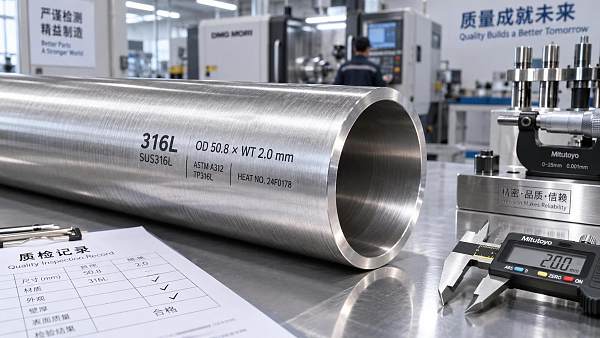
Technical tube buyers usually have one quiet fear: the material looks correct on arrival but behaves differently in fabrication or service than the quotation suggested. That is why the first article link is placed on the exact product term: 316L Stainless Steel Pipe Tube. The link points to a product-specific landing page, while the surrounding text remains readable for editors and buyers.
This article is written as a technical analysis, not as a generic catalog rewrite. The focus is material behavior, corrosion expectations, dimensional discipline, and inspection evidence. It is intended for procurement teams, importers, distributors, project contractors, engineers, and quality-control staff who need a practical way to judge suppliers before approving a larger order.
Understand the Technical Job Before Choosing the Tube
Technical selection should connect material grade, corrosion exposure, wall thickness, surface condition, and fabrication method. Without that connection, the product name alone is incomplete.
For buyers working across chemical equipment, food processing, marine-adjacent fabrication, sanitary structures, heat-exchanger support, industrial piping, and stainless distribution, the useful question is how the specification behaves after ordering. The product may be processed, installed, repacked, resold, or maintained by a different team from the team that first approved the purchase. That handoff makes clear scope more valuable than a vague quotation. A supplier should be able to explain which assumptions are included, which requirements need confirmation, and which documents or photos can support the buyer's review.
Inspection Evidence Is Part of the Specification
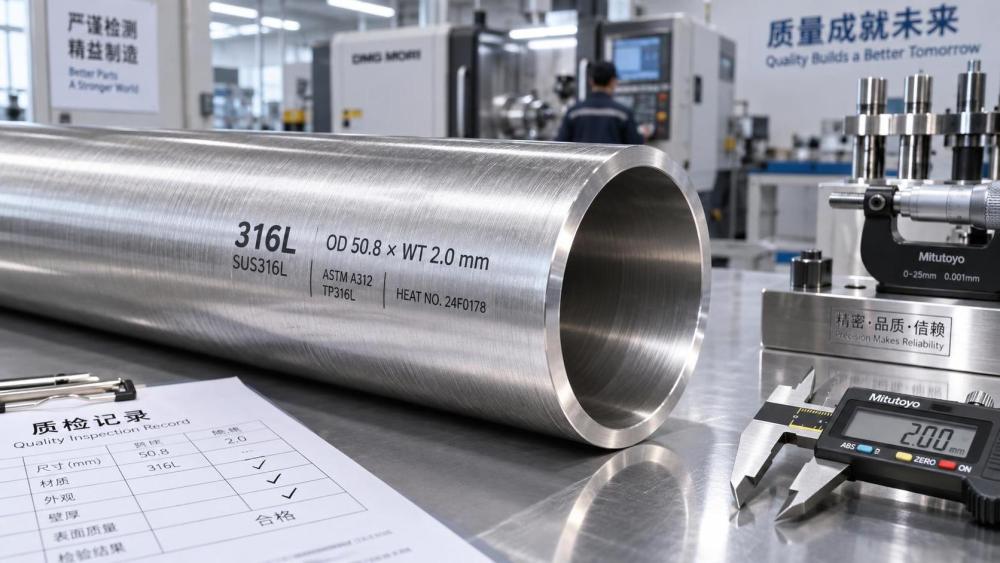
Buyers should treat dimensional checks, surface review, grade documents, and packing records as part of the order. Evidence helps prevent disputes after fabrication begins.
For buyers working across chemical equipment, food processing, marine-adjacent fabrication, sanitary structures, heat-exchanger support, industrial piping, and stainless distribution, the useful question is how the specification behaves after ordering. The product may be processed, installed, repacked, resold, or maintained by a different team from the team that first approved the purchase. That handoff makes clear scope more valuable than a vague quotation. A supplier should be able to explain which assumptions are included, which requirements need confirmation, and which documents or photos can support the buyer's review.
Corrosion Expectations Need Plain Language
Stainless grade selection should be discussed in practical terms: chemicals, humidity, temperature, cleaning routines, and contact materials. Broad corrosion promises should be avoided.
For buyers working across chemical equipment, food processing, marine-adjacent fabrication, sanitary structures, heat-exchanger support, industrial piping, and stainless distribution, the useful question is how the specification behaves after ordering. The product may be processed, installed, repacked, resold, or maintained by a different team from the team that first approved the purchase. That handoff makes clear scope more valuable than a vague quotation. A supplier should be able to explain which assumptions are included, which requirements need confirmation, and which documents or photos can support the buyer's review.
Supplier Evaluation Table
Risk Review Before Order Confirmation
The main purchasing risks include grade substitution, surface contamination, tolerance drift, wrong wall thickness, weld quality uncertainty, poor end protection, and incomplete inspection records. These issues can appear during production, shipment, installation, customer acceptance, or repeat ordering. A buyer who waits until arrival inspection may have fewer options, especially when goods are needed for a project schedule or a production line.
Early review should be practical. Ask suppliers to confirm dimensions, grade or model basis, packing method, label format, document availability, shipment preparation, and any known limits. If the product will be processed, ask about handling and fabrication expectations. If it will be installed, ask about interface dimensions and responsibility boundaries. If it will be stocked for resale, ask about visual consistency, reorder control, and packaging durability.
Buyers should also keep a written comparison record. The record does not need to be complicated. It should show the selected keyword, landing page, supplier quotation scope, requested evidence, approved documents, and open questions. That simple file helps purchasing, sales, engineering, and warehouse teams make the same decision from the same facts.
Pre-Approval Workflow for a Cleaner Purchase
A cleaner purchase normally follows a short but disciplined workflow. First, the buyer confirms the real use case and separates critical requirements from preferences. Second, the supplier confirms whether the requested specification is standard, custom, stocked, or subject to production scheduling. Third, both sides review documents and visual evidence before the order moves into a costly stage. Fourth, packing and logistics are checked against the destination, route, storage time, and unloading conditions. Finally, the buyer records the accepted scope so future orders do not restart from memory.
This workflow is useful because many purchasing disputes come from silence rather than open disagreement. The buyer assumes one grade, package, label, inspection document, or accessory scope; the supplier assumes another; both sides discover the gap only after production or shipment. A written pre-approval routine gives both teams a shared reference. It also helps editors and readers understand why the article is practical: it does not simply name a product, but explains how to buy it with fewer avoidable surprises.
Portal Match and Category Rationale
The recommended portal for this article is tradehorizonpro.com, with the final category CNC & Machine Tools|Metal Fabrication Equipment. This is one matched category path from the latest directory, using one second-level category after the vertical bar. It avoids listing several columns separated by punctuation, which keeps the publishing route clearer for the portal editor.
The selected category fits the product's industry: Stainless Steel Tube and Industrial Fabrication. Chemical resin belongs with polymer materials; heavy trucks belong with transport and tractor categories; steel and coated sheets belong with steel market or metal profile columns; bearings belong with high-precision bearing coverage. When the article category, title, metadata, anchor text, and landing page all describe the same buying topic, the external article is easier to place and easier to review later.
Procurement Checklist
- Confirm the core product keyword: 316L Stainless Steel Pipe Tube.
- Confirm the landing page URL shown in the metadata.
- Use only the selected final category: CNC & Machine Tools|Metal Fabrication Equipment.
- Define application, destination market, quantity range, documents, packing, and acceptance needs before comparing prices.
- Ask each supplier to confirm the assumptions behind the quotation.
- Request practical evidence such as photos, labels, certificates, drawings, inspection notes, or packing records.
- Check shipment and storage risks before the goods leave the supplier.
- Keep approved records for repeat orders and later supplier comparison.
FAQ
Why is one core product keyword used?
One core keyword keeps the article focused and aligns the title, TDK block, metadata, anchor text, and landing page.
Why is there only one external link?
One contextual product link keeps the article natural for readers and avoids turning the content into a promotional link list.
What should buyers compare before choosing a supplier?
Buyers should compare application fit, specification scope, evidence quality, packing, logistics, documentation, communication clarity, and repeat-supply discipline.
How should the article be checked before publishing?
The publisher should confirm that the portal category, product keyword, landing URL, visible TDK, and house style all match the final upload requirements.
Related News
 What is driving consolidation in the global equipment supplier market?IEG Heavy Machinery & Automation AnalystGlobal equipment supplier market consolidation is accelerating through technology, service, and supply-chain demands. Discover how buyers can capture value while managing risk.
 When does capital equipment investment pay back in manufacturing?IEG Heavy Machinery & Automation AnalystCapital equipment investment manufacturing: learn when equipment truly pays back by evaluating full costs, cash flow, ramp-up, operational risks, and lifecycle value.
 When does a distribution center need an automated pallet handling system?Heavy Lifting Systems AnalystPallet handling systems help distribution centers overcome labor shortages, bottlenecks, safety risks, and storage constraints. Discover the key signs it’s time to automate.
 How to build a machinery investment plan around payback periodIEG Heavy Machinery & Automation AnalystMachinery investment planning manufacturing guide: build a credible payback plan with full costs, ramp-up assumptions, lifecycle risks, and scenario-based cash benefits.
 How to Specify a Modular Packaging Line for Fast Changeovers and Scalable OutputRobotics EngineerModular packaging line specification guide: achieve faster changeovers, scalable output, reliable controls, and lower lifecycle costs with practical planning.
 How industrial IoT devices reduce unplanned downtime in factoriesRobotics EngineerIndustrial IoT devices help factories detect early equipment issues, plan maintenance, and reduce costly unplanned downtime before production is disrupted.
 What is driving industrial machinery market demand in manufacturing?IEG Heavy Machinery & Automation AnalystIndustrial machinery market manufacturing demand is rising as factories pursue automation, energy efficiency, resilient supply chains, and lifecycle productivity gains.
 316L Stainless Steel Pipe Tube Technical Factors That Shape Buyer DecisionsCNC Machining AnalystA technical analysis for 316L stainless steel pipe tube buyers, covering corrosion expectations, pipe route choice, tolerance, surface, and inspection.
 How ground conditions determine crawler piling equipment selectionConstruction Equipment SpecialistCrawler piling equipment selection starts with ground conditions. Learn how soil, rock, groundwater and site constraints shape safer, more productive piling solutions.
 3300mm CNC Beam Saw Sheet Capacity: Layout Checks Before PurchaseCNC Machining AnalystZhongding ZD330 beam saw specifications: assess 3300mm sheet capacity, layout clearances, handling flow, and acceptance checks before buying.
 How Bucket Chain Diamond Dredgers Meet ISO 12100 Safety Requirements in Alluvial Mining ProjectsMining Infrastructure ExpertBucket chain diamond dredger safety made real: how ISO 12100 compliance ensures operator protection, reliability & zero lost-time injuries in alluvial mining.
 Modular Packaging for High-Mix Automotive Assembly Lines: How Standardized Load Units Reduce Line Changeover Time by 37% — Case Study from Tier-1 Supplier in GuangdongHeavy Lifting Systems AnalystModular packaging slashes automotive line changeover time by 37%—discover how standardized load units boost OEE, cut labor costs, and enable seamless high-mix assembly.