SCFI Tops 3,000 as Ocean Rates Hit Eight-Week Climb




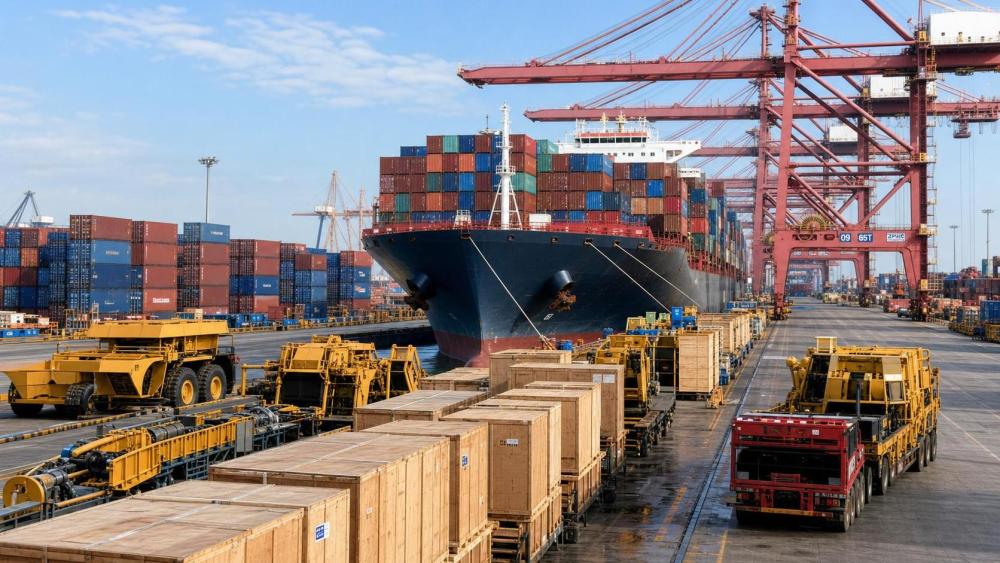
On June 18, 2026, the Shanghai Containerized Freight Index (SCFI) reached 3121.69 after rising for eight straight weeks, while rates on the U.S. West Coast and East Coast routes continued to move higher. For exporters and overseas channel partners handling heavy capital goods such as construction machinery, mining equipment, and automated production lines, the issue is not only higher freight spend but also greater uncertainty around delivery timing, order scheduling, and inventory planning.
What the June 18 update confirms
The confirmed facts are clear. As of June 18, the SCFI stood at 3121.69. The index had increased for eight consecutive weeks, and pricing on both U.S. West Coast and U.S. East Coast routes continued to rise. The reported effect of this trend is a noticeable increase in international logistics costs and delivery-cycle uncertainty for large capital goods, including engineering machinery, mining equipment, and automation line systems. The same development also means overseas distributors need to reassess order timetables and inventory strategy.
Where the pressure is likely to appear first
Export manufacturers face a tighter delivery window
From an industry perspective, producers of heavy equipment may be affected most directly at the shipment and handover stage. When ocean freight keeps rising, the delivered cost of large machines becomes harder to control, while promised dispatch and arrival windows may become less predictable.
Overseas distributors need to rebalance stock decisions
For distributors in destination markets, the main issue is not limited to freight expense. Observably, longer or less certain delivery cycles can affect when orders are placed, how much inventory is carried, and how sales commitments are sequenced against expected arrivals.
Supply chain service providers must manage planning volatility
Freight forwarders, logistics coordinators, and related service providers may see greater pressure in booking, scheduling, and communication. What deserves closer attention is whether rising route prices are also forcing more frequent adjustments in shipment planning for bulky capital goods.
What companies should watch now
Track route-specific cost exposure
Companies shipping to the U.S. market should closely monitor how continued increases on West Coast and East Coast routes affect quoted prices, contract margins, and total landed cost assumptions for large equipment orders.
Recheck order sequencing against delivery promises
For machinery and automation projects, shipment timing is often tied to installation or commissioning plans. Analysis shows that even without new confirmed disruptions beyond the freight increase itself, a higher-cost and less certain shipping environment can require a fresh review of order sequencing and promised delivery dates.
Review inventory assumptions in overseas channels
Overseas distributors should focus on whether current stocking logic still matches transport conditions. The user-provided information already indicates that inventory strategy needs reassessment, making this a practical issue rather than a theoretical one.
Strengthen customer and supplier communication
Where delivery timing is sensitive, companies should pay closer attention to shipment documentation, lead-time communication, and contingency discussions with channel partners. The priority is to reduce misunderstanding around fulfillment timing as freight conditions remain elevated.
How this signal should be read
Analysis shows this development is best understood as a market signal that deserves continued observation rather than as a fully settled long-term conclusion. The confirmed facts point to sustained near-term freight strength, especially on U.S.-bound routes, but the broader industry meaning lies in how quickly this feeds into equipment delivery schedules, overseas stocking behavior, and contract execution discipline.
Why this matters beyond the index level
The immediate significance of the June 18 update is that ocean freight is becoming a more visible operational variable for heavy industrial exports. It is more appropriate to understand this as a short-term cost and delivery pressure signal with possible wider implications if the trend persists. For now, the rational reading is that companies tied to large capital goods shipments should stay focused on scheduling, inventory, and customer communication rather than assume a simple pass-through of higher freight costs.
Basis of this article and follow-up focus
This article is based on the user-provided news title, event date, and event summary. In this type of industry update, commonly relevant source categories may include official announcements, company statements, industry association releases, authoritative media coverage, and standard-setting documents. A specific official source link was not provided in the input, so the underlying details still require ongoing verification. The next areas to watch are whether freight increases on major U.S. routes continue, and how that changes delivery planning and inventory decisions for heavy equipment exporters and overseas distributors.
Related News
 What is driving consolidation in the global equipment supplier market?IEG Heavy Machinery & Automation AnalystGlobal equipment supplier market consolidation is accelerating through technology, service, and supply-chain demands. Discover how buyers can capture value while managing risk.
 When does capital equipment investment pay back in manufacturing?IEG Heavy Machinery & Automation AnalystCapital equipment investment manufacturing: learn when equipment truly pays back by evaluating full costs, cash flow, ramp-up, operational risks, and lifecycle value.
 When does a distribution center need an automated pallet handling system?Heavy Lifting Systems AnalystPallet handling systems help distribution centers overcome labor shortages, bottlenecks, safety risks, and storage constraints. Discover the key signs it’s time to automate.
 How to build a machinery investment plan around payback periodIEG Heavy Machinery & Automation AnalystMachinery investment planning manufacturing guide: build a credible payback plan with full costs, ramp-up assumptions, lifecycle risks, and scenario-based cash benefits.
 How to Specify a Modular Packaging Line for Fast Changeovers and Scalable OutputRobotics EngineerModular packaging line specification guide: achieve faster changeovers, scalable output, reliable controls, and lower lifecycle costs with practical planning.
 How industrial IoT devices reduce unplanned downtime in factoriesRobotics EngineerIndustrial IoT devices help factories detect early equipment issues, plan maintenance, and reduce costly unplanned downtime before production is disrupted.
 What is driving industrial machinery market demand in manufacturing?IEG Heavy Machinery & Automation AnalystIndustrial machinery market manufacturing demand is rising as factories pursue automation, energy efficiency, resilient supply chains, and lifecycle productivity gains.
 316L Stainless Steel Pipe Tube Technical Factors That Shape Buyer DecisionsCNC Machining AnalystA technical analysis for 316L stainless steel pipe tube buyers, covering corrosion expectations, pipe route choice, tolerance, surface, and inspection.
 How ground conditions determine crawler piling equipment selectionConstruction Equipment SpecialistCrawler piling equipment selection starts with ground conditions. Learn how soil, rock, groundwater and site constraints shape safer, more productive piling solutions.
 3300mm CNC Beam Saw Sheet Capacity: Layout Checks Before PurchaseCNC Machining AnalystZhongding ZD330 beam saw specifications: assess 3300mm sheet capacity, layout clearances, handling flow, and acceptance checks before buying.
 How Bucket Chain Diamond Dredgers Meet ISO 12100 Safety Requirements in Alluvial Mining ProjectsMining Infrastructure ExpertBucket chain diamond dredger safety made real: how ISO 12100 compliance ensures operator protection, reliability & zero lost-time injuries in alluvial mining.
 Modular Packaging for High-Mix Automotive Assembly Lines: How Standardized Load Units Reduce Line Changeover Time by 37% — Case Study from Tier-1 Supplier in GuangdongHeavy Lifting Systems AnalystModular packaging slashes automotive line changeover time by 37%—discover how standardized load units boost OEE, cut labor costs, and enable seamless high-mix assembly.