What determines the price of articulated dump trucks?




What Determines the Price of Articulated Dump Trucks?
The articulated dump trucks price is shaped by far more than payload capacity or brand. Procurement teams must assess specification, operating conditions, support, risk, and lifecycle cost.
For most buyers, the lowest purchase quotation is not automatically the lowest-cost decision. A truck that matches haul-road conditions can deliver stronger availability, lower fuel use, and predictable maintenance.
Articulated dump truck pricing can vary widely between similarly sized machines because manufacturers package engines, drivetrains, electronics, tires, safety systems, and service agreements differently.
Buyers should therefore compare offers on a like-for-like basis. The useful question is not simply what the machine costs, but what productive tonne moved will cost.
This guide explains the factors behind articulated dump trucks price decisions, identifies common quotation gaps, and provides a procurement framework for evaluating new and used machines.
It is designed for procurement managers, contractors, quarry operators, mining teams, and fleet owners who need defendable capital equipment decisions for demanding off-road applications.
Payload Class Sets the Starting Price Range
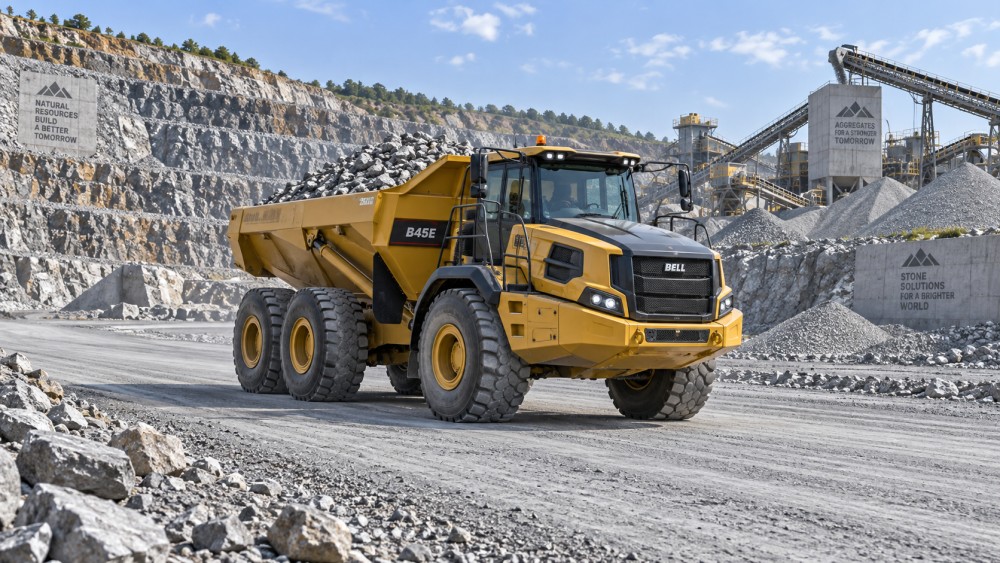
Payload is usually the first specification influencing articulated dump trucks price. Smaller units serve site development work, while higher-capacity models support major earthmoving, quarrying, and mining operations.
A higher payload requires more than a larger dump body. It generally needs a stronger chassis, higher-output engine, reinforced axles, larger tires, and more capable braking systems.
Buyers should compare rated payload, heaped body volume, and material density together. A truck may carry a large volume but remain payload-limited when hauling wet rock or dense aggregate.
Under-specifying capacity can increase fleet size, labor requirements, and traffic congestion. Over-specifying capacity can create unnecessary capital cost, particularly where loading equipment cannot fill the truck efficiently.
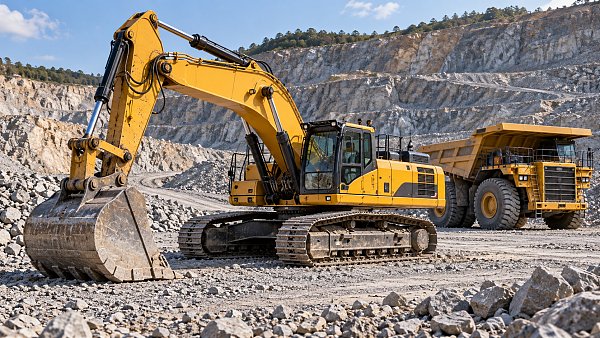
The loading tool must be considered early. Excavator bucket size, wheel loader pass count, loading cycle time, and site geometry determine whether a truck reaches useful productivity.
Many operations target an efficient number of loading passes rather than maximum theoretical body volume. Excessive passes slow cycles, while too few passes may reduce payload control accuracy.
Payload ratings should also be checked against local regulations, road access restrictions, and temporary works conditions. Site limits may prevent full use of a larger truck’s nominal capacity.
For procurement comparison, group quotations by payload class first, then normalize engine power, tire specification, emissions standard, warranty duration, and included technology before judging price differences.
Engine Power, Emissions Rules, and Drivetrain Design
Engine specification is a major price driver because it affects both machine capability and regulatory compliance. More power supports gradients, rolling resistance, acceleration, and demanding haul cycles.
However, the highest horsepower rating does not always provide the best economic outcome. Engine selection should reflect haul distance, ramp length, material type, altitude, and expected utilization.
Modern emissions-compliant engines may include diesel particulate filters, selective catalytic reduction, exhaust gas recirculation, sensors, and control software. These systems add cost and maintenance requirements.
Markets using stricter emissions regulations often have higher new-equipment prices. Procurement teams should verify the applicable emission tier before requesting bids from global suppliers or distributors.
A lower-emission engine can be commercially attractive where projects require compliance documentation, urban access, fuel reporting, or corporate carbon-reduction commitments. It may also protect residual value.
The drivetrain has equally significant influence on articulated dump trucks price. Transmission type, axle design, differential locks, traction control, and retarder systems affect performance on difficult ground.
Automatic traction systems may cost more initially, but they can reduce wheel spin, tire damage, operator dependence, and lost time on wet, loose, or uneven haul roads.
Evaluate drivetrain features against actual site conditions rather than selecting every available option. Deep mud, steep ramps, and seasonal weather justify different specifications than compacted construction-site haul routes.
Chassis Strength and Body Configuration Affect Long-Term Value
The articulated joint is central to the machine’s mobility and durability. Its design affects steering behavior, oscillation, stability, maintenance access, and performance over uneven terrain.
More robust frames and articulation assemblies typically increase acquisition cost, but they can be justified in continuous quarry, mining, forestry, and infrastructure work with severe ground conditions.
Suspension systems also influence price. Advanced suspension can improve ride quality, reduce structural stress, protect operators, and support faster travel over rough roads when properly maintained.
Dump body design should match the material being moved. General-purpose bodies are suitable for many earthmoving applications, while heated, lined, reinforced, or specialized bodies increase cost.
Abrasion-resistant liners can extend body life when transporting blasted rock or sharp aggregate. Their value depends on annual material volume, replacement cost, and the availability of repair facilities.
Tailgates, body extensions, sideboards, and ejector alternatives should be assessed cautiously. They can improve application fit, but may affect payload, stability, loading compatibility, and maintenance complexity.
Tire selection is another frequently underestimated line item. Larger, premium, or application-specific tires raise the initial articulated dump trucks price and can materially affect operating expenses.
Procurement documents should state tire brand, size, tread pattern, ply rating, and warranty terms. A low bid with unsuitable tires can quickly lose its apparent advantage.
Technology Options Can Increase Price but Reduce Operating Risk
Telematics, onboard weighing, fleet monitoring, and remote diagnostics increasingly influence equipment quotations. These systems add upfront cost, subscriptions, data requirements, and possible integration work.
The strongest business case for technology is operational visibility. Accurate data can reveal excessive idling, overload events, fuel variance, harsh braking, unauthorized use, and avoidable maintenance risk.
Onboard payload measurement is particularly valuable where overloading damages components or creates compliance concerns. It can also reduce underloading, which quietly lowers productivity across an entire fleet.
Procurement teams should ask whether weighing accuracy applies during loading, travel, or both. They should also understand calibration responsibility and the effect of system errors on reported output.
Safety options may include cameras, object detection, seat-belt monitoring, speed control, tire-pressure monitoring, automatic lubrication, and fire suppression. Their relevance depends on site hazards and client standards.
Some safety features are mandatory under project rules or corporate policies. Others should be justified through risk assessment, incident history, insurance requirements, and practical operator acceptance.
Technology should not be evaluated as a generic premium package. Buyers need a clear statement of included hardware, activation fees, connectivity charges, software duration, and data ownership rights.
Where a mixed fleet already uses a management platform, compatibility matters. Standalone telematics may deliver limited value if maintenance and production teams cannot use the information consistently.
Regional Supply, Currency, and Delivery Timing Change the Quotation
Regional market conditions can materially change articulated dump trucks price. Freight distance, import duties, exchange rates, dealer inventory, port capacity, and local competition all affect delivered cost.
A factory quotation is not a project-ready price. Buyers should identify transport, insurance, customs clearance, pre-delivery inspection, commissioning, taxes, and any local certification expenses.
Long delivery lead times can carry a hidden commercial cost. Delayed equipment may force rental use, postpone project mobilization, reduce planned output, or expose contractors to schedule penalties.
Dealer-stock units may cost more or less than factory orders depending on market conditions. Their advantage is usually certainty, but buyers must verify build date and stored-machine condition.
Currency risk deserves specific treatment on large orders. A favorable quoted price can change materially before delivery when the contract currency differs from the buyer’s operating currency.
Procurement contracts should define currency, payment milestones, price-validity periods, escalation clauses, and responsibilities for taxes or regulatory changes. These terms can be as important as list price.
Local dealer capability also affects commercial value. A nearby distributor with trained technicians and stocked parts may justify a higher purchase price than a remote, low-cost supplier.
For cross-border purchases, confirm whether warranty coverage transfers to the operating country. Some warranties are limited by territory, dealer authorization, maintenance records, or approved consumables.
After-Sales Support Often Determines the Real Cost Difference
Service support is one of the most important influences on lifecycle economics. An articulated dump truck earns value only when it is available for planned productive work.
Warranty duration alone is not enough. Buyers should review covered components, labor reimbursement, travel time, exclusions, response commitments, and procedures for handling repeated failures.
Preventive maintenance agreements can make cost planning easier, particularly for fleets without extensive workshops. However, the scope must include filters, fluids, wear items, inspections, and labor assumptions.
Parts availability should be evaluated using evidence rather than general assurances. Ask suppliers for regional warehouse locations, common-part stock levels, emergency delivery procedures, and historical fill rates.
Critical components include filters, hoses, sensors, brake parts, drivetrain components, tires, articulation bearings, and hydraulic cylinders. A shortage in any one category can stop production.
Operator and technician training also affects the long-term articulated dump trucks price outcome. Poor operating technique increases fuel burn, tire wear, structural stress, and incident exposure.
Service access should be examined physically where possible. Ground-level maintenance points, central lubrication, diagnostic connectivity, and safe access platforms can reduce routine maintenance time and risk.
Request a projected maintenance schedule for the expected ownership period. Then compare planned costs alongside assumed utilization, labor rate, fuel price, replacement parts, and residual value.
New, Used, and Rental Alternatives Require Different Price Logic
New machines offer current technology, full warranty, known specification, and long service life. Their higher purchase price may be appropriate for high-utilization fleets and multi-year projects.
Used articulated dump trucks can reduce capital expenditure, but their value depends heavily on verified hours, maintenance records, component condition, operating history, and remaining local support.
A used machine inspection should cover frame condition, articulation play, tire wear, hydraulic leaks, transmission performance, body damage, brakes, electronics, and diagnostic fault history.
Hour-meter reading alone is not a reliable condition indicator. A machine used in abrasive quarry work may have different wear characteristics than one operating on lighter earthmoving projects.
Rental can be commercially sensible for short-duration work, uncertain production volumes, emergency replacement needs, or projects where the customer does not want residual-value exposure.
Rental rates should be compared with transport, minimum-hour requirements, damage terms, maintenance responsibility, fuel use, standby charges, and availability during peak construction demand.
Lease and financing structures can alter the apparent affordability of a machine. Procurement teams should compare total financing cost, early settlement conditions, insurance obligations, and end-of-term arrangements.
The correct acquisition route depends on utilization certainty and risk appetite. A lower monthly payment does not necessarily produce lower lifecycle cost or stronger operational control.
How Procurement Teams Should Compare Articulated Dump Truck Offers
Build a comparison sheet that separates equipment price from delivered cost, service coverage, technology, consumables, financing, and expected operating expenditure. This prevents incomplete quotations from appearing cheaper.
Define the operating profile before inviting bids. Include payload target, material density, haul distance, road gradient, ground condition, annual hours, climate, shift pattern, and loading equipment.
Ask each supplier to state assumptions clearly. Fuel consumption, productivity estimates, tire life, availability, and maintenance costs should be linked to stated conditions rather than presented as universal claims.
Use total cost of ownership over the planned holding period. Include purchase price, financing, fuel, maintenance, tires, repairs, operator training, downtime exposure, resale value, and disposal costs.
Productivity should be measured in useful tonnes moved per hour or per shift. A lower-priced truck can become expensive when cycle time, payload control, reliability, or fleet coordination are weak.
Assess supplier risk separately from machine specification. Consider financial stability, regional parts coverage, technician capacity, warranty performance, delivery reliability, and ability to support project mobilization.
Where the purchase is strategically significant, conduct a reference check with comparable users. Questions should cover real fuel use, downtime patterns, parts lead times, dealer performance, and resale experience.
A well-structured procurement decision balances initial investment against predictable output. The best articulated dump trucks price is the one that supports reliable hauling at the lowest defensible lifecycle cost.
Conclusion: Price Should Be Measured Against Productive Output
The articulated dump trucks price reflects payload, powertrain, chassis strength, technology, tires, emissions compliance, supply conditions, and the support package behind the machine.
For procurement professionals, the key is to compare complete operating propositions instead of headline prices. Normalized specifications and documented assumptions make supplier comparisons substantially more reliable.
A machine that costs more initially may provide better availability, lower fuel consumption, safer operation, stronger residual value, and fewer project disruptions over its service life.
Before committing capital, define the haul profile, verify service capability, inspect commercial terms, and model total cost of ownership using realistic utilization and productivity assumptions.
That approach turns articulated dump truck sourcing from a price negotiation into an investment decision based on output, risk control, and lasting operational value.
Related News
 MSHA Issues Mine Truck Safety Alert After One Death and 121 InjuriesMining Infrastructure ExpertMSHA mine truck safety alert reports one death and 121 lost-time injuries. Discover why mine operators should review safety practices.
 How to size a crushing plant for ore processingMining Infrastructure ExpertSize your ore processing equipment crushing plant with confidence. Learn how to calculate throughput, assess ore characteristics, and prevent bottlenecks.
 Trump Administration Rewrites Mining Policy to Spur Critical Minerals DevelopmentMining Infrastructure ExpertU.S. critical minerals mining policy is changing. Explore what faster approvals could mean for investment, equipment demand and supply chains.
 How IEC 62443 defines security zones for industrial communication systemsRobotics EngineerExplore industrial communication systems and IEC 62443: learn how security zones, conduits, and risk-based controls help protect plant operations.
 China-Peru Trade Agreement Upgrade Takes Effect, Easing Machinery CertificationConstruction Equipment SpecialistThe China-Peru trade agreement upgrade simplifies machinery certification. Discover what mutual recognition could mean for exporters entering Peru.
 How do industrial control systems regulate water treatment?Robotics EngineerDiscover how industrial control systems in water treatment use sensors, PLCs, and SCADA to regulate processes and help operators respond to changing conditions.
 Exotec Report: 25% of Supply Chain Leaders Regret Warehouse Automation DecisionsRobotics EngineerWarehouse automation regret affects 25% of surveyed supply chain leaders, according to Exotec. Explore the cost, contract and readiness risks before investing.
 How to set maintenance intervals for mining equipment in AustraliaMining Infrastructure ExpertMining equipment maintenance Australia: Learn how to set service intervals using operating hours, site conditions and equipment data to reduce downtime.
 EY Survey Ranks Complexity as Mining's Top Risk for 2027Mining Infrastructure ExpertMining risk in 2027 is led by complexity, EY's survey finds. Discover how aging mines, declining ore grades and supply chain pressures are reshaping the industry.
 Can asset lifecycle management automation reduce equipment downtime?IEG Heavy Machinery & Automation AnalystDiscover how asset lifecycle management automation can reduce equipment downtime through timely maintenance, faster repairs, and smarter service workflows.
 Caterpillar Q3 2026 Revenue Rises 17% to $20.7 Billion as Both Equipment Segments GrowConstruction Equipment SpecialistCaterpillar Q3 2026 revenue reportedly rose 17% to $20.7 billion. Explore equipment segment growth and what it could mean for procurement planning.
 How to choose a rugged industrial control panel for wet environmentsRobotics EngineerChoose a rugged industrial control panel for wet environments. Compare IP ratings, materials, seals, and condensation control to improve reliability.