How Pick and Place Robots Improve Assembly Line Throughput




How Pick and Place Robots Improve Assembly Line Throughput
For technical evaluation, throughput is never just a speed number. It reflects cycle time, stability, changeover efficiency, labor dependency, and the ability to keep output predictable under pressure.
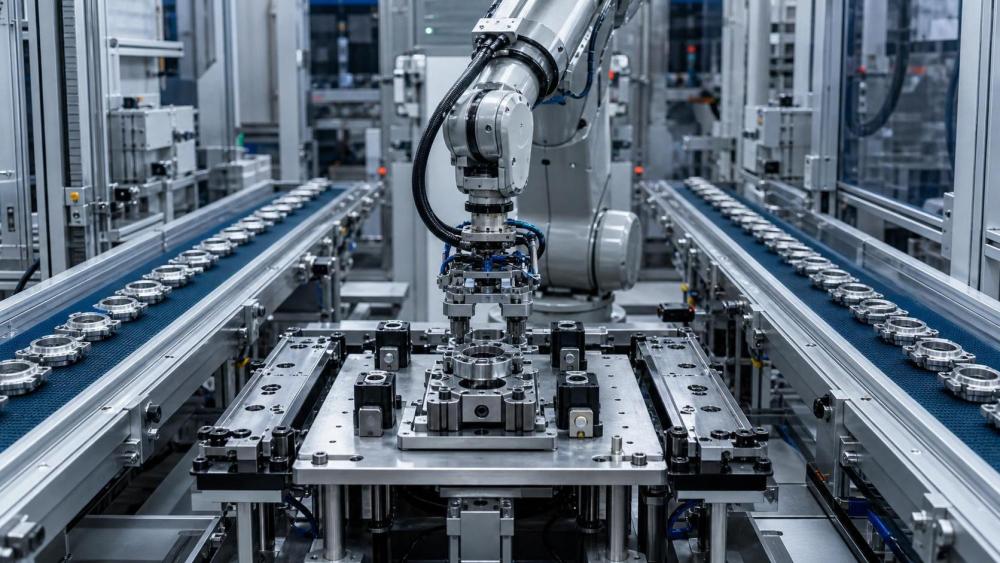
That is why pick and place robots assembly systems matter. They automate repeated transfer steps that often slow manual or semi-automatic lines.
In practical terms, these robots help move parts faster, place them more accurately, and reduce small interruptions that quietly damage line output.
The result is not only more units per hour. A well-designed pick and place robots assembly setup also improves consistency, lowers defect risk, and supports cleaner production planning.
Why Throughput Problems Often Start at Handling Points
Many assembly lines do not fail at the main process. They lose time between processes, especially during part transfer, orientation, positioning, and loading.
These handling steps look simple. In reality, they create waiting time, uneven pacing, and operator fatigue, especially when demand rises or product mix changes.
A pick and place robots assembly solution addresses that gap directly. It standardizes every motion, every pickup point, and every placement path.
This matters because throughput depends on repeatability. When transfer steps become stable, downstream machines receive parts at the right time and in the right orientation.
Typical bottlenecks reduced by robotic handling
- Delayed part loading at fast workstations
- Incorrect placement causing rework or jams
- Inconsistent spacing between parts
- Manual fatigue during long production runs
- Line imbalance between upstream and downstream stations
How Pick and Place Robots Assembly Systems Raise Output
The strongest benefit is shorter and more predictable cycle time. Robots do not vary their pace in the same way people do across shifts.
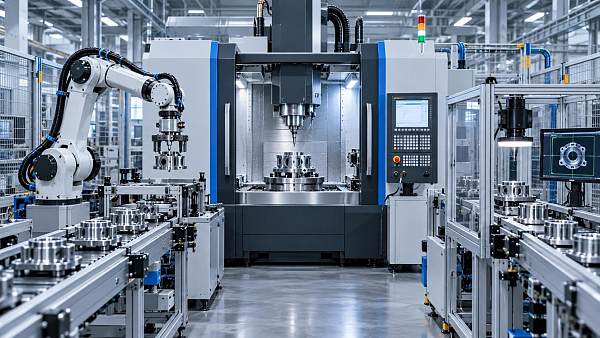
In a pick and place robots assembly process, motion paths are optimized for speed and repeatability. That reduces micro-delays during pickup, travel, and placement.
More importantly, robotic handling supports continuous flow. Parts arrive where they are needed without waiting for manual intervention or corrective repositioning.
This becomes even more valuable in high-volume production. A few seconds saved per cycle can translate into significant daily throughput gains.
Main throughput drivers
- Faster transfer between assembly stages
- Accurate placement with less correction time
- Stable timing across shifts and operators
- Better synchronization with conveyors and feeders
- Lower unplanned stops caused by handling errors
From a technical assessment view, this is where pick and place robots assembly delivers measurable value. It improves the pace of the line without sacrificing control.
Accuracy, Repeatability, and Quality Stability
Throughput should not be separated from quality. A faster line that produces more errors simply moves the bottleneck into inspection, repair, or customer complaints.
Pick and place robots assembly systems help prevent that tradeoff. Their repeatable motion reduces placement variation and keeps alignment within defined tolerances.
This is especially useful for electronics, automotive subassemblies, packaging, medical devices, and precision mechanical products where slight offsets can trigger failure.
When parts land correctly the first time, assembly stations run smoother. Vision systems also perform better when incoming part position is consistent.
Quality improvements linked to robotic placement
- Less part damage during transfer
- Fewer misalignment defects
- Lower scrap from incorrect orientation
- More stable inspection results
- Reduced rework and downstream correction
Where Pick and Place Robots Assembly Creates the Most Value
Not every line gains the same benefit. The best results appear where handling is frequent, labor-intensive, precision-sensitive, or connected to tight takt times.
In actual operations, pick and place robots assembly is most effective when one transfer task repeats thousands of times each shift.
The clearer signal is this: the more expensive each stop or defect becomes, the more valuable robotic handling becomes in the assembly line.
What Technical Evaluators Should Check Before Selection
A good pick and place robots assembly project starts with process fit, not just robot speed. Nameplate performance alone rarely predicts real line results.
The first question is payload and reach. The second is whether the end-of-arm tooling can grip parts reliably without slowing the cycle.
Then comes integration. Feeders, conveyors, vision systems, PLC communication, guarding, and upstream machine timing all affect throughput in practice.
This also means software matters. Motion programming, recipe switching, fault recovery, and data capture can determine whether the system stays productive after startup.
Key evaluation points
- Actual cycle time under production conditions
- Placement repeatability at required tolerances
- Tooling change time for different products
- Compatibility with existing controls and line logic
- Maintenance access and spare parts support
- Operator training and recovery from common faults
Common Risks That Limit Throughput Gains
Some installations underperform because the robot is treated as a standalone machine. In reality, throughput depends on the whole production system.
A pick and place robots assembly cell can still become a bottleneck if part presentation is poor, tooling slips, or downstream equipment cannot absorb the pace.
Another frequent issue is overengineering. A highly complex cell may promise flexibility but create difficult maintenance and longer restart times.
In many cases, the better answer is a simpler robotic architecture with stable fixturing, clear recipes, and fast troubleshooting access.
Risk control suggestions
- Validate part flow before final robot sizing
- Test gripper reliability with real materials
- Simulate line balance, not only robot motion
- Set clear recovery logic for jams and rejects
- Measure OEE impact after commissioning
A Practical Path to Better Assembly Throughput
Pick and place robots assembly is not simply about replacing manual labor. Its real value is improving flow, repeatability, and control across the full assembly process.
When selected around real bottlenecks, these systems raise throughput while protecting quality. That combination is what makes automation commercially useful.
In recent manufacturing upgrades, the strongest results usually come from targeted deployment. Start with the transfer step that causes the most waiting, variation, or rework.
Then compare cycle time, defect reduction, uptime, and integration effort. That approach gives a clearer business case for any pick and place robots assembly investment.
For assembly lines under pressure to produce more with fewer disruptions, robotic handling is often one of the fastest ways to unlock stable, scalable throughput.
Related News
 What is driving consolidation in the global equipment supplier market?IEG Heavy Machinery & Automation AnalystGlobal equipment supplier market consolidation is accelerating through technology, service, and supply-chain demands. Discover how buyers can capture value while managing risk.
 When does capital equipment investment pay back in manufacturing?IEG Heavy Machinery & Automation AnalystCapital equipment investment manufacturing: learn when equipment truly pays back by evaluating full costs, cash flow, ramp-up, operational risks, and lifecycle value.
 When does a distribution center need an automated pallet handling system?Heavy Lifting Systems AnalystPallet handling systems help distribution centers overcome labor shortages, bottlenecks, safety risks, and storage constraints. Discover the key signs it’s time to automate.
 How to build a machinery investment plan around payback periodIEG Heavy Machinery & Automation AnalystMachinery investment planning manufacturing guide: build a credible payback plan with full costs, ramp-up assumptions, lifecycle risks, and scenario-based cash benefits.
 How to Specify a Modular Packaging Line for Fast Changeovers and Scalable OutputRobotics EngineerModular packaging line specification guide: achieve faster changeovers, scalable output, reliable controls, and lower lifecycle costs with practical planning.
 How industrial IoT devices reduce unplanned downtime in factoriesRobotics EngineerIndustrial IoT devices help factories detect early equipment issues, plan maintenance, and reduce costly unplanned downtime before production is disrupted.
 What is driving industrial machinery market demand in manufacturing?IEG Heavy Machinery & Automation AnalystIndustrial machinery market manufacturing demand is rising as factories pursue automation, energy efficiency, resilient supply chains, and lifecycle productivity gains.
 316L Stainless Steel Pipe Tube Technical Factors That Shape Buyer DecisionsCNC Machining AnalystA technical analysis for 316L stainless steel pipe tube buyers, covering corrosion expectations, pipe route choice, tolerance, surface, and inspection.
 How ground conditions determine crawler piling equipment selectionConstruction Equipment SpecialistCrawler piling equipment selection starts with ground conditions. Learn how soil, rock, groundwater and site constraints shape safer, more productive piling solutions.
 3300mm CNC Beam Saw Sheet Capacity: Layout Checks Before PurchaseCNC Machining AnalystZhongding ZD330 beam saw specifications: assess 3300mm sheet capacity, layout clearances, handling flow, and acceptance checks before buying.
 How Bucket Chain Diamond Dredgers Meet ISO 12100 Safety Requirements in Alluvial Mining ProjectsMining Infrastructure ExpertBucket chain diamond dredger safety made real: how ISO 12100 compliance ensures operator protection, reliability & zero lost-time injuries in alluvial mining.
 Modular Packaging for High-Mix Automotive Assembly Lines: How Standardized Load Units Reduce Line Changeover Time by 37% — Case Study from Tier-1 Supplier in GuangdongHeavy Lifting Systems AnalystModular packaging slashes automotive line changeover time by 37%—discover how standardized load units boost OEE, cut labor costs, and enable seamless high-mix assembly.