Chile Ends VAT Exemption for Mining Equipment Imports




Effective October 1, 2026, Chile will remove the VAT exemption previously available to certain imported mining equipment and return those goods to the standard 19% VAT rate. For exporters, importers, procurement teams, and after-sales service providers linked to mining projects, this is not just a tax adjustment: it changes landed cost assumptions, bidding calculations, and the economics of delivery and service support. The measure also deserves attention because it is paired with a new opening for localized technical service cooperation, which may affect how suppliers structure post-sale support in the Chilean market.
What the announced rule change confirms
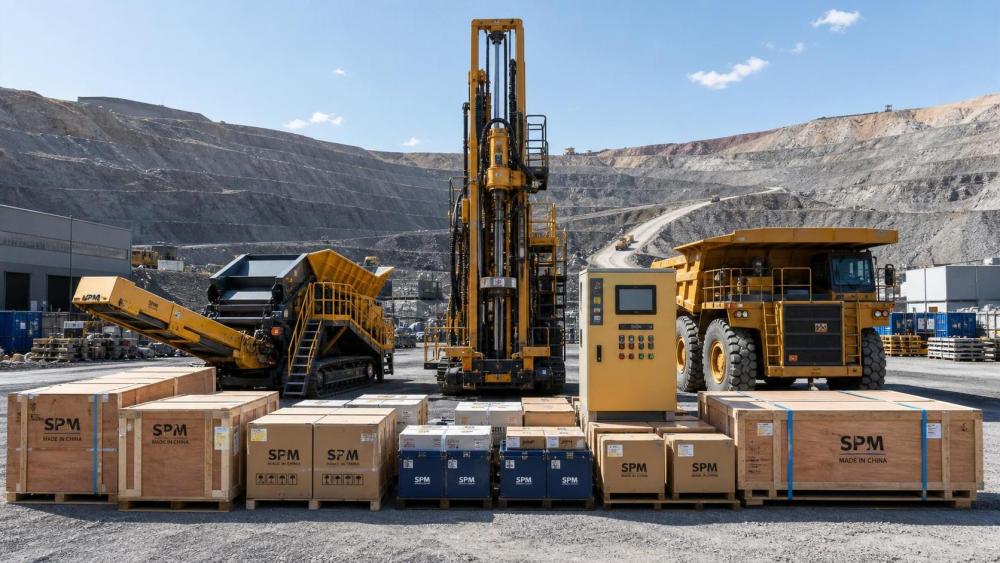
According to the information provided, Chile's Ministry of Finance announced on June 25, 2026 that, from October 1, 2026, the VAT exemption under Article 18 of the Mining Investment Promotion Law for imported mining equipment will be cancelled. The affected equipment categories include drilling rigs, crushing and screening systems, and electronic control units for mining trucks.
From that date, the standard 19% VAT rate will apply again to those imports. The same information indicates that this change is expected to raise the end procurement cost of Chinese-funded mining equipment exports to Chile by about 12% to 15%.
The announcement also includes a parallel support measure. Importers will be allowed to apply jointly with Chinese companies for subsidies covering localized technical service cooperation, with support of up to 30% for on-site commissioning and the establishment of spare-parts warehouses.
Where the commercial effect is likely to be felt first
Export pricing and bid preparation may need recalibration
From an industry perspective, exporters of mining equipment to Chile are likely to feel the impact first in quotation strategy, bid pricing, and contract discussions. A restored 19% VAT burden changes the total purchase cost seen by the end buyer, which can affect competitive positioning even when the ex-works or FOB equipment price remains unchanged. What deserves closer attention is whether technical documents, commercial offers, and tender responses clearly distinguish equipment value from service value and tax treatment, so that pricing assumptions remain internally consistent.
Importers and procurement teams face a changed landed-cost baseline
For importers and procurement-side teams, the key effect is at the procurement planning and budgeting stage. A transaction structure that previously relied on VAT exemption will now need to be reviewed against the restored standard rate. In practical terms, that means closer attention to import documentation, product classification, purchase timing relative to the October 1, 2026 effective date, and the way total project cost is presented to internal approval teams or end users. Analysis shows that the tax change and the service subsidy opening now need to be assessed together rather than as separate items.
After-sales and service partners may move closer to the center of the deal
The newly opened subsidy route for on-site commissioning and spare-parts warehouse development gives after-sales support a more direct commercial role. For service providers, spare-parts operators, and companies involved in field commissioning, the relevance is not that a subsidy is guaranteed, but that localized service capability may become more important in the overall procurement decision. Observably, suppliers that can coordinate equipment delivery with local service cooperation may be better placed to respond to buyer cost pressure created by the tax change.
Supply-chain support functions will need tighter document alignment
Logistics coordinators, trade compliance teams, and supply-chain service providers may also be affected because changes in tax treatment often increase the importance of document accuracy and contract alignment. The immediate concern is not a new certification regime in the provided information, but the need to ensure consistency across import papers, technical descriptions, service scopes, and commercial agreements, especially where subsidy applications may involve joint participation between importers and Chinese partners.
What companies should monitor before and after the effective date
Review which product lines fall within the announced scope
Companies should first check whether their exports or procurement plans involve the equipment categories specifically mentioned in the provided information, including drilling rigs, crushing and screening systems, and mining truck electronic control units. Where product portfolios sit near those categories, closer review of technical descriptions and transaction documents will matter for internal compliance and trade planning.
Recheck quotes, contracts, and tender files against the October 2026 timing
Analysis shows that timing is a practical issue. Contracts signed, bids submitted, or deliveries arranged around October 1, 2026 may need careful review to confirm how tax assumptions are reflected in pricing and acceptance terms. What deserves closer attention is whether commercial documents, technical annexes, and procurement files are aligned on the post-exemption cost structure rather than still reflecting earlier assumptions.
Track how the service subsidy is described in execution practice
The information provided confirms that importers may apply jointly with Chinese companies for support of up to 30% for on-site commissioning and spare-parts warehouse construction. However, detailed execution criteria are not provided in the input. For that reason, companies should treat the subsidy as an available policy direction rather than an already standardized operating mechanism, and continue to watch for official wording on eligibility, filing requirements, scope of covered services, and supporting materials.
Strengthen service and traceability records tied to local support
Where companies plan to use localized technical service cooperation, it would be prudent to prepare clearer records around commissioning scope, spare-parts arrangements, and service responsibility boundaries. This is not because new traceability rules are confirmed in the provided information, but because subsidy-linked service arrangements usually increase the practical importance of documentation, handover clarity, and responsibility mapping across exporter, importer, and service teams.
How this change is best understood at this stage
Observably, this development is more than a routine tax notice but still not a complete operating rulebook. The removal of the VAT exemption from a defined group of imported mining equipment is a confirmed rule change with a stated effective date, so it should be read as a concrete execution signal rather than a speculative policy discussion. At the same time, the accompanying subsidy pathway for localized technical service appears, based on the provided information, to require further observation in terms of practical application standards and implementation wording.
From an industry perspective, the combined message is that cost competitiveness in mining equipment trade may depend less on equipment pricing alone and more on how suppliers package delivery, commissioning, and local parts support. That said, the available information does not support firm conclusions about market outcomes, supplier reshuffling, or final buyer behavior.
What this means for near-term market reading
At this stage, it is more appropriate to understand the announcement as a confirmed tax-policy adjustment with immediate implications for procurement and trade execution, alongside a still-developing policy signal in favor of localized service cooperation. The confirmed part is the end of the VAT exemption and the return to the 19% standard rate from October 1, 2026. The part that still warrants close monitoring is how the subsidy channel will be applied in practice and how procurement documents, service models, and market responses adapt around it.
Basis of this article and points still requiring verification
This article is based on the user-provided news title, event date, and event summary. For developments of this type, relevant source categories would usually include official government announcements, regulator releases, customs or trade authority information, industry association notices, standard-setting documents, and reporting by established professional media. A specific official source link was not provided in the input, so the exact official publication path still needs to be verified on an ongoing basis.
Further monitoring is still needed on detailed implementation language, any operational interpretation affecting import and service documentation, possible changes in tender wording, and market feedback from exporters, importers, procurement teams, and after-sales operators once the October 2026 effective date begins to shape actual transactions.
Related News
 What is driving consolidation in the global equipment supplier market?IEG Heavy Machinery & Automation AnalystGlobal equipment supplier market consolidation is accelerating through technology, service, and supply-chain demands. Discover how buyers can capture value while managing risk.
 When does capital equipment investment pay back in manufacturing?IEG Heavy Machinery & Automation AnalystCapital equipment investment manufacturing: learn when equipment truly pays back by evaluating full costs, cash flow, ramp-up, operational risks, and lifecycle value.
 When does a distribution center need an automated pallet handling system?Heavy Lifting Systems AnalystPallet handling systems help distribution centers overcome labor shortages, bottlenecks, safety risks, and storage constraints. Discover the key signs it’s time to automate.
 How to build a machinery investment plan around payback periodIEG Heavy Machinery & Automation AnalystMachinery investment planning manufacturing guide: build a credible payback plan with full costs, ramp-up assumptions, lifecycle risks, and scenario-based cash benefits.
 How to Specify a Modular Packaging Line for Fast Changeovers and Scalable OutputRobotics EngineerModular packaging line specification guide: achieve faster changeovers, scalable output, reliable controls, and lower lifecycle costs with practical planning.
 How industrial IoT devices reduce unplanned downtime in factoriesRobotics EngineerIndustrial IoT devices help factories detect early equipment issues, plan maintenance, and reduce costly unplanned downtime before production is disrupted.
 What is driving industrial machinery market demand in manufacturing?IEG Heavy Machinery & Automation AnalystIndustrial machinery market manufacturing demand is rising as factories pursue automation, energy efficiency, resilient supply chains, and lifecycle productivity gains.
 316L Stainless Steel Pipe Tube Technical Factors That Shape Buyer DecisionsCNC Machining AnalystA technical analysis for 316L stainless steel pipe tube buyers, covering corrosion expectations, pipe route choice, tolerance, surface, and inspection.
 How ground conditions determine crawler piling equipment selectionConstruction Equipment SpecialistCrawler piling equipment selection starts with ground conditions. Learn how soil, rock, groundwater and site constraints shape safer, more productive piling solutions.
 3300mm CNC Beam Saw Sheet Capacity: Layout Checks Before PurchaseCNC Machining AnalystZhongding ZD330 beam saw specifications: assess 3300mm sheet capacity, layout clearances, handling flow, and acceptance checks before buying.
 How Bucket Chain Diamond Dredgers Meet ISO 12100 Safety Requirements in Alluvial Mining ProjectsMining Infrastructure ExpertBucket chain diamond dredger safety made real: how ISO 12100 compliance ensures operator protection, reliability & zero lost-time injuries in alluvial mining.
 Modular Packaging for High-Mix Automotive Assembly Lines: How Standardized Load Units Reduce Line Changeover Time by 37% — Case Study from Tier-1 Supplier in GuangdongHeavy Lifting Systems AnalystModular packaging slashes automotive line changeover time by 37%—discover how standardized load units boost OEE, cut labor costs, and enable seamless high-mix assembly.