How modular packaging components simplify production line changes




How Modular Packaging Components Simplify Production Line Changes
For project managers and engineering leaders, a packaging line change is rarely limited to replacing one machine. A new carton size, pouch format, closure type, pack count, or labeling requirement can affect infeed timing, conveyor height, guarding, controls, utilities, inspection equipment, palletizing, and operator procedures. Even a relatively modest product launch may become a shutdown-risk project when every section of the line has been designed as a fixed, one-off installation.
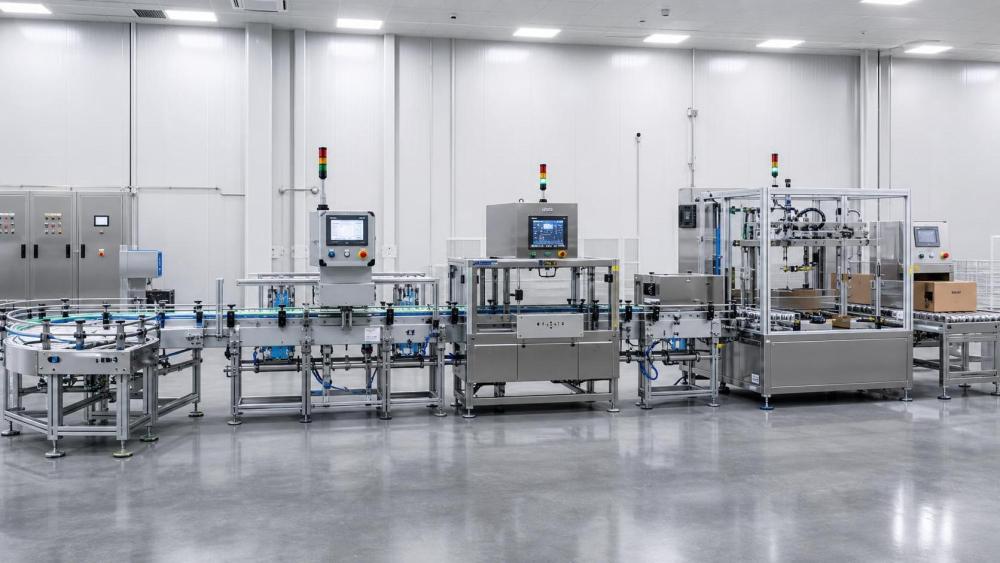
Modular packaging components offer a more manageable alternative. Rather than treating the line as a single integrated asset that must be rebuilt whenever demand changes, the plant uses standardized, interoperable sections that can be added, removed, relocated, or upgraded with less disruption. The approach does not eliminate engineering work, and it does not make every changeover simple. What it does is reduce the number of unknowns that normally appear when mechanical, electrical, pneumatic, and control systems are modified at the same time.
For capital projects, that difference matters. Production flexibility is increasingly tied to shorter product lifecycles, more SKU variation, regional packaging requirements, labor constraints, and gradual automation upgrades. A line that can accept a new module without redesigning every adjacent machine gives project teams more options when schedules, budgets, or product forecasts change.
Modularity Is an Interface Strategy, Not Just Equipment on Wheels
The term “modular” is sometimes used too loosely. A machine mounted on casters may be movable, but it is not necessarily modular. True modular packaging components are designed around defined interfaces: mechanical connection points, conveyor elevations, product transfer zones, electrical supply arrangements, safety circuits, communication protocols, compressed-air connections, and control logic boundaries.
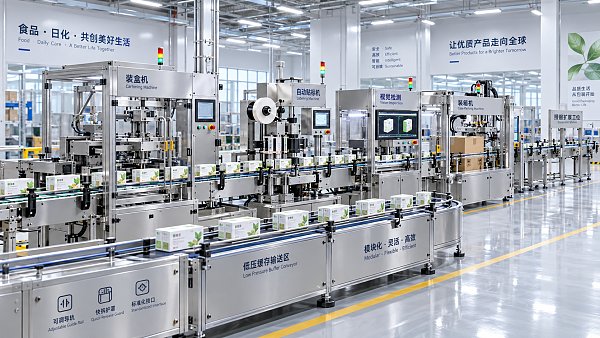
Typical modules may include accumulation conveyors, feeding and orienting sections, labeling stations, checkweighers, case packers, print-and-apply units, inspection systems, robotic loading cells, or pallet handling equipment. The purpose is not to standardize every machine into an identical box. It is to make the points between machines predictable enough that a project team can change one area without opening a chain of redesign work across the entire line.
This distinction is particularly important when a line includes equipment from multiple suppliers. A project may have a filling machine with its own proprietary controls, a separate cartoning system, and a third-party palletizing cell. Modularity can still work, but only if the owner defines responsibility for the interfaces. Without that discipline, “plug-and-play” often becomes “connect, test, troubleshoot, and rewire during commissioning.”
Why Conventional Line Changes Become So Disruptive
Packaging lines often develop in layers. An original line is extended to meet higher output. A manual station is replaced by semi-automatic equipment. A new inspection requirement adds sensors and reject handling. A conveyor is lengthened because a downstream process needs more accumulation. Over time, a line may work well in daily operation while becoming increasingly difficult to alter.
The challenge is not only physical fit. Changes can expose hidden dependencies: a machine cannot maintain its rated speed because the accumulation section is too short; a new format needs different guide rails but conflicts with an existing guard; a control update affects upstream release logic; an added robotic cell requires a revised safety zone and recovery procedure. These are common project issues, not signs of poor engineering. The risk increases when interface information exists only in the memory of operators, maintenance technicians, or the original integrator.
Modular design reduces this dependency by creating clearer boundaries. If an inspection module has known product handoff conditions, a documented I/O list, defined footprint limits, and an agreed safety connection method, it can be evaluated as a contained change. The team still needs to validate line performance, but the project no longer starts from a blank sheet.
Where Modular Packaging Components Create the Most Practical Value
The strongest use case is not always a fully modular greenfield line. In many plants, value comes from making the highest-change areas modular first. These are usually the zones affected by product mix, pack configuration, quality control requirements, or manual labor availability.
For example, an end-of-line area may need to switch between tray packing, case packing, and direct pallet loading as customer orders evolve. A modular layout allows the project team to retain common conveyor, controls, and material flow elements while exchanging the handling or packing module. Similarly, a plant introducing traceability may install a modular print, vision, and rejection section rather than modify every existing machine individually.
Modularity is also useful where production capacity must be expanded in stages. Instead of purchasing and installing a complete high-capacity line before demand is proven, a manufacturer may design the base line with reserved space, utility capacity, and control architecture for a future parallel module, buffering section, or automation cell. This does not guarantee a low-cost upgrade later; building constraints and product behavior still matter. But it makes the future expansion a planned engineering task rather than an emergency retrofit.
The Interfaces That Need Attention Before Equipment Is Ordered
A modular project succeeds or fails at the interfaces. Project managers should insist that these are discussed before the purchase order is finalized, rather than leaving them to site commissioning. Mechanical dimensions are necessary, but they are only one part of the picture.
Product flow should be mapped in realistic operating conditions. That includes package orientation, speed variation, accumulation behavior, rejected-product paths, restart conditions, and the consequences of a downstream stop. A stable product at nominal speed may behave very differently during frequent starts and stops or when conveyor gaps are introduced between modules.
Controls require equal attention. A new component may communicate successfully with a line controller while still creating operational confusion if alarm naming, machine states, recipe handling, and fault recovery are inconsistent. The project specification should establish who owns the master line control, how signals are exchanged, what data is required, and how changes will be documented. If industrial communication protocols, remote support access, or plant data systems are involved, IT and cybersecurity stakeholders should be included early rather than after installation.
Utilities and safety are often underestimated. Electrical load, air quality, air consumption, extraction needs, floor loading, access clearances, and maintenance space can all limit the practical use of a module. Safety requirements must be assessed for the final line arrangement, especially where movable modules alter guard boundaries, emergency-stop circuits, access routes, or robot cell separation. Applicable local regulations and site safety rules need project-specific confirmation.
Avoid Treating Modularity as a Shortcut Around Engineering
There is a temptation to assume that standardized modules can simply be connected and put into production. In reality, modularity shifts engineering effort earlier in the project. The work moves from custom fabrication and last-minute troubleshooting toward interface definition, testing, and lifecycle planning. That is generally a better trade-off, but only when the owner has a clear design basis.
One common mistake is standardizing around current equipment without considering the next likely product change. A conveyor elevation or interface width may be ideal for today’s packs but restrictive for the formats under development. Another is buying modules from different suppliers without requiring consistent documentation. Drawings, electrical schematics, software backups, spare-parts lists, and operating instructions should be managed as line-level assets, not scattered across individual vendor files.
A third issue is excessive modular fragmentation. Breaking a line into too many small units can add transfer points, cable connections, guarding complexity, and maintenance tasks. The best architecture is not the one with the greatest number of modules. It is the one that isolates likely future changes while preserving reliable product flow and manageable operation.
Planning a Change Without Creating a Longer Shutdown
For an existing plant, the implementation plan should begin with a current-state survey rather than a supplier layout alone. Measure actual available space, not only drawing dimensions. Confirm cable routes, floor condition, utility locations, drainage where relevant, lifting access, and the room needed for operators to clear jams or service equipment. Review production records and maintenance observations to identify recurring disruptions that a new module might amplify.
Where feasible, modules should be assembled, configured, and tested before site installation. Factory testing cannot fully reproduce every production condition, but it can identify basic interface gaps before the shutdown window begins. The site plan should distinguish between mechanical installation, utility connection, controls integration, safety validation, dry running, product trials, operator training, and acceptance. Combining all of those activities into one undefined “commissioning” period makes delay difficult to diagnose and manage.
Spare parts and support arrangements also deserve attention before go-live. A modular line is easier to maintain when wear components, sensors, drives, and format parts have clear identification and reasonable availability. If a module is sourced internationally, the project team should understand lead times, local technical support, documentation language, and the process for software changes. Initial purchase price alone says little about the operational burden of a line over its service life.
Evaluating the Investment as a Flexible Production Asset
The financial case for modular packaging components should not rely only on the cost of a single line modification. Project teams should compare the likely lifecycle consequences of a fixed design and a configurable one: expected shutdown exposure, reuse potential, change-part management, integration labor, floor-space efficiency, training requirements, maintenance access, and the ability to defer some capital spending until demand becomes clearer.
Not every line needs a high degree of flexibility. A stable, high-volume product with a long forecast horizon may justify a tightly optimized dedicated system. Conversely, a plant managing frequent SKU changes, uncertain demand, contract packaging work, or phased automation is more likely to benefit from standardized equipment boundaries. The correct decision depends on the expected frequency and cost of change, not on whether modularity is currently fashionable.
This is the type of assessment that Industrial Edge Global approaches through lifecycle value rather than isolated machine specifications. Packaging equipment, conveyors, controls, material handling, and automation systems should be considered as connected capital assets. For project leaders, the useful question is not simply whether a module can be installed. It is whether the line will remain understandable, serviceable, and commercially adaptable after the next two or three changes.
A Better Starting Point for the Next Line Change
Before approving a packaging line modification, define the changes the plant reasonably expects to make over the asset’s life: package formats, output range, inspection needs, automation plans, product routing, and regional compliance requirements. Then identify which sections are likely to change and which interfaces must remain stable. That exercise often reveals whether the project needs a fully modular line, a few standardized modules, or simply better documentation and control architecture.
The practical advantage of modularity is not that it removes complexity. It makes complexity visible earlier, places it at manageable boundaries, and gives the production system more room to evolve without repeatedly rebuilding its foundations.
Related News
 What is driving consolidation in the global equipment supplier market?IEG Heavy Machinery & Automation AnalystGlobal equipment supplier market consolidation is accelerating through technology, service, and supply-chain demands. Discover how buyers can capture value while managing risk.
 When does capital equipment investment pay back in manufacturing?IEG Heavy Machinery & Automation AnalystCapital equipment investment manufacturing: learn when equipment truly pays back by evaluating full costs, cash flow, ramp-up, operational risks, and lifecycle value.
 When does a distribution center need an automated pallet handling system?Heavy Lifting Systems AnalystPallet handling systems help distribution centers overcome labor shortages, bottlenecks, safety risks, and storage constraints. Discover the key signs it’s time to automate.
 How to build a machinery investment plan around payback periodIEG Heavy Machinery & Automation AnalystMachinery investment planning manufacturing guide: build a credible payback plan with full costs, ramp-up assumptions, lifecycle risks, and scenario-based cash benefits.
 How to Specify a Modular Packaging Line for Fast Changeovers and Scalable OutputRobotics EngineerModular packaging line specification guide: achieve faster changeovers, scalable output, reliable controls, and lower lifecycle costs with practical planning.
 How industrial IoT devices reduce unplanned downtime in factoriesRobotics EngineerIndustrial IoT devices help factories detect early equipment issues, plan maintenance, and reduce costly unplanned downtime before production is disrupted.
 What is driving industrial machinery market demand in manufacturing?IEG Heavy Machinery & Automation AnalystIndustrial machinery market manufacturing demand is rising as factories pursue automation, energy efficiency, resilient supply chains, and lifecycle productivity gains.
 316L Stainless Steel Pipe Tube Technical Factors That Shape Buyer DecisionsCNC Machining AnalystA technical analysis for 316L stainless steel pipe tube buyers, covering corrosion expectations, pipe route choice, tolerance, surface, and inspection.
 How ground conditions determine crawler piling equipment selectionConstruction Equipment SpecialistCrawler piling equipment selection starts with ground conditions. Learn how soil, rock, groundwater and site constraints shape safer, more productive piling solutions.
 3300mm CNC Beam Saw Sheet Capacity: Layout Checks Before PurchaseCNC Machining AnalystZhongding ZD330 beam saw specifications: assess 3300mm sheet capacity, layout clearances, handling flow, and acceptance checks before buying.
 How Bucket Chain Diamond Dredgers Meet ISO 12100 Safety Requirements in Alluvial Mining ProjectsMining Infrastructure ExpertBucket chain diamond dredger safety made real: how ISO 12100 compliance ensures operator protection, reliability & zero lost-time injuries in alluvial mining.
 Modular Packaging for High-Mix Automotive Assembly Lines: How Standardized Load Units Reduce Line Changeover Time by 37% — Case Study from Tier-1 Supplier in GuangdongHeavy Lifting Systems AnalystModular packaging slashes automotive line changeover time by 37%—discover how standardized load units boost OEE, cut labor costs, and enable seamless high-mix assembly.