Precision Servo Motion Systems: When Higher Accuracy Pays Off




When does extra accuracy in precision servo motion systems actually pay?
In industrial automation, better accuracy is not automatically better business.
The value of precision servo motion systems appears when tighter control improves yield, speed, repeatability, or equipment life.
That is why the buying question is rarely about the highest specification.
A more useful question is simpler: where does higher precision remove a measurable cost?
In metalworking, packaging, robotics, converting, and process equipment, servo accuracy can reduce scrap and setup drift.
In heavy machinery or material handling, the return may come from smoother motion, safer positioning, and less mechanical stress.
Industrial Edge Global follows these decisions across capital equipment markets by linking performance claims with operating reality.
That matters because motion control is not a line-item upgrade alone.
It affects throughput, downtime risk, service strategy, and long-term asset value.
What exactly counts as a precision servo motion system?
The term usually refers to a servo motor, drive, feedback device, controller, and tuned mechanics working as one controlled system.
Precision comes from how accurately the system reaches position, holds speed, and responds to load changes.
It also depends on repeatability, settling time, encoder resolution, and control loop performance.
In practical terms, precision servo motion systems are chosen when standard motors cannot hold the required motion quality.
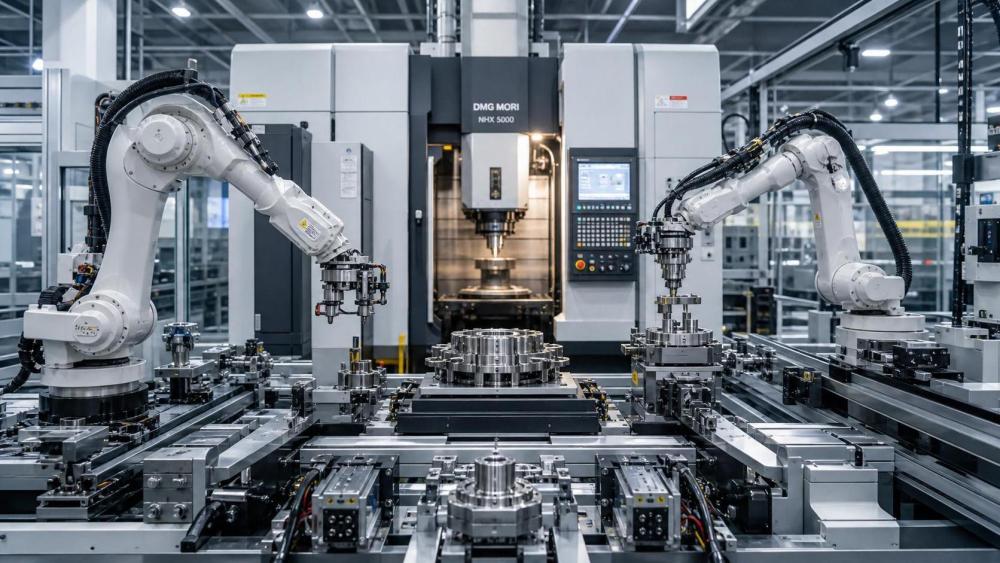
That may involve pick-and-place robots, CNC feed axes, automated inspection stages, printing lines, or synchronized conveyors.
The common thread is not prestige.
It is controlled motion under changing conditions, where poor response directly creates defects, rework, vibration, or lost cycle time.
A useful reminder is that a high-resolution encoder alone does not create a precision system.
The gearbox, coupling, load inertia, frame rigidity, and software tuning can decide the final result.
Which applications benefit most, and where is it usually over-specified?
The best candidates are applications where motion error has a visible financial consequence.
That consequence may be scrap, missed tolerance, unstable quality, collision risk, or excessive wear.
Precision servo motion systems tend to justify themselves in these cases:
- Multi-axis robotics that require coordinated path accuracy at production speed.
- CNC, laser, and cutting systems where positioning error becomes material loss.
- Packaging and converting lines where registration drift causes waste and stoppages.
- Automated assembly where repeated micro-errors reduce fit quality or downstream yield.
- Inspection, dispensing, and electronics processes with tight repeatability windows.
More common over-specification appears in simple conveyors, low-speed positioning, or rugged duties with wide process tolerance.
In those cases, stronger environmental protection or service simplicity may matter more than extreme precision.
The table below helps separate real need from specification inflation.
How should cost be judged beyond the purchase price?
This is where many decisions become distorted.
Precision servo motion systems cost more upfront, but the real comparison is lifecycle economics.
A lower-priced system can become expensive if it causes tuning delays, replacement failures, or unstable production.
A higher-priced system can also disappoint if the process never uses the extra capability.
The strongest business case usually comes from four measurable areas.
- Yield improvement: fewer rejects, tighter cut quality, better registration, or more consistent assembly.
- Output gain: shorter settling time, faster indexing, and less manual adjustment between batches.
- Maintenance reduction: lower vibration, gentler starts and stops, and less stress on bearings and couplings.
- Downtime control: better diagnostics, easier parameter backup, and stronger compatibility with automation platforms.
In large equipment investments, IEG often frames value in terms of productive asset performance, not isolated component price.
That approach is useful here.
A servo system should be reviewed as part of machine utilization, spare parts planning, training needs, and expected service life.
If one hour of downtime is costly, support quality and replacement lead time matter almost as much as accuracy.
What should be compared before selecting a supplier or platform?
The safest approach is to compare complete motion capability, not brochure headlines.
In actual projects, several checks reveal whether precision servo motion systems will perform as promised.
Key comparison points
- Required positioning accuracy versus real repeatability under load.
- Inertia matching, torque margin, and overload handling during peak duty.
- Encoder type, feedback quality, and resistance to electrical noise.
- Integration with PLCs, robot controllers, safety systems, and industrial networks.
- Diagnostic tools, parameter backup, remote support, and commissioning workflow.
- Local spare parts access and long-term continuity of the product family.
It is also worth asking for performance evidence from similar loads, speeds, and environmental conditions.
A successful result in a lab demo does not always transfer to dusty plants, thermal variation, or heavy cyclic shock.
For internationally sourced equipment, support documentation and service responsiveness should be checked early.
That fits the broader industrial reality IEG tracks across global manufacturing supply chains.
What are the common mistakes that weaken return on investment?
The biggest mistake is buying precision servo motion systems to solve a process problem that is actually mechanical.
Loose frames, backlash, poor alignment, and unstable loads can erase the value of better controls.
Another frequent issue is focusing on maximum accuracy while ignoring implementation cost.
Complex tuning, operator retraining, or controller changes can extend payback longer than expected.
There is also a tendency to underweight environmental factors.
Heat, contamination, vibration, and power quality can reduce motion stability or shorten component life.
One more risk sits in poor KPI definition.
If the project starts without clear targets for scrap reduction, throughput, or downtime, value becomes hard to prove.
A short validation checklist helps avoid that:
- Confirm the process loss that higher precision is expected to remove.
- Separate control limitations from mechanical limitations before specifying upgrades.
- Estimate commissioning time, training effort, and spare parts strategy.
- Define acceptable payback using production and maintenance data, not assumptions.
So, when should precision servo motion systems move to the top of the shortlist?
They deserve priority when precision directly protects margin.
That includes high-value materials, demanding tolerances, synchronized multi-axis motion, and production lines where instability creates recurring loss.
They also rise in importance when lifecycle visibility matters.
Better diagnostics, stronger repeatability, and lower mechanical stress can support a more reliable asset strategy over time.
The practical next step is to map one application in detail.
List the current losses, required motion performance, integration constraints, and service expectations.
Then compare precision servo motion systems against standard alternatives using the same operating assumptions.
That creates a decision based on output, risk, and lifecycle cost, not specification appeal.
In a market where industrial equipment choices increasingly affect long-term competitiveness, that is the comparison that matters.
Related News
 What is driving consolidation in the global equipment supplier market?IEG Heavy Machinery & Automation AnalystGlobal equipment supplier market consolidation is accelerating through technology, service, and supply-chain demands. Discover how buyers can capture value while managing risk.
 When does capital equipment investment pay back in manufacturing?IEG Heavy Machinery & Automation AnalystCapital equipment investment manufacturing: learn when equipment truly pays back by evaluating full costs, cash flow, ramp-up, operational risks, and lifecycle value.
 When does a distribution center need an automated pallet handling system?Heavy Lifting Systems AnalystPallet handling systems help distribution centers overcome labor shortages, bottlenecks, safety risks, and storage constraints. Discover the key signs it’s time to automate.
 How to build a machinery investment plan around payback periodIEG Heavy Machinery & Automation AnalystMachinery investment planning manufacturing guide: build a credible payback plan with full costs, ramp-up assumptions, lifecycle risks, and scenario-based cash benefits.
 How to Specify a Modular Packaging Line for Fast Changeovers and Scalable OutputRobotics EngineerModular packaging line specification guide: achieve faster changeovers, scalable output, reliable controls, and lower lifecycle costs with practical planning.
 How industrial IoT devices reduce unplanned downtime in factoriesRobotics EngineerIndustrial IoT devices help factories detect early equipment issues, plan maintenance, and reduce costly unplanned downtime before production is disrupted.
 What is driving industrial machinery market demand in manufacturing?IEG Heavy Machinery & Automation AnalystIndustrial machinery market manufacturing demand is rising as factories pursue automation, energy efficiency, resilient supply chains, and lifecycle productivity gains.
 316L Stainless Steel Pipe Tube Technical Factors That Shape Buyer DecisionsCNC Machining AnalystA technical analysis for 316L stainless steel pipe tube buyers, covering corrosion expectations, pipe route choice, tolerance, surface, and inspection.
 How ground conditions determine crawler piling equipment selectionConstruction Equipment SpecialistCrawler piling equipment selection starts with ground conditions. Learn how soil, rock, groundwater and site constraints shape safer, more productive piling solutions.
 3300mm CNC Beam Saw Sheet Capacity: Layout Checks Before PurchaseCNC Machining AnalystZhongding ZD330 beam saw specifications: assess 3300mm sheet capacity, layout clearances, handling flow, and acceptance checks before buying.
 How Bucket Chain Diamond Dredgers Meet ISO 12100 Safety Requirements in Alluvial Mining ProjectsMining Infrastructure ExpertBucket chain diamond dredger safety made real: how ISO 12100 compliance ensures operator protection, reliability & zero lost-time injuries in alluvial mining.
 Modular Packaging for High-Mix Automotive Assembly Lines: How Standardized Load Units Reduce Line Changeover Time by 37% — Case Study from Tier-1 Supplier in GuangdongHeavy Lifting Systems AnalystModular packaging slashes automotive line changeover time by 37%—discover how standardized load units boost OEE, cut labor costs, and enable seamless high-mix assembly.