Robotic Welding Cells Price: Cost Drivers and ROI Benchmarks




Robotic Welding Cells Price: Cost Drivers and ROI Benchmarks
Understanding robotic welding cells price is no longer just a sourcing task. It is a capital investment decision with long-term operating impact.
The first number on a quotation rarely tells the full story. System design, output targets, labor savings, maintenance, and uptime usually shape the real return.
In practical terms, finance teams need a framework. They must compare robotic welding cells price against production capacity, defect reduction, and asset life.
That is where cost drivers and ROI benchmarks matter. A clearer cost model usually leads to faster approval and fewer surprises after installation.
What Shapes Robotic Welding Cells Price

Robotic welding cells price can vary widely. A basic single-station setup may start around US$80,000 to US$150,000.
A mid-range production cell often lands between US$150,000 and US$350,000. Larger integrated systems can exceed US$500,000.
The spread is large because the robot itself is only one part of the investment. Tooling, fixtures, controls, and integration usually decide the final number.
Core hardware costs
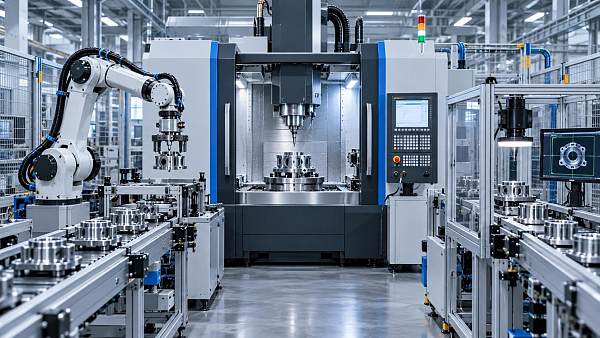
The robot arm, power source, torch package, positioner, and safety enclosure form the hardware base. Higher payload and reach increase cost quickly.
If the application needs dual-station loading or heavy part rotation, the robotic welding cells price moves up further.
Fixture complexity
Fixtures are often underestimated during budgeting. Tight tolerances, part variation, and fast changeovers make fixtures more expensive than expected.
For mixed-product manufacturing, modular tooling may improve flexibility. However, it adds to robotic welding cells price at the front end.
Controls and software
Offline programming, seam tracking, machine vision, and data monitoring add value. They also add cost, especially when custom integration is required.
This matters because advanced controls can shorten commissioning and improve quality. In some plants, that offsets a higher robotic welding cells price.
Hidden Costs That Change the Budget
Quoted system price is only part of total project cost. Capital approval usually fails when indirect costs are left outside the business case.
In actual projects, these hidden items can add 15% to 40% above the listed robotic welding cells price.
- Site preparation, including floor reinforcement, power supply, compressed air, and fume extraction.
- Installation and commissioning, especially when line downtime must be tightly managed.
- Operator and maintenance training for safe startup and stable long-term use.
- Spare parts, consumables, torch maintenance kits, and preventive service contracts.
- Production ramp-up losses during debugging, qualification, and welding parameter optimization.
More clearly, the useful comparison is total installed cost, not brochure price. That gives a better basis for evaluating robotic welding cells price.
It also helps avoid a common mistake. A cheaper cell may create higher downtime, higher scrap, or slower cycle times later.
Main ROI Drivers Behind Robotic Welding Cells Price
A sound ROI model links robotic welding cells price to measurable operating gains. The strongest gains usually come from labor, throughput, and quality.
1. Direct labor reduction
This is the most visible driver. One automated cell can reduce dependence on multiple skilled welders across shifts.
Savings should include wages, overtime, recruitment pressure, absenteeism exposure, and the cost of hard-to-fill positions.
2. Throughput improvement
Robots can run more consistently and support longer production windows. That improves output predictability and order fulfillment.
When demand is strong, extra capacity can justify a higher robotic welding cells price better than labor savings alone.
3. Scrap and rework reduction
Consistent weld path control lowers defect rates. This matters more when parts are high value or when rework delays downstream assembly.
Quality gains should be measured in material waste, repair hours, customer claims, and delayed shipment risk.
4. Uptime and schedule stability
A reliable automated cell can reduce variation between shifts. It also lowers exposure to manual skill inconsistency.
For many factories, schedule stability is a hidden financial benefit. It supports inventory control and protects delivery performance.
Typical ROI Benchmarks for Approval Decisions
There is no universal payback number. Still, several practical benchmarks are widely used when reviewing robotic welding cells price.
In many organizations, an acceptable payback target falls below 24 or 30 months. Beyond that, approval gets harder unless strategic value is strong.
That strategic value may include labor shortage risk, customer quality requirements, or the need to win larger contracts.
So the right way to read robotic welding cells price is through expected utilization. Underused systems rarely meet benchmark returns.
How to Compare Supplier Quotes More Accurately
Supplier quotations often look comparable on the surface. In reality, different scope definitions can distort robotic welding cells price significantly.
A disciplined comparison process reduces that risk and improves procurement decisions.
- Request a clear equipment scope, including robot brand, power source, positioners, guarding, sensors, and software licenses.
- Separate base system cost from integration, tooling, training, and commissioning.
- Ask for target cycle time, uptime assumption, and part family coverage.
- Confirm warranty terms, spare parts lead time, and local technical support availability.
- Model total cost over five to seven years, not only purchase year expense.
This kind of quote normalization makes robotic welding cells price far more meaningful. It also exposes where low bids may carry execution risk.
Common Approval Risks and How to Handle Them
Even strong projects can stall when assumptions are weak. Most approval problems come from incomplete operating data or inflated utilization estimates.
Risk: utilization is overstated
If the cell runs below expected volume, payback stretches quickly. Build the model using conservative load assumptions and actual shift schedules.
Risk: part variation is ignored
Inconsistent incoming parts can slow automation and increase rework. Review upstream fabrication quality before approving robotic welding cells price.
Risk: after-sales support is undervalued
Low service responsiveness can erase expected savings. Service depth should be treated as a financial factor, not just a technical preference.
From a budgeting view, robotic welding cells price should always be tied to execution readiness. A cheaper purchase can become an expensive deployment.
A Practical Way to Build the Business Case
A workable approval case should stay simple and evidence-based. It does not need unrealistic precision to support a sound capital decision.
- Start with total installed robotic welding cells price.
- Subtract annual maintenance, consumables, and support costs.
- Add labor savings, defect reduction, and capacity gains.
- Stress-test the model at lower utilization levels.
- Review payback, internal rate of return, and downside exposure.
This approach keeps the discussion grounded. It turns robotic welding cells price from a procurement number into a performance investment model.
In the current market, the strongest proposals are usually the ones that connect cost, output, and operating reliability in one picture.
That is the practical benchmark to use. Evaluate robotic welding cells price against measurable production value, then approve the system that can sustain returns.
Related News
 What is driving consolidation in the global equipment supplier market?IEG Heavy Machinery & Automation AnalystGlobal equipment supplier market consolidation is accelerating through technology, service, and supply-chain demands. Discover how buyers can capture value while managing risk.
 When does capital equipment investment pay back in manufacturing?IEG Heavy Machinery & Automation AnalystCapital equipment investment manufacturing: learn when equipment truly pays back by evaluating full costs, cash flow, ramp-up, operational risks, and lifecycle value.
 When does a distribution center need an automated pallet handling system?Heavy Lifting Systems AnalystPallet handling systems help distribution centers overcome labor shortages, bottlenecks, safety risks, and storage constraints. Discover the key signs it’s time to automate.
 How to build a machinery investment plan around payback periodIEG Heavy Machinery & Automation AnalystMachinery investment planning manufacturing guide: build a credible payback plan with full costs, ramp-up assumptions, lifecycle risks, and scenario-based cash benefits.
 How to Specify a Modular Packaging Line for Fast Changeovers and Scalable OutputRobotics EngineerModular packaging line specification guide: achieve faster changeovers, scalable output, reliable controls, and lower lifecycle costs with practical planning.
 How industrial IoT devices reduce unplanned downtime in factoriesRobotics EngineerIndustrial IoT devices help factories detect early equipment issues, plan maintenance, and reduce costly unplanned downtime before production is disrupted.
 What is driving industrial machinery market demand in manufacturing?IEG Heavy Machinery & Automation AnalystIndustrial machinery market manufacturing demand is rising as factories pursue automation, energy efficiency, resilient supply chains, and lifecycle productivity gains.
 316L Stainless Steel Pipe Tube Technical Factors That Shape Buyer DecisionsCNC Machining AnalystA technical analysis for 316L stainless steel pipe tube buyers, covering corrosion expectations, pipe route choice, tolerance, surface, and inspection.
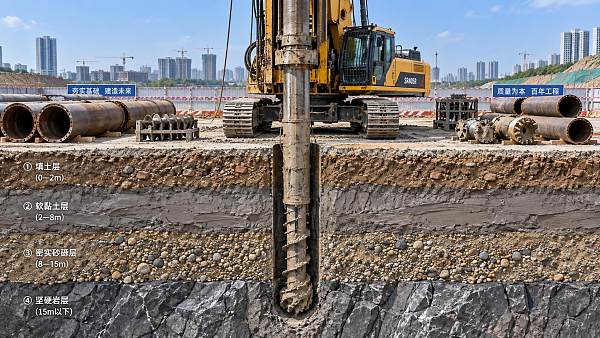
 How ground conditions determine crawler piling equipment selectionConstruction Equipment SpecialistCrawler piling equipment selection starts with ground conditions. Learn how soil, rock, groundwater and site constraints shape safer, more productive piling solutions.
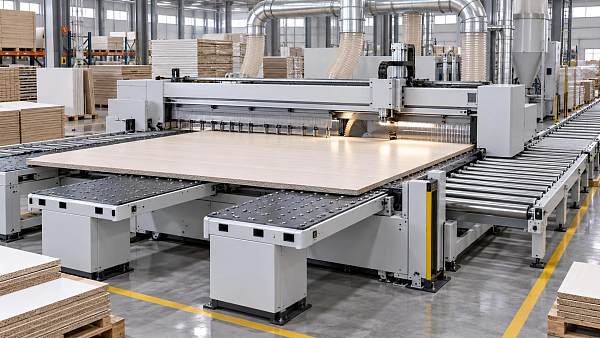
 3300mm CNC Beam Saw Sheet Capacity: Layout Checks Before PurchaseCNC Machining AnalystZhongding ZD330 beam saw specifications: assess 3300mm sheet capacity, layout clearances, handling flow, and acceptance checks before buying.
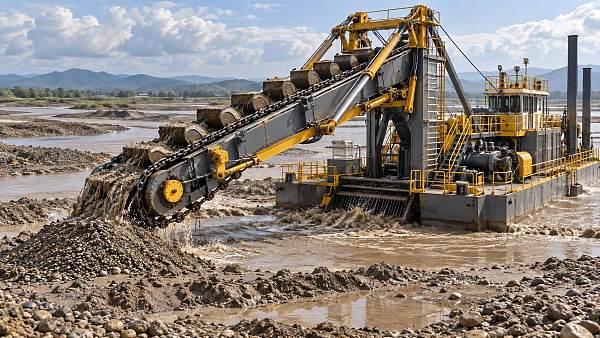
 How Bucket Chain Diamond Dredgers Meet ISO 12100 Safety Requirements in Alluvial Mining ProjectsMining Infrastructure ExpertBucket chain diamond dredger safety made real: how ISO 12100 compliance ensures operator protection, reliability & zero lost-time injuries in alluvial mining.
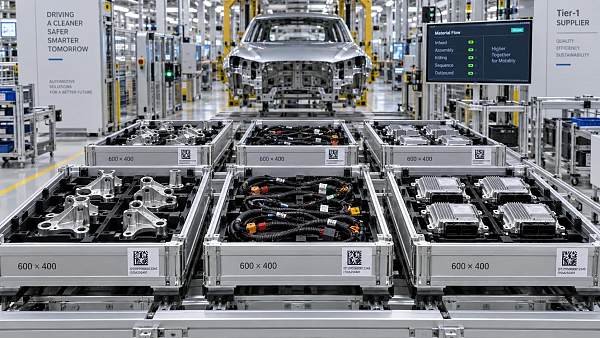
 Modular Packaging for High-Mix Automotive Assembly Lines: How Standardized Load Units Reduce Line Changeover Time by 37% — Case Study from Tier-1 Supplier in GuangdongHeavy Lifting Systems AnalystModular packaging slashes automotive line changeover time by 37%—discover how standardized load units boost OEE, cut labor costs, and enable seamless high-mix assembly.