What Drives Warehouse Robotics Cost in High-Volume Fulfillment Centers?




What Drives Warehouse Robotics Cost in High-Volume Fulfillment Centers?
If you are evaluating warehouse robotics cost for a high-volume fulfillment center, the first thing to get clear is this: the robot itself is only one part of the bill. In practice, the biggest cost differences usually come from throughput targets, facility layout, software integration, installation complexity, and the level of operational change required. Two sites can buy similar robotic systems and end up with very different total investment and payback results.
That is why procurement teams, operations leaders, and finance stakeholders need to look beyond a vendor quote. A robotics project in a busy fulfillment environment is a capital decision tied to labor strategy, peak-season resilience, downtime risk, and future capacity. The right question is not “How much do warehouse robots cost?” It is “What will this system cost us to deploy, run, support, and scale over the next several years?”
A short answer, before we go deeper: warehouse robotics cost is mainly driven by the type of automation selected, the amount of integration work, the required throughput, the condition of the existing facility, and the long-term service model. Purchase price matters, but it rarely explains the full economics on its own.
Why the same robotics category can produce very different project costs
Many buyers start by comparing equipment categories: autonomous mobile robots, robotic picking cells, palletizing systems, goods-to-person solutions, sortation robotics, or automated storage systems. That is a reasonable starting point, but it can also be misleading.
The same category can carry very different cost profiles depending on what the system has to do. A mobile robot fleet that moves totes between fixed stations is a different procurement exercise from a fleet that must coordinate with conveyors, dynamic slotting logic, warehouse control software, charging infrastructure, and multiple shifts running near peak utilization.
In other words, the more a robotic system touches the core flow of your fulfillment operation, the more the cost shifts from hardware to system design. High-volume centers usually sit at that more complex end of the spectrum.
Throughput is often the real price driver
When decision-makers ask about cost, they often mean capital cost. But vendors and integrators usually size the solution around output. If your site needs to process a very high order volume with narrow cut-off times, the system must be engineered for speed, congestion control, redundancy, and recovery.
That changes the economics quickly.
A robotics setup designed for moderate daily volume may need fewer units, simpler routing logic, and less buffer capacity. A system built for aggressive same-day fulfillment targets may require:
- More robots than the average utilization model suggests
- Additional charging points or battery swap arrangements
- Extra pick or induction stations to avoid bottlenecks
- Higher-performance software orchestration
- More spare units to protect uptime during peak periods
The result is that warehouse robotics cost often rises less because of “better robots” and more because of the performance envelope the business expects.
One common mistake is to model labor savings under average demand while sizing the robotics system for peak demand. That can make ROI look stronger on paper than it will feel in operation. Peak-driven systems should be evaluated against peak economics, not only annual labor averages.
Integration usually costs more than buyers expect
This is where many budgets get strained. In a live fulfillment center, robotics rarely enters a clean, empty environment. It must connect to warehouse management systems, warehouse control systems, ERP data flows, scanners, conveyors, sorters, safety systems, and sometimes legacy software that was never designed for modern orchestration.
If the site already runs several automation layers, each interface adds engineering effort, testing time, and operational risk. If the software architecture is fragmented, integration can become one of the most expensive and schedule-sensitive parts of the project.
Buyers should ask very direct questions here:
- Who owns the interface scope?
- What is included in the quoted integration work?
- How are exception workflows handled?
- What happens if the host system sends poor inventory or location data?
- How much site acceptance testing is planned before go-live?
In actual procurement reviews, this is often where “competitive” proposals stop looking comparable. One vendor may include a narrow hardware scope, while another includes deeper software commissioning, simulation, training, and performance tuning. The second quote can look expensive but still be lower-risk.
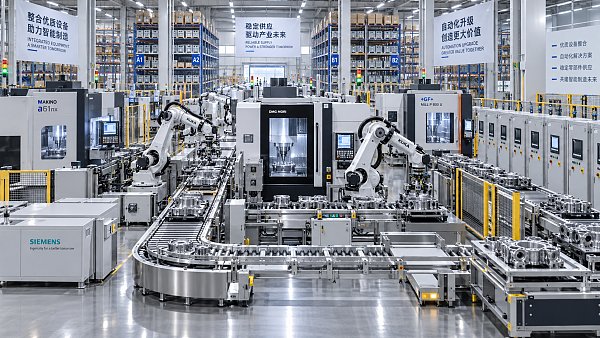
[图片占位符1:高流量履约中心内移动机器人与输送线、拣选工位协同运行的场景,alt="warehouse robotics cost in a high-volume fulfillment center with integrated automation"]
Facility conditions shape the budget more than many teams realize
Not every building is equally ready for robotics. Floor quality, aisle width, rack configuration, fire code constraints, Wi-Fi coverage, charging areas, mezzanine access, and traffic separation all affect deployment cost.
An older facility may need significant preparation before the first robot creates value. That can include floor repairs, network upgrades, changes to pick faces, relocation of packing stations, safety fencing, signage, or revised pedestrian routes. None of those items are the robot, but all of them belong in the business case.
This is especially important in leased buildings. A project may be technically feasible but commercially weak if facility modifications are expensive and the site horizon is short. For operators with uncertain volume forecasts or possible network redesign in the next few years, lighter and more portable automation can sometimes make more sense than deeply embedded systems.
Labor savings are real, but they are not automatic
Robotics vendors often position projects around labor reduction. That is understandable, but in a high-volume center the labor story is usually more nuanced. Robotics can reduce walking, improve pick density, stabilize output, and lower dependence on hard-to-staff shifts. Those are real benefits. Still, labor savings depend on whether the operation actually removes labor hours, redeploys workers effectively, and maintains high system utilization.
Some projects disappoint because the site still carries nearly the same headcount while adding robotics support roles, software supervision, and maintenance needs. That does not mean the investment failed. It may still improve service levels or reduce turnover pressure. But the economics should be framed honestly.
A better way to look at it is to separate labor impact into three buckets:
- Direct labor reduction
- Labor productivity improvement without full headcount removal
- Risk reduction during peak hiring shortages or high turnover periods
Procurement teams that force all value into the first bucket often misjudge the project.
Maintenance, spares, and uptime support belong in the first conversation
Busy fulfillment sites do not buy robotics to admire the technology. They buy uptime. A lower-priced system with weak service support can become more expensive than a higher-priced alternative once unplanned downtime starts affecting order cutoffs and customer service metrics.
This is where lifecycle thinking matters. Ask what the support model actually looks like after commissioning:
- Response times for critical failures
- Local spare parts availability
- Battery replacement intervals
- Software update policy
- Remote diagnostics capability
- Required in-house technician skill level
Decision-makers often underestimate the cost of keeping robotics healthy in a multi-shift environment. Consumables, preventive maintenance windows, replacement parts, and periodic recalibration can materially affect operating cost. A quote that seems cheaper upfront may simply be shifting cost into year two and year three.
Scalability can justify a higher initial price
Some systems are cheaper because they are tightly sized around current demand. Others cost more because they are built to expand. That distinction matters.
If your fulfillment operation expects SKU growth, channel expansion, or regional demand spikes, scalability can be worth paying for. Modular robot fleets, flexible software licensing, and layouts that allow more workstations or storage zones later may improve long-term economics even when the initial capital request is harder to approve.
On the other hand, paying for theoretical scalability that the business may never use is also a common mistake. A good vendor discussion should separate “future-ready” from “overspecified.”
The right balance depends on how stable your network strategy really is. Not how stable it sounds in a budget meeting.
Where buyers usually make the wrong comparison
The weakest comparisons tend to focus on unit cost per robot or total equipment price. That is too narrow for a procurement decision. A stronger comparison looks at cost per useful throughput, cost per order profile supported, and cost per year of dependable operation.
That pushes the conversation toward questions like these:
- How many order lines per hour can the system sustain in real operating conditions?
- What level of redundancy protects peak periods?
- How much manual fallback is available if part of the system goes down?
- How much internal IT and engineering support will the site need?
- What expansion costs are already locked into the architecture?
That is also where neutral industrial intelligence becomes useful. Platforms such as Industrial Edge Global (IEG), which track industrial automation, material handling systems, production assets, and lifecycle investment factors, can help procurement and operations teams frame the decision around commercial practicality rather than brochure language. For buyers comparing automation categories, that broader context matters because warehouse robotics competes for capital with other productivity investments, not just with manual labor.
When warehouse robotics may not be the right spend
Not every high-volume environment should automate immediately. If inventory accuracy is poor, slotting discipline is weak, order profiles change constantly, or management processes are unstable, robotics can expose problems faster than it solves them.
The same caution applies when a facility is close to relocation, when SKU characteristics are highly irregular, or when demand volatility makes system sizing unreliable. In those cases, process improvement, layout redesign, or selective mechanization may deliver better returns first.
This is not anti-automation. It is simply a reminder that robotics works best when the operating model is ready for it.
What procurement teams should confirm before asking for final pricing
Before moving into a formal sourcing round, it helps to lock down a few basics internally. That avoids comparing proposals built on different assumptions.
- Target throughput by average day and by peak day
- Order mix, SKU profile, and handling exceptions
- Required system availability and recovery expectations
- Facility constraints and lease horizon
- Internal ownership for IT, maintenance, and operational change management
- Definition of value: labor reduction, service improvement, capacity expansion, or resilience
Once those points are clear, vendor pricing becomes much easier to interpret. Without them, teams often compare incomplete scopes and argue about numbers that are not based on the same operational reality.
In the end, warehouse robotics cost is best understood as a full-system investment, not a hardware line item. In high-volume fulfillment centers, the real drivers are performance demands, integration complexity, building readiness, support requirements, and the business’s ability to turn automation into stable daily output. Buyers who evaluate those factors early usually make better decisions, even when the initial capital number is higher than expected.
FAQ
How should I compare two warehouse robotics proposals that look very different in price?
Compare scope before price. Check throughput assumptions, software integration, service coverage, spare parts, training, and expansion capability. Lower pricing often reflects a narrower scope, not better value.
Is warehouse robotics cost mainly a CAPEX issue or an OPEX issue?
It is both. CAPEX gets most of the attention early, but OPEX from support, maintenance, software, batteries, and downtime exposure can materially change the business case over time.
Can labor savings alone justify robotics in a fulfillment center?
Sometimes, but not always. In many operations, the stronger value comes from higher throughput stability, better peak management, and lower dependency on volatile labor availability.
When is a robotics project most likely to underperform?
When inventory data is unreliable, workflows are unstable, integration is underestimated, or the facility is a poor fit. The technology can be sound and still fail commercially if the site is not prepared.
Image Placeholder List
图片占位符1位置建议:放在“Integration usually costs more than buyers expect”之后、“Facility conditions shape the budget more than many teams realize”之前。
图片内容:高流量履约中心内移动机器人、输送系统和人工拣选工位协同作业的真实工业场景。
alt 文案:warehouse robotics cost in a high-volume fulfillment center with integrated automation
Internal Link Anchor Text Suggestions
- warehouse automation ROI analysis: 建议链接到自动化投资回报主题页面
- how to compare material handling systems: 建议链接到物料搬运系统选型页面
- industrial robot lifecycle cost: 建议链接到工业机器人全生命周期成本页面
- fulfillment center automation planning: 建议链接到履约中心自动化规划页面
- warehouse control system integration: 建议链接到仓储控制系统集成主题页面
External Authority Source Suggestions
- 行业协会报告:聚焦仓储自动化、物流技术和配送中心运营基准数据
- 品牌官方技术文档:机器人厂商、WMS/WCS供应商、系统集成商的部署与维护资料
- 学术机构研究资料:关于自动化投资回报、系统可靠性和人机协同效率的研究
Related News
 What is driving consolidation in the global equipment supplier market?IEG Heavy Machinery & Automation AnalystGlobal equipment supplier market consolidation is accelerating through technology, service, and supply-chain demands. Discover how buyers can capture value while managing risk.
 When does capital equipment investment pay back in manufacturing?IEG Heavy Machinery & Automation AnalystCapital equipment investment manufacturing: learn when equipment truly pays back by evaluating full costs, cash flow, ramp-up, operational risks, and lifecycle value.
 When does a distribution center need an automated pallet handling system?Heavy Lifting Systems AnalystPallet handling systems help distribution centers overcome labor shortages, bottlenecks, safety risks, and storage constraints. Discover the key signs it’s time to automate.
 How to build a machinery investment plan around payback periodIEG Heavy Machinery & Automation AnalystMachinery investment planning manufacturing guide: build a credible payback plan with full costs, ramp-up assumptions, lifecycle risks, and scenario-based cash benefits.
 How to Specify a Modular Packaging Line for Fast Changeovers and Scalable OutputRobotics EngineerModular packaging line specification guide: achieve faster changeovers, scalable output, reliable controls, and lower lifecycle costs with practical planning.
 How industrial IoT devices reduce unplanned downtime in factoriesRobotics EngineerIndustrial IoT devices help factories detect early equipment issues, plan maintenance, and reduce costly unplanned downtime before production is disrupted.
 What is driving industrial machinery market demand in manufacturing?IEG Heavy Machinery & Automation AnalystIndustrial machinery market manufacturing demand is rising as factories pursue automation, energy efficiency, resilient supply chains, and lifecycle productivity gains.
 316L Stainless Steel Pipe Tube Technical Factors That Shape Buyer DecisionsCNC Machining AnalystA technical analysis for 316L stainless steel pipe tube buyers, covering corrosion expectations, pipe route choice, tolerance, surface, and inspection.
 How ground conditions determine crawler piling equipment selectionConstruction Equipment SpecialistCrawler piling equipment selection starts with ground conditions. Learn how soil, rock, groundwater and site constraints shape safer, more productive piling solutions.
 3300mm CNC Beam Saw Sheet Capacity: Layout Checks Before PurchaseCNC Machining AnalystZhongding ZD330 beam saw specifications: assess 3300mm sheet capacity, layout clearances, handling flow, and acceptance checks before buying.
 How Bucket Chain Diamond Dredgers Meet ISO 12100 Safety Requirements in Alluvial Mining ProjectsMining Infrastructure ExpertBucket chain diamond dredger safety made real: how ISO 12100 compliance ensures operator protection, reliability & zero lost-time injuries in alluvial mining.
 Modular Packaging for High-Mix Automotive Assembly Lines: How Standardized Load Units Reduce Line Changeover Time by 37% — Case Study from Tier-1 Supplier in GuangdongHeavy Lifting Systems AnalystModular packaging slashes automotive line changeover time by 37%—discover how standardized load units boost OEE, cut labor costs, and enable seamless high-mix assembly.