When do discrete automation systems outperform continuous control?




Discrete automation systems outperform continuous control when the production task is defined by events, states, positions, counts, and decisions rather than by an uninterrupted physical variable. If a machine must detect a part, clamp it, perform an operation, verify the result, reject a fault, and record the cycle, discrete control is usually the clearer and more maintainable choice. The advantage becomes stronger when product variants, traceability, coordinated motion, or frequent changeovers matter.
The comparison is often framed too broadly. This is not a contest between “modern” and “traditional” automation. A well-designed continuous control loop is indispensable for many processes. The real question is whether the dominant production risk comes from managing a variable such as temperature, pressure, flow, speed, or level, or from managing the sequence of physical actions that moves a product through a machine.
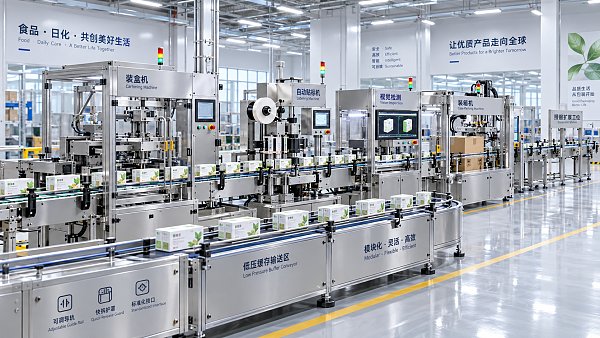
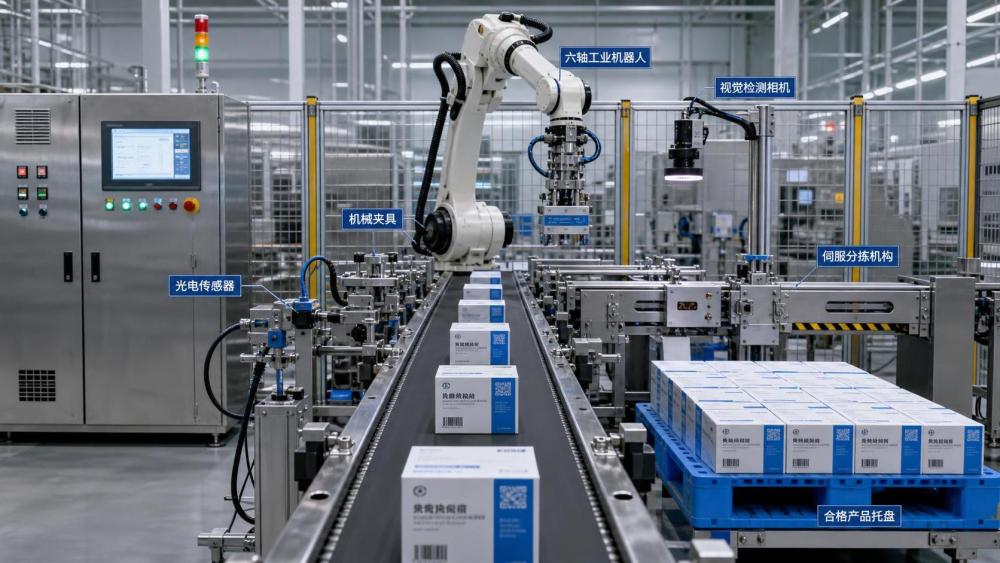
A packaging line offers a useful example. Maintaining oven temperature may require continuous PID control. Feeding cartons, checking barcode orientation, synchronizing a pick-and-place unit, confirming seal presence, and diverting failed packs are discrete tasks. The most effective machine may use both approaches, but its production logic is still primarily discrete.
Where discrete automation systems have the stronger fit
Discrete control is built around distinct conditions: on or off, present or absent, open or closed, pass or fail, at position or not at position. Programmable logic controllers, safety controllers, industrial robots, machine vision systems, servo drives, sensors, and human-machine interfaces commonly work together in this environment.
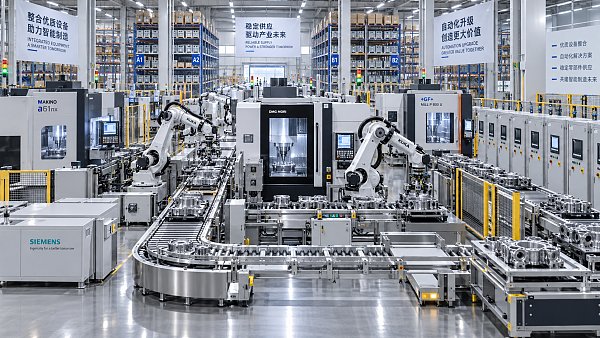
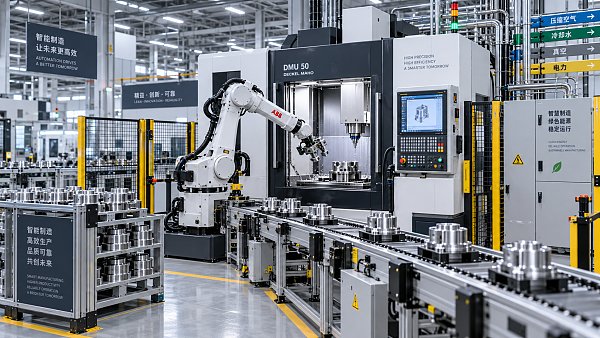
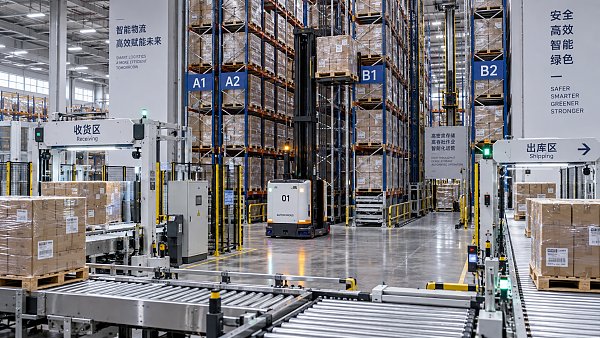
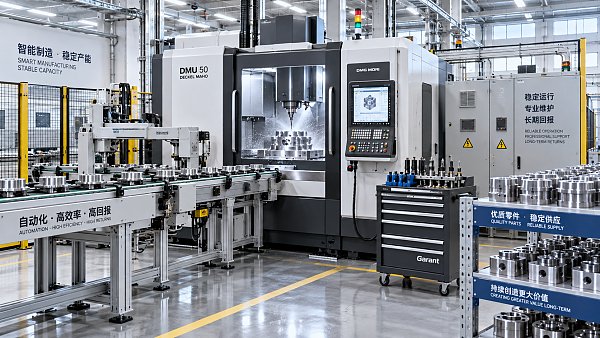
Its strongest applications are usually found in assembly, machining cells, palletizing, warehousing, conveyor systems, filling and packaging equipment, intralogistics, test stations, and material handling. These systems need to coordinate individual products or workpieces, not merely keep a physical process near a setpoint.
The direct answer is simple: choose discrete automation when success depends on executing repeatable machine states, responding to sensor events, handling unit-level variation, and proving what happened to each item. Choose continuous control when the central job is keeping a changing physical process stable within a required operating range.
That distinction sounds obvious, yet many projects become difficult because the specification describes equipment rather than control behavior. A request for “higher automation” says little. A request for a system that must identify each workpiece, select one of six assembly recipes, prevent incorrect component installation, log torque results, and recover safely after a stopped conveyor is specific enough to guide architecture.
The operational conditions that change the decision
Product complexity is often the first deciding factor. A single-product line with a fixed mechanical sequence may run reliably with relatively simple relay or PLC logic. Once several product variants share the same equipment, the need changes. Recipes, barcode or RFID identification, vision-based verification, variant-specific motion profiles, and error-proofing become central. Discrete automation systems handle this kind of branching logic naturally.
Consider an assembly station producing left-hand and right-hand versions of a component. The mechanical work may be nearly identical, but the required fastener, torque setting, orientation, inspection rule, and release condition can differ. Continuous control can regulate a motor speed or pneumatic pressure within that station, but it is not the tool that decides which sequence may run or whether the completed unit is valid.
Traceability creates a similar dividing line. If the plant only needs aggregate production totals, the data model can remain simple. If it must associate a serial number with a batch, tool result, operator action, vision image, rework history, or inspection outcome, the control system needs reliable event handling and data exchange. The system should record an event at the correct point in the cycle, avoid duplicate records during recovery, and make it clear when data cannot be written. Those details matter more than a dashboard demonstration.
High throughput does not automatically favor one approach. People sometimes assume discrete control is only suited to slower, step-by-step machines. In practice, a fast packaging or sorting operation can involve tightly coordinated motion, high-speed counters, deterministic communications, electronic camming, and vision inspection. The deciding question is whether the throughput limit is caused by the sequencing and movement of individual units or by the dynamics of a continuously changing process.
When the workpiece must be indexed, oriented, picked, measured, assembled, tested, and routed, a discrete architecture can reduce ambiguity. Every transition has a known condition, each interlock can be reviewed, and faults can be tied to a precise machine state. This makes commissioning and later troubleshooting substantially easier than trying to represent event-driven behavior through an unsuitable process-control model.
Continuous control remains the right answer for process stability
Discrete logic does not replace continuous control where process physics dominates. A furnace needs stable temperature control. A chemical process may depend on accurate flow, pressure, pH, concentration, and vessel level. A hydraulic system may require closed-loop pressure or position regulation. These conditions are measured continuously and typically demand control algorithms that respond to deviation from a target value.
In such cases, turning an actuator on and off according to thresholds may create oscillation, uneven quality, wasted energy, or equipment stress. A continuous loop can regulate the process smoothly, while alarms and permissives provide the discrete protection layer around it.
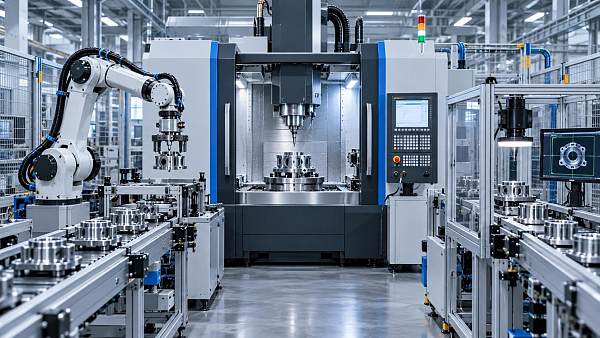
There is also a middle ground. A batch reactor may use continuous loops to regulate temperature and pressure while discrete sequencing controls ingredient addition, mixing stages, hold times, cleaning cycles, and operator approvals. A CNC machine uses continuous servo control to manage axis motion, but the tool-change sequence, pallet transfer, part clamping, and production reporting are discrete functions. Good system selection recognizes this hybrid reality instead of forcing the entire plant into one category.
What to assess before approving a control architecture
Start with the production sequence, not the vendor catalog. Map the normal cycle, the variant paths, expected fault states, manual operations, restart procedure, quality checks, and required records. This exercise frequently reveals that a project described as a “conveyor upgrade” is actually a sequencing, safety, and traceability project.
A practical assessment should answer these questions:
- What are the individual events that start, stop, release, reject, or divert a unit?
- How many product variants, recipes, packaging formats, or routing rules must the machine manage?
- Which actions require confirmation from sensors, vision, torque tools, scanners, or operators?
- What happens when a part is missing, a scan fails, a guard opens, a drive faults, or a network connection drops?
- Can production restart from a defined state without losing product identity or creating duplicate records?
- Which data must remain local for machine operation, and which data must reach MES, quality, warehouse, or enterprise systems?
The restart question deserves particular attention. A system may look impressive during a clean demonstration and still create costly disruption after a jam or power interruption. In a robust discrete design, the recovery procedure is intentional: retained states are defined, product positions are reconciled, unsafe actions are blocked, and the operator receives a useful instruction rather than a generic fault number.
Safety is another area where an apparently small control decision can have wide consequences. Safety functions should be designed from the assessed hazards and validated against the applicable project requirements. A standard PLC sequence should not be treated as a substitute for the appropriate safety architecture. The exact performance requirements, devices, wiring, validation method, and documentation need to be confirmed for the machinery and jurisdiction involved.
Integration is often where the business case is won or lost
Discrete automation systems are especially valuable when machine-level decisions must connect to broader operations. A robot cell may receive a production order, retrieve the applicable recipe, confirm component availability, report cycle completion, and flag a quality exception. That does not mean every decision belongs in a higher-level platform. Fast interlocks, motion coordination, and safety-related responses need to remain close to the machine where timing and availability can be controlled.
The useful design principle is to separate real-time control from operational information while making the interface explicit. Define ownership of each tag, alarm, recipe, identifier, timestamp, and quality result. Define what the machine does when upstream data is unavailable. If the only response to a lost connection is “stop production,” the plant may accept unnecessary downtime. If the machine continues indefinitely without controlled synchronization, traceability may be compromised.
Industrial Edge Global approaches equipment decisions through this lifecycle lens: machine capability, integration effort, maintenance access, spare-parts strategy, energy use, operator training, and downtime exposure should be reviewed together. That is more useful than comparing controller specifications alone. A technically capable platform can still be a poor selection if the local support model is weak, the engineering team cannot maintain it, or the required interfaces have not been proven.
Common selection mistakes
Mistake one: treating discrete control as simple on/off automation. Basic discrete logic can be simple, but modern machine control may include robotics, coordinated servo axes, vision, safety networks, recipe management, edge data collection, and remote diagnostics. Estimate the actual state complexity before selecting hardware or staffing the project.
Mistake two: buying for peak capacity without studying exceptions. Normal-cycle performance matters, but exception handling determines practical availability. Ask suppliers to demonstrate missing-part logic, bad scans, jams, manual recovery, device replacement, and controlled restart. These are not peripheral concerns; they are where production teams spend their time.
Mistake three: assuming continuous control provides better precision in every application. Precision depends on the controlled variable, sensors, actuators, mechanics, cycle timing, and feedback method. A discrete sequence using a servo axis and verified end conditions can position and repeat a manufacturing task very accurately. It simply solves a different control problem from a PID loop regulating temperature or flow.
Mistake four: treating data connectivity as an afterthought. Retrofitting traceability after equipment acceptance can require changes to control logic, network design, station layout, and operator workflow. Define the minimum data set early, particularly where serial-level records or quality evidence are required.
Mistake five: focusing only on initial cost. A lower-cost controller or sensor choice may be reasonable for a stable standalone machine. It becomes expensive when it creates difficult diagnostics, unavailable spare parts, limited expansion capacity, or dependence on a single specialist. Capital equipment should be evaluated over its useful operating life, with local service and maintainability included in the decision.
A decision path that works in real projects
First, classify the dominant behavior of the application. If the equipment primarily regulates a physical variable, begin with process control requirements. If it moves and transforms individual units through defined steps, begin with discrete sequencing requirements. Where both are material, split the functions instead of arguing for a single control philosophy.
Next, identify the failure modes that have real operational cost. This means more than listing alarms. Estimate which failures stop output, create quality escapes, damage tooling, require manual reconciliation, or place people at risk. Then verify that the proposed architecture can detect, isolate, communicate, and recover from those events.
Finally, test the solution against future production changes that are plausible, not imaginary. A plant should not overpay for unlimited flexibility it will never use. It should, however, understand the cost of adding a product variant, a second inspection point, an additional robot, a new packaging format, or MES connectivity later. The best design usually leaves deliberate expansion points in I/O, network capacity, electrical panels, software structure, and documentation.
For procurement and engineering reviews, request a clear functional description, I/O list, network architecture, safety concept, fault-recovery matrix, software ownership terms, commissioning scope, training plan, and recommended critical spares list. Vendor claims about “easy integration” should be supported by the actual interface definition and a realistic responsibility boundary.
FAQ
Can discrete automation systems control analog signals?
Yes. PLC-based machine systems often read analog signals and control variable-speed drives, servo axes, pneumatic proportional valves, or temperature zones. The distinction is about the dominant application behavior, not whether analog inputs exist.
Are discrete systems suitable for small production lines?
They can be, particularly where sequencing, safety interlocks, product counting, or planned expansion are needed. For a very simple fixed operation, a smaller controller may be enough. Scale the architecture to the risk and complexity rather than copying a large-factory design.
Should robot cells always use discrete control?
Robot cell coordination is usually discrete because it depends on part presence, safe zones, handshakes, tool states, and quality confirmation. The robot’s internal motion loops remain continuous or servo-based, so the complete solution is normally hybrid.
What is the best proof that a proposed system will be maintainable?
Review the diagnostic design, documentation quality, spare-parts availability, training scope, software access, and fault-recovery demonstration. A maintainable system lets plant personnel identify the failed device or state without relying on trial and error.
Discrete automation systems are the stronger choice when manufacturing performance depends on controlled events, repeatable sequences, individual product handling, and dependable records of what occurred. They are not a replacement for continuous control in process-dominated operations. The most defensible investment decision comes from mapping the real production behavior, including its failures and future changes, then selecting the control architecture that makes those conditions visible and manageable.
Related News
 What is driving consolidation in the global equipment supplier market?IEG Heavy Machinery & Automation AnalystGlobal equipment supplier market consolidation is accelerating through technology, service, and supply-chain demands. Discover how buyers can capture value while managing risk.
 When does capital equipment investment pay back in manufacturing?IEG Heavy Machinery & Automation AnalystCapital equipment investment manufacturing: learn when equipment truly pays back by evaluating full costs, cash flow, ramp-up, operational risks, and lifecycle value.
 When does a distribution center need an automated pallet handling system?Heavy Lifting Systems AnalystPallet handling systems help distribution centers overcome labor shortages, bottlenecks, safety risks, and storage constraints. Discover the key signs it’s time to automate.
 How to build a machinery investment plan around payback periodIEG Heavy Machinery & Automation AnalystMachinery investment planning manufacturing guide: build a credible payback plan with full costs, ramp-up assumptions, lifecycle risks, and scenario-based cash benefits.
 How to Specify a Modular Packaging Line for Fast Changeovers and Scalable OutputRobotics EngineerModular packaging line specification guide: achieve faster changeovers, scalable output, reliable controls, and lower lifecycle costs with practical planning.
 How industrial IoT devices reduce unplanned downtime in factoriesRobotics EngineerIndustrial IoT devices help factories detect early equipment issues, plan maintenance, and reduce costly unplanned downtime before production is disrupted.
 What is driving industrial machinery market demand in manufacturing?IEG Heavy Machinery & Automation AnalystIndustrial machinery market manufacturing demand is rising as factories pursue automation, energy efficiency, resilient supply chains, and lifecycle productivity gains.
 316L Stainless Steel Pipe Tube Technical Factors That Shape Buyer DecisionsCNC Machining AnalystA technical analysis for 316L stainless steel pipe tube buyers, covering corrosion expectations, pipe route choice, tolerance, surface, and inspection.
 How ground conditions determine crawler piling equipment selectionConstruction Equipment SpecialistCrawler piling equipment selection starts with ground conditions. Learn how soil, rock, groundwater and site constraints shape safer, more productive piling solutions.
 3300mm CNC Beam Saw Sheet Capacity: Layout Checks Before PurchaseCNC Machining AnalystZhongding ZD330 beam saw specifications: assess 3300mm sheet capacity, layout clearances, handling flow, and acceptance checks before buying.
 How Bucket Chain Diamond Dredgers Meet ISO 12100 Safety Requirements in Alluvial Mining ProjectsMining Infrastructure ExpertBucket chain diamond dredger safety made real: how ISO 12100 compliance ensures operator protection, reliability & zero lost-time injuries in alluvial mining.
 Modular Packaging for High-Mix Automotive Assembly Lines: How Standardized Load Units Reduce Line Changeover Time by 37% — Case Study from Tier-1 Supplier in GuangdongHeavy Lifting Systems AnalystModular packaging slashes automotive line changeover time by 37%—discover how standardized load units boost OEE, cut labor costs, and enable seamless high-mix assembly.