When do industrial software systems need IIoT integration?




Industrial software systems need IIoT integration when the information required to run, maintain, or improve an asset is trapped in separate machines, local applications, spreadsheets, and manual reports. The trigger is usually operational rather than technological: recurring unplanned stops, uncertain equipment condition, slow fault diagnosis, incomplete production records, unexplained energy use, or a growing gap between what the control layer knows and what planning or maintenance systems can act on.
Connectivity alone is not a sufficient reason to integrate. A machine that runs predictably, has limited data value, and is already maintained through simple, reliable routines may gain little from a new data architecture. Integration becomes justified when a missing data connection creates a material blind spot in the production process, asset lifecycle, or quality record. The most useful starting point is to identify a decision that is currently delayed, based on weak evidence, or repeatedly reconstructed after an event.
Start with the decision that lacks evidence
An IIoT project is often framed as a request for dashboards, cloud access, or connected equipment. Those outputs are secondary. The stronger question is: which operating decision would change if trustworthy machine data were available at the right time?
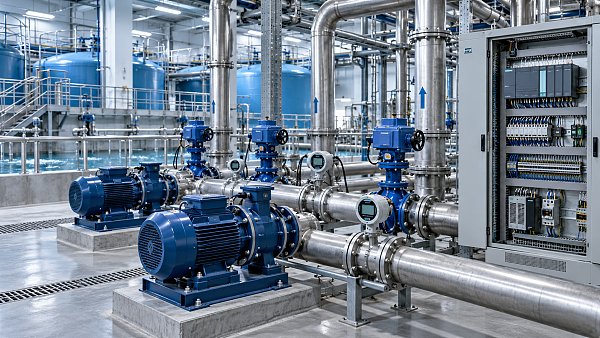
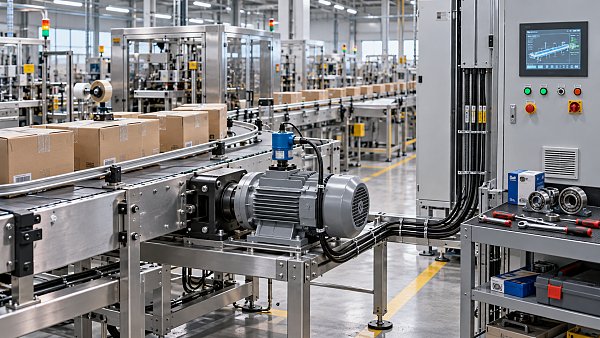
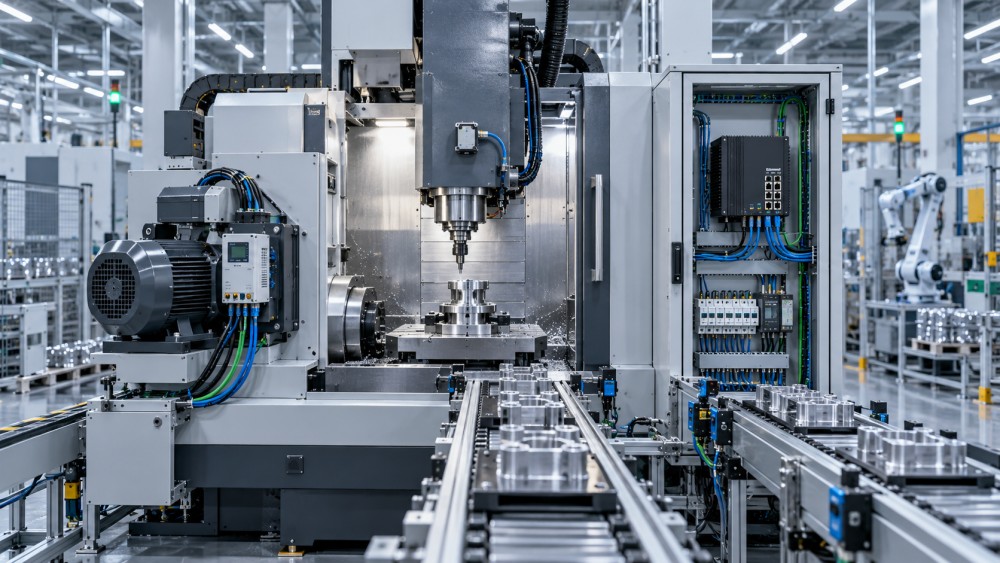
For a CNC machining cell, the decision may concern whether spindle load, vibration, tool life, coolant condition, and part rejection patterns indicate an emerging process problem. For a pumping station, it may concern whether pressure variation comes from suction conditions, valve behavior, impeller wear, a blocked filter, or a control-loop issue. On a material-handling line, the question may be whether frequent stoppages originate from one conveyor drive, a sensor alignment problem, upstream accumulation, or an intermittent communication fault.
Each case needs different data, sampling frequency, event context, and response path. A system that merely transmits broad data streams without linking them to a real action can produce attractive displays while leaving the original decision unchanged.
Signals that integration has become necessary
Several conditions point to a genuine need for IIoT integration. The first is fragmented asset visibility. This occurs when a production supervisor can see a line status on an HMI, maintenance records sit in a separate system, energy meters are reviewed later, and quality results are recorded elsewhere. The organization may have data, yet still lack a shared record of what happened before, during, and after a disruption.
Repeated manual collection is another strong signal. If shift personnel export machine logs, enter counters into spreadsheets, photograph HMI alarms, or combine timestamps from different sources to explain a stop, the process is vulnerable to delay and interpretation errors. Manual records remain useful for observations such as noise, leakage, material condition, or unusual operator intervention. They are a poor substitute for automatically captured event sequences when faults occur rapidly or repeatedly.
IIoT integration also becomes relevant when maintenance is dominated by calendar intervals or emergency response. Time-based service remains appropriate for certain lubricants, filters, safety devices, and wear parts with known replacement intervals. It becomes less adequate when operating load varies sharply. A hydraulic power unit running under high temperature, frequent pressure cycling, and contaminated fluid does not experience the same wear pattern as an identical unit operating lightly in a clean, stable environment. Condition data can distinguish these cases when it is tied to maintenance history and operating context.
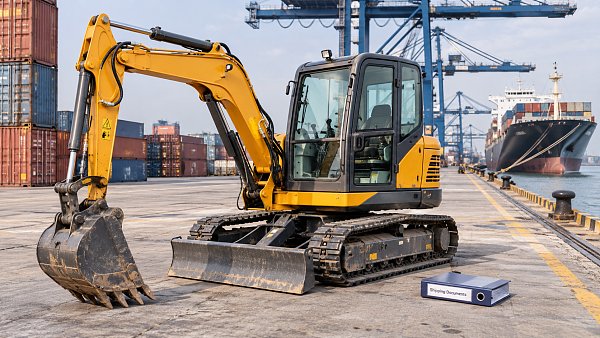
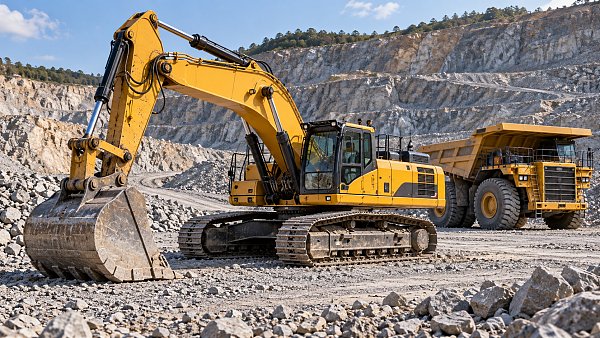
Asset fleets with inconsistent performance deserve special attention. Two nominally identical compressors, robots, presses, excavators, or packaging machines may show different energy consumption, cycle times, fault histories, or service needs because of installation quality, material variation, duty cycle, local settings, ambient conditions, or component changes. Aggregated monthly figures can conceal those differences. Connected data is valuable when it preserves the operating conditions behind the comparison.
Where IIoT creates useful operational value
Real-time monitoring is often the visible part of an IIoT deployment, but the value lies in detecting deviations that require a response. A rising motor current, for example, is not automatically evidence of a failing motor. It may reflect increased product load, a misaligned belt, a bearing issue, a blocked conveyor, lower supply voltage, or a changed speed command. The software needs enough surrounding context to prevent a misleading alarm.
That context commonly includes machine state, production recipe, batch or work order, commanded speed, ambient condition, maintenance status, and the sequence of alarms around the event. On a process line, temperature alone says little without flow, pressure, product type, valve state, and residence time. On a forming press, cycle count alone is weak unless it is considered alongside tonnage, die configuration, lubrication behavior, material thickness, and fault events.
Predictive maintenance is appropriate where failure progression produces detectable signals and where earlier intervention changes the maintenance outcome. Rotating equipment often offers useful indicators through vibration, bearing temperature, current draw, lubrication condition, pressure stability, or repeated start behavior. However, a predictive model is not a shortcut around basic maintenance discipline. Loose mounting, poor sensor placement, inconsistent lubrication records, and uncontrolled operating changes can create false patterns that look analytical but do not support reliable maintenance decisions.
Energy analysis is another common driver, particularly where power demand is high or utility cost is difficult to attribute. Integration is most useful when consumption is normalized against production conditions. A machine consuming more kilowatt-hours during a high-output shift is not necessarily inefficient. Useful analysis compares energy with units produced, run state, recipe, idle time, heating cycle, compressed-air demand, and rejected output. Without those relationships, energy dashboards often identify high consumption without revealing whether it is avoidable.
Traceability can justify integration where product history must be connected to process conditions. The level of traceability should fit the process. Some operations need only lot-level records showing material batch, route, key machine settings, inspection result, and release status. Others need serial-level association between a specific product and its torque results, weld parameters, thermal cycle, software version, or final test record. Capturing every available data point is not automatically better; unnecessary data increases storage, validation, access-control, and retrieval burdens.
Integration is not always the correct first move
IIoT should not be used to compensate for undefined process ownership or poor data foundations. If alarm codes have no consistent meaning, maintenance work orders are incomplete, tag names are ambiguous, and production states differ across machines, connecting more systems may spread inconsistency faster.
A basic data model should exist before large-scale integration. It needs clear asset identifiers, readable equipment hierarchy, consistent time synchronization, defined production states, agreed units of measure, and ownership for important tags. A value labeled “run time” can mean powered-on time, automatic cycle time, productive cutting time, or commanded operation, depending on the machine supplier and application logic. Combining these values without definition creates invalid comparisons.
Legacy equipment also requires a practical boundary. An older machine may expose only a few digital signals, relay contacts, analog outputs, or controller registers. Retrofitting can still be worthwhile when a narrow set of signals answers a high-value question, such as run/idle/fault state, motor current, hydraulic temperature, or total cycle count. Retrofitting every legacy asset to the same depth is rarely necessary. The sensible scope depends on criticality, repair exposure, data accessibility, remaining service life, and the effect of failure on production flow.
Choose the integration depth by asset role
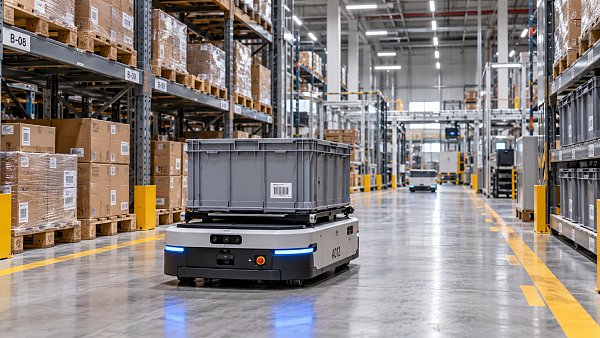
Industrial software systems do not all require the same IIoT architecture. A site-wide deployment should distinguish between critical bottleneck assets, support equipment, mobile equipment, utility systems, and low-risk standalone machines.
This distinction prevents a common selection error: treating the number of connected assets as the measure of maturity. A limited integration around a constrained production step can be more useful than broad connectivity across equipment whose data has no defined consumer.
Data quality determines whether software conclusions are credible
Industrial data has physical origins, and its quality must be evaluated at that level. A pressure transmitter can be correctly calibrated yet installed where pulsation dominates the reading. A temperature sensor mounted on an external housing responds differently from one located in the fluid stream. A vibration sensor placed on a flexible guard tells a different story from one fixed near a bearing housing. Sampling intervals, filtering, scaling, and communication delays all affect interpretation.
Timestamp alignment is especially important when several systems contribute to one event history. A machine controller, vision system, quality station, historian, and maintenance application may each hold a record of the same production problem. If their clocks drift or event definitions differ, apparent cause and effect can be reversed. Before using connected data for root-cause analysis, verify the order in which signals are generated, transmitted, stored, and displayed.
Data gaps need explicit handling. A flat reading can represent stable operation, a disconnected sensor, an unchanging value cached by a gateway, or a failed measurement channel. Software should retain communication-quality information rather than presenting all values as equally trustworthy. Otherwise, a missing signal can be interpreted as a healthy condition.
Architecture choices should follow process constraints
Edge processing is useful where control-relevant information must remain close to the machine, network bandwidth is limited, or raw data volumes are large. Machine vision, high-frequency vibration, and fast cycle analysis often benefit from local filtering or event extraction. The central system can then receive validated summaries, exceptions, models, and selected trace records instead of every raw sample.
Centralized platforms are better suited to cross-line comparison, fleet-level analysis, enterprise reporting, and integration with maintenance, quality, planning, or inventory records. The boundary between edge and central processing should be defined by latency, resilience, data volume, security requirements, and the consequence of losing connectivity. A production machine must remain safe and operable when a higher-level application is unavailable; business connectivity should not become a hidden dependency for basic machine control.
Protocol compatibility needs scrutiny beyond a supplier statement that a machine is “IIoT ready.” Confirm which variables are available, whether data access is read-only or bidirectional, how alarms are exposed, whether historical values can be retrieved, how tags are documented, and whether access requires an optional license or gateway. A controller may support a modern industrial protocol while providing only a small, undocumented data set through the actual machine application.
Evaluate the workflow after an alert appears
An alert is useful only when it enters a workable response path. If a condition threshold is exceeded, the system should identify the asset, event time, operating state, relevant trend, likely priority, and responsible maintenance process. The record should later show whether the condition was inspected, corrected, deferred, or determined to be normal for the operating mode.
Thresholds require care. Fixed limits are suitable for some safety or equipment-protection conditions. For performance monitoring, a baseline that changes with product, speed, ambient temperature, or machine mode is often more meaningful. A false alarm rate that causes alarms to be ignored can be more damaging than a modestly delayed warning. Threshold tuning should therefore be linked to confirmed outcomes, not adjusted solely to make a dashboard appear quiet.
IIoT integration is justified when it turns machine and process signals into a more reliable operational record, then connects that record to a defined action. Where the only result is additional data collection, the integration scope should be reduced until a specific maintenance, quality, energy, traceability, or production decision is clearly improved.
Related News
 MSHA Issues Mine Truck Safety Alert After One Death and 121 InjuriesMining Infrastructure ExpertMSHA mine truck safety alert reports one death and 121 lost-time injuries. Discover why mine operators should review safety practices.
 How to size a crushing plant for ore processingMining Infrastructure ExpertSize your ore processing equipment crushing plant with confidence. Learn how to calculate throughput, assess ore characteristics, and prevent bottlenecks.
 Trump Administration Rewrites Mining Policy to Spur Critical Minerals DevelopmentMining Infrastructure ExpertU.S. critical minerals mining policy is changing. Explore what faster approvals could mean for investment, equipment demand and supply chains.
 How IEC 62443 defines security zones for industrial communication systemsRobotics EngineerExplore industrial communication systems and IEC 62443: learn how security zones, conduits, and risk-based controls help protect plant operations.
 China-Peru Trade Agreement Upgrade Takes Effect, Easing Machinery CertificationConstruction Equipment SpecialistThe China-Peru trade agreement upgrade simplifies machinery certification. Discover what mutual recognition could mean for exporters entering Peru.
 How do industrial control systems regulate water treatment?Robotics EngineerDiscover how industrial control systems in water treatment use sensors, PLCs, and SCADA to regulate processes and help operators respond to changing conditions.
 Exotec Report: 25% of Supply Chain Leaders Regret Warehouse Automation DecisionsRobotics EngineerWarehouse automation regret affects 25% of surveyed supply chain leaders, according to Exotec. Explore the cost, contract and readiness risks before investing.
 How to set maintenance intervals for mining equipment in AustraliaMining Infrastructure ExpertMining equipment maintenance Australia: Learn how to set service intervals using operating hours, site conditions and equipment data to reduce downtime.
 EY Survey Ranks Complexity as Mining's Top Risk for 2027Mining Infrastructure ExpertMining risk in 2027 is led by complexity, EY's survey finds. Discover how aging mines, declining ore grades and supply chain pressures are reshaping the industry.
 Can asset lifecycle management automation reduce equipment downtime?IEG Heavy Machinery & Automation AnalystDiscover how asset lifecycle management automation can reduce equipment downtime through timely maintenance, faster repairs, and smarter service workflows.
 Caterpillar Q3 2026 Revenue Rises 17% to $20.7 Billion as Both Equipment Segments GrowConstruction Equipment SpecialistCaterpillar Q3 2026 revenue reportedly rose 17% to $20.7 billion. Explore equipment segment growth and what it could mean for procurement planning.
 How to choose a rugged industrial control panel for wet environmentsRobotics EngineerChoose a rugged industrial control panel for wet environments. Compare IP ratings, materials, seals, and condensation control to improve reliability.