Conveyor Automation in Warehouses: Costs, Throughput, and Payback




Is conveyor automation warehouse investment really worth the capital?
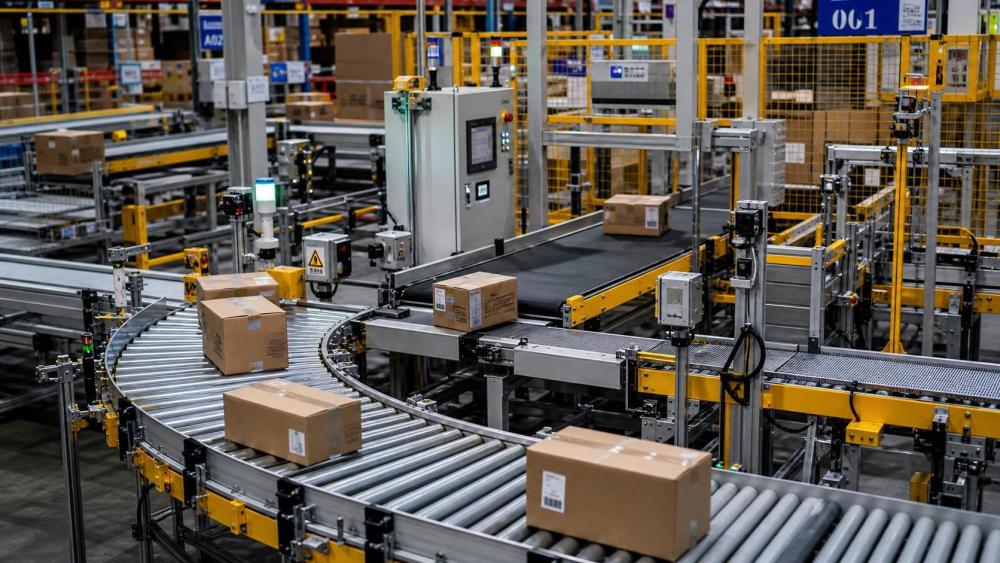
Conveyor automation warehouse projects usually begin with one practical question: will higher throughput justify the spend?
That question matters more now because warehouse networks face tighter delivery windows, labor volatility, and stronger pressure to control operating cost.
In simple terms, conveyor automation is not only about moving cartons faster.
It is about creating a repeatable flow, reducing touches, and turning space, labor, and equipment into measurable output.
For that reason, cost analysis should go beyond equipment price.
A serious review includes controls, guarding, integration, installation, electrical work, testing, training, spare parts, and expected downtime during changeover.
Industrial Edge Global often frames this kind of investment as a lifecycle decision, not a catalog purchase.
That perspective is useful because warehouse conveyors sit inside a wider industrial automation environment involving sensors, drives, controls, maintenance planning, and production logic.
The strongest business case appears when manual transport has already become a bottleneck.
If picking is fast but transfer between zones is inconsistent, conveyor automation warehouse design can unlock capacity without expanding headcount at the same rate.
What does a conveyor automation warehouse actually improve in daily operations?
Most facilities do not buy conveyors just to save walking distance.
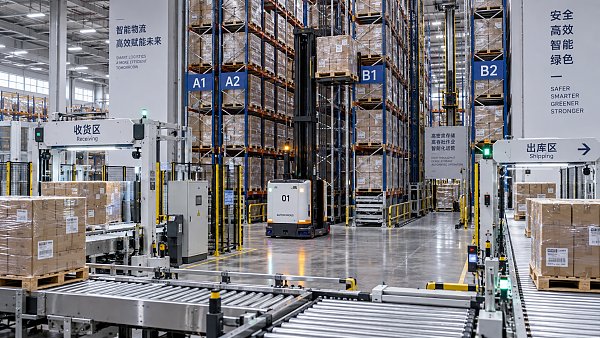
They buy them to stabilize flow across receiving, putaway support, picking, packing, sortation, and shipping.
A well-matched system can improve performance in several ways.
- More consistent throughput per hour, especially during peak shifts.
- Lower dependence on manual transfer labor between process zones.
- Better order accuracy when conveyors are linked with scanning and sortation logic.
- Safer movement of repetitive loads compared with carts or forklifts in dense areas.
- Better space discipline because product flow follows fixed routes.
Still, not every warehouse gains the same value.
Fast-moving consumer goods, e-commerce fulfillment, parcel handling, and packaging-intensive operations usually see clearer gains than slow, irregular, bulky handling environments.
The important distinction is between movement efficiency and total process efficiency.
If congestion happens at packing benches or shipping doors, conveyors alone will not solve the constraint.
In practical evaluations, the better question is this: which step loses the most time, touches, or accuracy today?
That answer usually determines whether conveyor automation warehouse planning should focus on transport, merge control, accumulation, or sortation.
How should total cost be calculated before comparing suppliers?
A common mistake is to compare only the quoted line price.
A more realistic model separates upfront cost from operating cost and risk cost.
The table below helps structure that review before vendor discussions move too far.
This is where many conveyor automation warehouse projects rise or fail.
A cheaper system can become expensive if controls are weak, spare parts are slow, or line balancing was poorly engineered.
On the other hand, a higher initial quote may produce a stronger payback if it reduces labor, errors, and service interruptions across several shifts.
When do throughput gains translate into a believable payback period?
Payback becomes believable when the gains can be tied to baseline numbers, not assumptions.
That means measuring current cartons per hour, labor hours per order, transfer delays, mis-sort rates, and peak-season overtime.
In many cases, conveyor automation warehouse economics improve through a mix of gains rather than one dramatic result.
Typical value drivers include labor redeployment, shorter cycle times, higher dock output, lower product handling damage, and fewer forklift movements in internal routes.
A simple payback model often uses this logic.
- Annual labor savings from reduced transfer work.
- Additional gross margin from higher shipping capacity.
- Reduced error, damage, and delay costs.
- Minus annual maintenance, energy, and support costs.
The result should then be compared with total installed cost, not just hardware cost.
More conservative models also test three scenarios: expected, peak-demand, and underutilized.
That matters because some systems look excellent at ninety percent utilization but weak at fifty percent.
For capital equipment decisions, that sensitivity analysis is often more useful than a single headline ROI number.
IEG frequently emphasizes this broader asset view across industrial automation categories, and warehouse conveyors fit that logic well.
What are the most common mistakes in conveyor automation warehouse planning?
The biggest mistake is automating motion before understanding flow.
If SKU profiles, order mix, and daily peaks are unclear, the line may be technically impressive but operationally mismatched.
Another mistake is ignoring upstream and downstream constraints.
Conveyors can feed work faster than teams can scan, pack, label, or load.
That simply moves the bottleneck instead of removing it.
Need-to-check items usually include the following.
- Future product size range and weight variation.
- Noise, safety, and ergonomic requirements.
- Access for maintenance and cleaning.
- Control system compatibility with existing automation.
- Local service support and spare parts lead time.
- Expansion options if volume doubles in three years.
Retrofit projects need even more caution.
Legacy buildings often limit column spacing, ceiling height, floor loading, and electrical routing.
In actual applications, these site constraints can influence cost as much as conveyor selection itself.
How can a business judge whether now is the right time to move forward?
The right time is usually visible before the budget is approved.
Warning signs include recurring overtime, rising internal transport labor, missed dispatch windows, and growing dependence on temporary labor during peaks.
If those signals appear together, conveyor automation warehouse investment may be less about optimization and more about capacity protection.
A practical next step is to build a short decision file.
- Map current flow by zone and identify where delay begins.
- Record hourly throughput, labor use, and exception rates.
- Estimate installed cost, not equipment-only cost.
- Test payback under normal and peak demand assumptions.
- Review service capability, integration risk, and expansion path.
That approach keeps the discussion grounded in operating evidence.
It also reflects the way Industrial Edge Global presents capital equipment decisions: compare technical fit, lifecycle value, and commercial risk together.
A conveyor automation warehouse system earns attention when it can raise throughput without creating fragile complexity.
The most reliable decisions come from matching flow data, cost structure, maintenance readiness, and growth plans before final supplier comparison.
If the numbers hold under realistic conditions, the investment stops looking like a conveyor purchase and starts looking like a controllable productivity asset.
Related News
 What is driving consolidation in the global equipment supplier market?IEG Heavy Machinery & Automation AnalystGlobal equipment supplier market consolidation is accelerating through technology, service, and supply-chain demands. Discover how buyers can capture value while managing risk.
 When does capital equipment investment pay back in manufacturing?IEG Heavy Machinery & Automation AnalystCapital equipment investment manufacturing: learn when equipment truly pays back by evaluating full costs, cash flow, ramp-up, operational risks, and lifecycle value.
 When does a distribution center need an automated pallet handling system?Heavy Lifting Systems AnalystPallet handling systems help distribution centers overcome labor shortages, bottlenecks, safety risks, and storage constraints. Discover the key signs it’s time to automate.
 How to build a machinery investment plan around payback periodIEG Heavy Machinery & Automation AnalystMachinery investment planning manufacturing guide: build a credible payback plan with full costs, ramp-up assumptions, lifecycle risks, and scenario-based cash benefits.
 How to Specify a Modular Packaging Line for Fast Changeovers and Scalable OutputRobotics EngineerModular packaging line specification guide: achieve faster changeovers, scalable output, reliable controls, and lower lifecycle costs with practical planning.
 How industrial IoT devices reduce unplanned downtime in factoriesRobotics EngineerIndustrial IoT devices help factories detect early equipment issues, plan maintenance, and reduce costly unplanned downtime before production is disrupted.
 What is driving industrial machinery market demand in manufacturing?IEG Heavy Machinery & Automation AnalystIndustrial machinery market manufacturing demand is rising as factories pursue automation, energy efficiency, resilient supply chains, and lifecycle productivity gains.
 316L Stainless Steel Pipe Tube Technical Factors That Shape Buyer DecisionsCNC Machining AnalystA technical analysis for 316L stainless steel pipe tube buyers, covering corrosion expectations, pipe route choice, tolerance, surface, and inspection.
 How ground conditions determine crawler piling equipment selectionConstruction Equipment SpecialistCrawler piling equipment selection starts with ground conditions. Learn how soil, rock, groundwater and site constraints shape safer, more productive piling solutions.
 3300mm CNC Beam Saw Sheet Capacity: Layout Checks Before PurchaseCNC Machining AnalystZhongding ZD330 beam saw specifications: assess 3300mm sheet capacity, layout clearances, handling flow, and acceptance checks before buying.
 How Bucket Chain Diamond Dredgers Meet ISO 12100 Safety Requirements in Alluvial Mining ProjectsMining Infrastructure ExpertBucket chain diamond dredger safety made real: how ISO 12100 compliance ensures operator protection, reliability & zero lost-time injuries in alluvial mining.
 Modular Packaging for High-Mix Automotive Assembly Lines: How Standardized Load Units Reduce Line Changeover Time by 37% — Case Study from Tier-1 Supplier in GuangdongHeavy Lifting Systems AnalystModular packaging slashes automotive line changeover time by 37%—discover how standardized load units boost OEE, cut labor costs, and enable seamless high-mix assembly.