How intralogistics manufacturing cuts material flow delays




Intralogistics manufacturing is becoming a practical answer to one of the most persistent factory problems: material is available in the business, but not where production needs it at the right time. That gap creates line stoppages, excess work-in-progress, manual handling, urgent forklift trips, and constant schedule changes. For plants trying to improve output without building entirely new capacity, the issue is often not machine speed alone. It is the internal movement of materials, components, pallets, and finished goods.
When business leaders look at delayed material flow, the instinct is often to focus on procurement lead times, labor availability, or production planning software. Those matter, but in many facilities the hidden constraint sits inside the plant. Storage, line feeding, buffer design, transport routes, picking logic, and data visibility are poorly connected. Intralogistics manufacturing addresses that internal disconnect by treating material flow as a production system, not a warehouse side function.
The business case is straightforward. If materials arrive at each process step with higher timing accuracy and less manual intervention, production becomes more stable. Stability reduces downtime, lowers damage risk, cuts avoidable labor movement, and improves throughput. It also improves the credibility of delivery commitments, which matters just as much commercially as it does operationally.
Why material flow delays persist even in modern plants
Many factories already have conveyors, forklifts, racks, barcode systems, or even automated storage. Yet delays continue because these elements were added over time rather than designed as one coordinated flow architecture. This is especially common in plants that expanded product variety, introduced shorter batch runs, or repurposed existing buildings.
The most common delay pattern is not a total absence of equipment. It is fragmentation. Raw materials may be received efficiently, but line-side replenishment remains manual. Intermediate goods may leave one process quickly, but queue too long before the next. Production scheduling may change faster than the internal transport system can respond. Operators may spend too much time searching, confirming, or escalating missing material issues instead of producing.
In heavy industry and capital equipment manufacturing, the challenge is amplified by large component sizes, mixed part profiles, and irregular takt times. In automation-rich sectors, the challenge shifts toward synchronization and traceability. In both cases, delays tend to come from the same root problem: internal logistics is managed as a support activity, while production depends on it as a core capability.
What intralogistics manufacturing actually changes
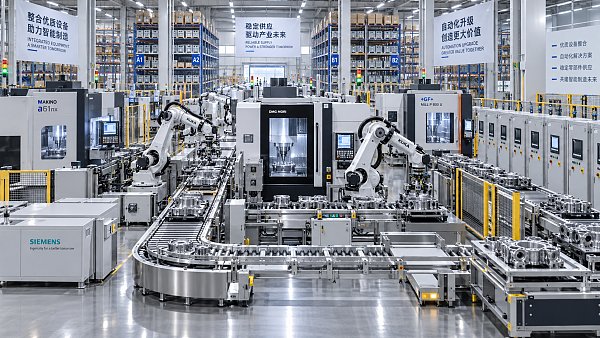
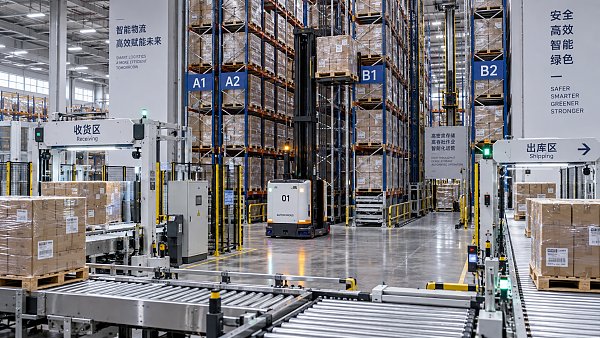
At its strongest, intralogistics manufacturing is not just about adding automation. It redesigns how material moves from receiving to storage, from storage to line-side supply, between workstations, and into outbound staging. That redesign can include physical systems, digital control layers, and operating rules.
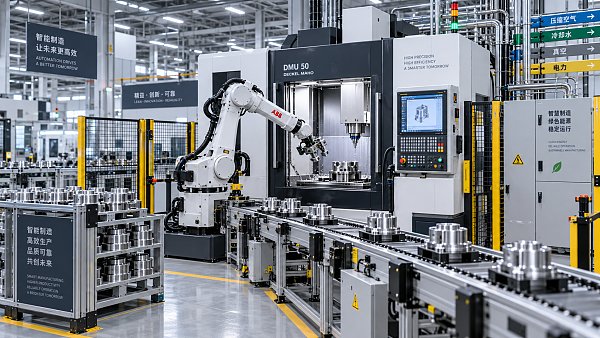
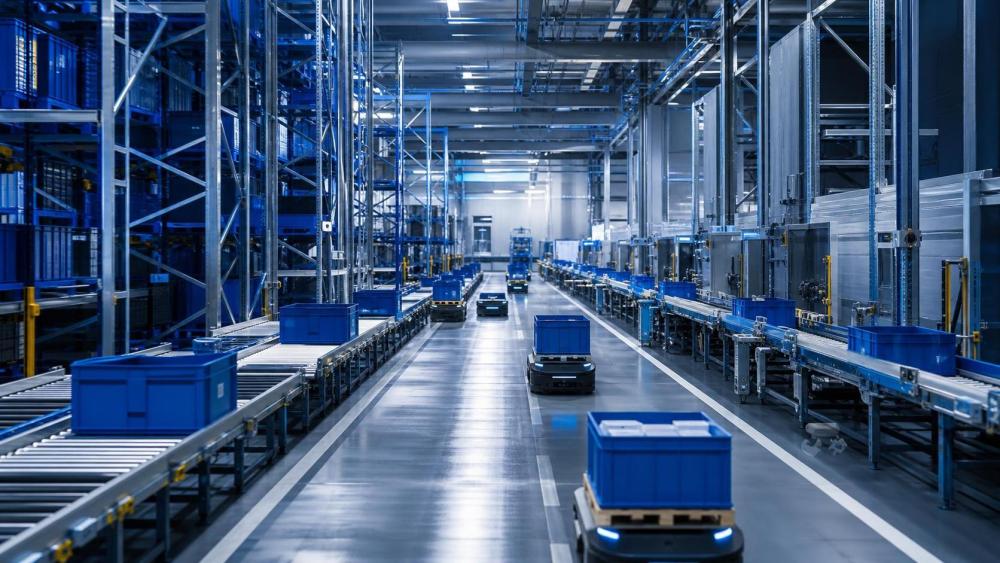
Typical elements include automated storage and retrieval systems, conveyors, sortation, autonomous mobile robots, guided vehicles, pallet handling systems, smart shelving, pick-to-light solutions, warehouse control systems, manufacturing execution system integration, and real-time inventory tracking. But the value does not come from owning these technologies individually. It comes from how well they reduce decision lag and transport friction between production stages.
For decision-makers, the relevant question is not whether intralogistics technology is advanced. It is whether the chosen combination removes the specific causes of delay in a given plant. A highly automated transport system will not solve a poor slotting strategy. A new warehouse control layer will not fix unstable production sequencing. A fleet of mobile robots will underperform if aisles, charging logic, and dispatch rules were not engineered around actual demand patterns.
Where the biggest delay reductions usually come from
The largest gains often come from a few recurring intervention points.
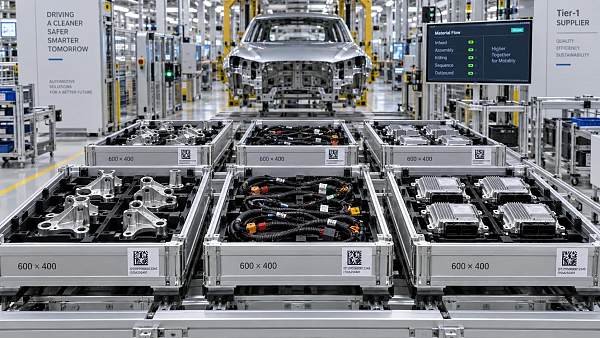
Line-side replenishment is one of the most important. Production lines frequently stop not because central inventory is low, but because replenishment arrives late, in the wrong sequence, or in the wrong container format. Better milk-run planning, kitting, supermarket design, or automated replenishment signaling can sharply reduce these disruptions.
Buffer management is another. Many plants either carry too little buffer in critical transitions or too much inventory in the wrong locations. Both create delays. Too little buffer exposes every upstream variation. Too much creates congestion, misplacement, and longer retrieval times. Intralogistics manufacturing works when buffer zones are designed around process variability, not rough estimates.
Routing discipline often matters more than equipment speed. Forklifts, tuggers, AGVs, and conveyors can all perform well in isolation, yet delay the overall system if routes conflict, priorities are unclear, or traffic mixes with pedestrians and manual picking. Plants that reduce internal route complexity often see faster improvement than those that merely add vehicles.
Inventory visibility is another high-impact area. If supervisors and planners cannot see what is physically available, where it is located, and whether it is reserved for a task, they compensate with safety stock, calls, emails, and manual checks. That creates both delay and hidden cost. Real-time visibility is valuable not because it looks modern, but because it removes decision uncertainty.
How it improves throughput without adding new production lines
One of the most attractive aspects of intralogistics manufacturing is that it can unlock existing production capacity. Many factories believe they need more machines, more labor, or more floor space to increase output. In reality, bottlenecks may be caused by waiting, searching, staging, and transport interruptions around the machines rather than by the machines themselves.
When internal material flow becomes more predictable, changeovers can be supported with the right components on time, downstream operations receive output with less accumulation, and production sequencing can be executed with fewer exceptions. This does not eliminate every bottleneck, but it reduces the non-value-added delay that erodes effective capacity.
That matters financially because capacity gains from intralogistics upgrades are often less capital-intensive than major production expansion. The return is especially attractive in facilities where assets are underutilized due to poor coordination rather than technical limitations. For firms under margin pressure, this distinction is important. Spending on internal flow may produce faster payback than adding a new processing cell that will still suffer from the same feeding and staging issues.
Not every factory needs the same level of automation
A common mistake in this market is assuming that delay reduction requires maximum automation. It does not. The right level of intralogistics maturity depends on plant volume, product mix, building constraints, labor cost, variability, and uptime requirements.
In low-to-medium volume environments with frequent product changes, flexible systems such as mobile robots, modular racks, digital picking support, and dynamic route scheduling may create more value than fixed conveyor networks. In stable, high-volume plants, fixed automation may be the better long-term choice because it offers high repeatability and lower unit movement cost.
Manual and semi-automated systems should not be dismissed too quickly either. In some operations, standardized carts, disciplined supermarket replenishment, barcode confirmation, and improved material presentation can cut delays meaningfully without a large capital commitment. The decision should follow flow economics and process constraints, not the desire to appear more automated.
What leaders should assess before approving an intralogistics project
Projects fail when companies buy technology before defining the operational problem precisely. The first priority is to identify where delays occur, how often they occur, and what they cost in throughput, labor, rescheduling, scrap, premium freight, or missed delivery performance.
Several questions usually separate strong projects from weak ones:
- Are delays concentrated in receiving, storage, line feeding, inter-process transfer, or outbound staging?
- Is the main problem transport capacity, poor location management, scheduling volatility, or weak system integration?
- How much of the current delay is structural, and how much is caused by inconsistent execution?
- Can the building layout support fixed automation, or is flexibility more valuable?
- Will the proposed system integrate with ERP, WMS, MES, and shop-floor controls without creating a new data silo?
- What is the fallback plan when the automated flow system is down?
These are not technical details for engineers alone. They are investment questions. A project that improves movement speed but increases dependence on hard-to-service systems, proprietary software, or fragile workflows can create a different form of operational risk.
The implementation risk is usually organizational, not just technical
Even good intralogistics designs can disappoint if the plant organization is not ready. Material flow sits across functions: production, warehousing, maintenance, IT, industrial engineering, quality, and procurement. If these teams optimize separately, the system loses coherence.
For example, procurement may choose packaging formats that maximize inbound efficiency but complicate line-side presentation. Production may change sequencing rules without updating transport priorities. IT may deploy visibility tools without clear ownership for exception handling. Maintenance may not be prepared to support automated handling assets with the required response time.
This is why intralogistics manufacturing should be treated as an operating model decision as much as an equipment decision. Governance, KPI alignment, and exception management procedures often determine whether delay reduction is sustained.
How to measure whether the solution is working
Decision-makers should be careful with vanity metrics. The success of intralogistics manufacturing is not measured by robot count, conveyor length, or storage density alone. Those may describe the system, but they do not prove business impact.
Better indicators include line stoppage minutes caused by missing material, replenishment accuracy, material travel time between key process points, work-in-progress days, order-to-ship lead time, inventory location accuracy, internal handling labor hours per unit, and schedule adherence. In some sectors, damage rates and traceability performance are equally important.
The key is to connect logistics indicators with production and financial outcomes. If internal flow improves but throughput does not, the plant may have solved the wrong constraint. If throughput improves but inventory swells, the design may be masking instability instead of removing it. Management should insist on metrics that reveal trade-offs, not just local gains.
Why this matters more now than it did five years ago
Several market shifts are making intralogistics manufacturing more relevant. Product customization is increasing in many sectors, which puts pressure on internal sequencing and component availability. Labor shortages and turnover are making manual material handling less reliable and more expensive in many regions. At the same time, factories are expected to improve responsiveness without carrying excessive inventory.
There is also a strategic supply chain angle. External disruptions have pushed many manufacturers to focus on resilience, but resilience does not stop at the factory gate. Plants with weak internal material flow are slower to absorb supplier variation, faster to accumulate hidden shortages, and more vulnerable to planning instability. In that sense, intralogistics is part of supply chain risk management, not just plant efficiency.
A practical decision view
For companies evaluating where to invest next, intralogistics manufacturing deserves attention when delays are repeatedly traced back to internal movement, poor replenishment, visibility gaps, or buffer dysfunction. It is most valuable when leadership understands that the objective is not to modernize logistics for its own sake, but to protect flow across the production system.
The strongest projects usually start with a narrow operational truth: materials are late, routes are inefficient, or line-side supply is unstable. From there, successful plants redesign the flow logic, choose the appropriate automation level, integrate data with execution, and measure performance against actual production outcomes.
That is how intralogistics manufacturing cuts material flow delays in a meaningful business sense. It shortens the distance between inventory and productive use. In a factory environment where every minute of waiting can ripple into missed output and weaker delivery performance, that distance matters more than many companies first assume.
Related News
 What is driving consolidation in the global equipment supplier market?IEG Heavy Machinery & Automation AnalystGlobal equipment supplier market consolidation is accelerating through technology, service, and supply-chain demands. Discover how buyers can capture value while managing risk.
 When does capital equipment investment pay back in manufacturing?IEG Heavy Machinery & Automation AnalystCapital equipment investment manufacturing: learn when equipment truly pays back by evaluating full costs, cash flow, ramp-up, operational risks, and lifecycle value.
 When does a distribution center need an automated pallet handling system?Heavy Lifting Systems AnalystPallet handling systems help distribution centers overcome labor shortages, bottlenecks, safety risks, and storage constraints. Discover the key signs it’s time to automate.
 How to build a machinery investment plan around payback periodIEG Heavy Machinery & Automation AnalystMachinery investment planning manufacturing guide: build a credible payback plan with full costs, ramp-up assumptions, lifecycle risks, and scenario-based cash benefits.
 How to Specify a Modular Packaging Line for Fast Changeovers and Scalable OutputRobotics EngineerModular packaging line specification guide: achieve faster changeovers, scalable output, reliable controls, and lower lifecycle costs with practical planning.
 How industrial IoT devices reduce unplanned downtime in factoriesRobotics EngineerIndustrial IoT devices help factories detect early equipment issues, plan maintenance, and reduce costly unplanned downtime before production is disrupted.
 What is driving industrial machinery market demand in manufacturing?IEG Heavy Machinery & Automation AnalystIndustrial machinery market manufacturing demand is rising as factories pursue automation, energy efficiency, resilient supply chains, and lifecycle productivity gains.
 316L Stainless Steel Pipe Tube Technical Factors That Shape Buyer DecisionsCNC Machining AnalystA technical analysis for 316L stainless steel pipe tube buyers, covering corrosion expectations, pipe route choice, tolerance, surface, and inspection.
 How ground conditions determine crawler piling equipment selectionConstruction Equipment SpecialistCrawler piling equipment selection starts with ground conditions. Learn how soil, rock, groundwater and site constraints shape safer, more productive piling solutions.
 3300mm CNC Beam Saw Sheet Capacity: Layout Checks Before PurchaseCNC Machining AnalystZhongding ZD330 beam saw specifications: assess 3300mm sheet capacity, layout clearances, handling flow, and acceptance checks before buying.
 How Bucket Chain Diamond Dredgers Meet ISO 12100 Safety Requirements in Alluvial Mining ProjectsMining Infrastructure ExpertBucket chain diamond dredger safety made real: how ISO 12100 compliance ensures operator protection, reliability & zero lost-time injuries in alluvial mining.
 Modular Packaging for High-Mix Automotive Assembly Lines: How Standardized Load Units Reduce Line Changeover Time by 37% — Case Study from Tier-1 Supplier in GuangdongHeavy Lifting Systems AnalystModular packaging slashes automotive line changeover time by 37%—discover how standardized load units boost OEE, cut labor costs, and enable seamless high-mix assembly.