What affects forklifts price for warehouse fleet buyers?




What affects forklifts price for warehouse fleet buyers?
For warehouse fleet buyers, forklifts price is rarely a simple question of brand or lifting capacity. Two trucks that look similar on a spec sheet can land at very different cost levels once you include power system, mast configuration, battery setup, safety package, delivery scope, and service terms. That is why procurement teams need to look beyond the headline quote and compare what is actually being delivered.
In industrial buying, the real issue is not whether a forklift is “cheap” or “expensive.” It is whether the machine fits the duty cycle, the warehouse layout, and the maintenance model of the fleet. A lower purchase price can be attractive, but if it brings longer charging time, higher fuel use, more downtime, or poor parts availability, the total cost can move in the wrong direction fast. This is where structured equipment information matters, which is also the kind of decision support platforms like Industrial Edge Global (IEG) are built to provide for industrial buyers.
The first price driver is the work the forklift has to do
The more demanding the application, the more the price tends to rise. Lifting capacity is the obvious starting point, but it is not the only one. Mast height, load center, attachment compatibility, turning radius, and stability requirements all influence machine design. A forklift used in a narrow warehouse aisle has a different engineering profile from one moving palletized goods in an outdoor yard. Even if both are “3-ton forklifts,” the cost can differ because the operating conditions are not the same.
Warehouse fleet buyers should also consider whether the truck will run a few hours a day or almost continuously across shifts. A machine built for heavier duty cycles often needs stronger components, better cooling, and more robust driveline or battery management. Those features add cost, but they may be the right answer if fleet utilization is high. Paying for capacity you will not use is wasteful; under-specifying a truck is usually more expensive over time.
Power type changes both upfront cost and operating economics
Electric forklifts, LPG models, and diesel units each come with a different cost structure. Electric trucks often have a higher initial equipment decision because the battery, charger, and sometimes site electrical upgrades must be included. On the other hand, they can be easier to justify in indoor warehouse environments where emissions, noise, and heat matter. Fuel-powered trucks may appear more affordable at purchase, but the lifetime cost depends on fuel consumption, maintenance intervals, and local fuel prices.
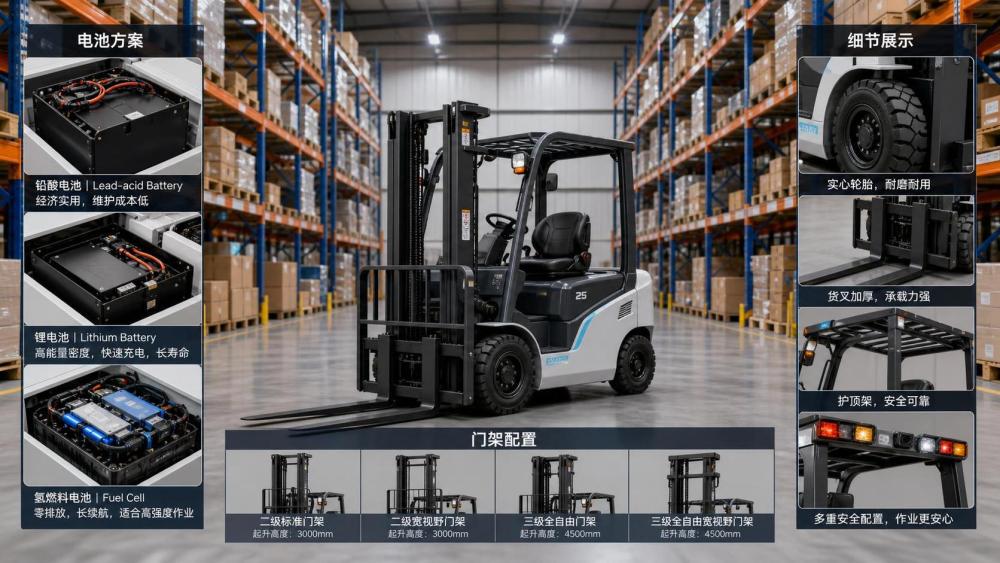
Battery choice deserves special attention. Lead-acid and lithium-ion systems are not interchangeable from a cost perspective. Lithium-ion usually carries a higher upfront price, but it can reduce charging downtime, simplify daily operation, and lower battery handling effort. Whether that premium makes sense depends on shift pattern, charging discipline, available space, and the buyer’s tolerance for maintenance complexity. Procurement teams should not treat the battery as an accessory; it is part of the fleet’s working system.
Specification packages can change the quote more than buyers expect
A basic forklift and a fully equipped one can serve the same warehouse role on paper, but not in daily use. Options such as side shift, fork positioner, enclosed cab, cold-storage package, non-marking tires, camera systems, or advanced telematics all add to the forklifts price. In some cases, these options are optional extras. In others, they are close to mandatory because of the environment or operating process.
This is where buyers often compare quotes that are not really comparable. One supplier may include a complete safety and visibility package, while another leaves those items out. One may quote the truck only, while another includes charger, commissioning, and operator training. Procurement should request a line-by-line scope so that the comparison reflects the real delivered configuration, not just the brochure version.
Maintenance access and parts support affect price in a very practical way
A forklift that is easy to service is usually worth more than one that only looks inexpensive at the start. Fleet buyers know that downtime eats margin quickly. If a truck needs frequent visits for routine checks, or if core parts are hard to source, the savings on purchase price can disappear. That is why service layout, component commonality, and local parts availability matter during sourcing.
For larger fleets, the question is not just whether a dealer can supply one truck, but whether they can support ten or twenty over time. Response speed, spare parts stocking, technical documentation, and warranty handling all influence the effective price of ownership. Industrial equipment buyers usually get better results when they evaluate suppliers on service capability, not just on the line item in the quote. IEG often frames this kind of decision as lifecycle value rather than initial cost, because that is how warehouse operations actually feel the impact.
Fleet standardization can be more valuable than chasing the lowest unit price
A common mistake in warehouse procurement is to buy each forklift as an isolated deal. That can lead to mixed controls, different batteries, varied spare parts, and inconsistent operator training. The result is a fleet that is harder to manage, even if each individual purchase looked competitive. In practice, standardizing on fewer models can reduce training time, simplify maintenance, and improve uptime planning.
Standardization also affects negotiating power. Buyers who can forecast volume, replacement cycles, and accessory needs are often in a stronger position when discussing commercial terms. This does not automatically mean a lower forklift price, but it can lead to a better overall package. Procurement teams should think in terms of fleet economics: common parts, common charging strategy, common operator interfaces, and predictable service intervals.
Installation, training, and site conditions are part of the real cost
Some forklift quotes ignore the work needed to make the machine usable. Electric fleets may require charger placement, battery handling procedures, floor loading checks, or power supply adjustments. Cold storage, food handling, and high-throughput logistics sites may also need specific tires, protection packages, or cabin features. If those factors are discovered late, the purchase can stall or expand beyond budget.
Operator training is another overlooked line item. New controls, safety systems, and charging routines can create a short productivity dip if the team is not prepared. For buyers with rotating labor or multiple shifts, easy-to-learn controls and clear maintenance routines can be worth paying for. In many warehouse projects, the most expensive forklift is the one that spends too much time waiting for people to use it properly.
How procurement teams should compare forklifts price
A useful comparison starts with a clear operating profile: load weights, lift height, aisle width, daily run time, indoor or outdoor use, and any special environment requirements. Once that is defined, buyers can compare machine type, power source, battery or fuel consumption, maintenance schedule, and support scope. Without that baseline, price comparisons can be misleading.
It also helps to ask suppliers the same practical questions every time: What is included in the quote? What is excluded? How long is the lead time? Which wear parts are stocked locally? What happens if a major component fails after warranty? These are not sales questions; they are cost-control questions. They usually reveal more than a discount percentage ever will.
For warehouse fleet buyers, the right purchasing approach is usually not to aim for the lowest forklifts price. It is to buy the truck that gives the best balance of performance, uptime, service access, and operating cost under your actual conditions. That balance changes from one warehouse to another, which is why careful specification review matters before the order is placed. If the application is still unclear, it is better to confirm the duty cycle, site constraints, and support requirements first than to lock in a price that looks good only on paper.
Related News
 What is driving consolidation in the global equipment supplier market?IEG Heavy Machinery & Automation AnalystGlobal equipment supplier market consolidation is accelerating through technology, service, and supply-chain demands. Discover how buyers can capture value while managing risk.
 When does capital equipment investment pay back in manufacturing?IEG Heavy Machinery & Automation AnalystCapital equipment investment manufacturing: learn when equipment truly pays back by evaluating full costs, cash flow, ramp-up, operational risks, and lifecycle value.
 When does a distribution center need an automated pallet handling system?Heavy Lifting Systems AnalystPallet handling systems help distribution centers overcome labor shortages, bottlenecks, safety risks, and storage constraints. Discover the key signs it’s time to automate.
 How to build a machinery investment plan around payback periodIEG Heavy Machinery & Automation AnalystMachinery investment planning manufacturing guide: build a credible payback plan with full costs, ramp-up assumptions, lifecycle risks, and scenario-based cash benefits.
 How to Specify a Modular Packaging Line for Fast Changeovers and Scalable OutputRobotics EngineerModular packaging line specification guide: achieve faster changeovers, scalable output, reliable controls, and lower lifecycle costs with practical planning.
 How industrial IoT devices reduce unplanned downtime in factoriesRobotics EngineerIndustrial IoT devices help factories detect early equipment issues, plan maintenance, and reduce costly unplanned downtime before production is disrupted.
 What is driving industrial machinery market demand in manufacturing?IEG Heavy Machinery & Automation AnalystIndustrial machinery market manufacturing demand is rising as factories pursue automation, energy efficiency, resilient supply chains, and lifecycle productivity gains.
 316L Stainless Steel Pipe Tube Technical Factors That Shape Buyer DecisionsCNC Machining AnalystA technical analysis for 316L stainless steel pipe tube buyers, covering corrosion expectations, pipe route choice, tolerance, surface, and inspection.
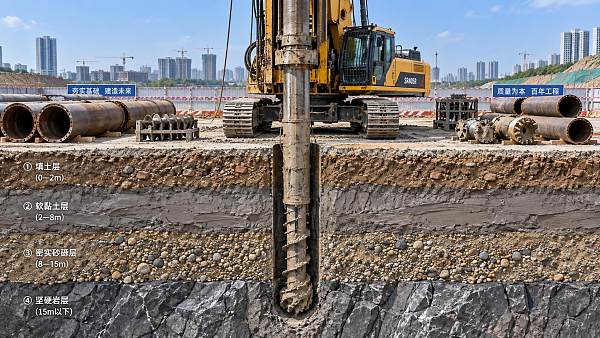
 How ground conditions determine crawler piling equipment selectionConstruction Equipment SpecialistCrawler piling equipment selection starts with ground conditions. Learn how soil, rock, groundwater and site constraints shape safer, more productive piling solutions.
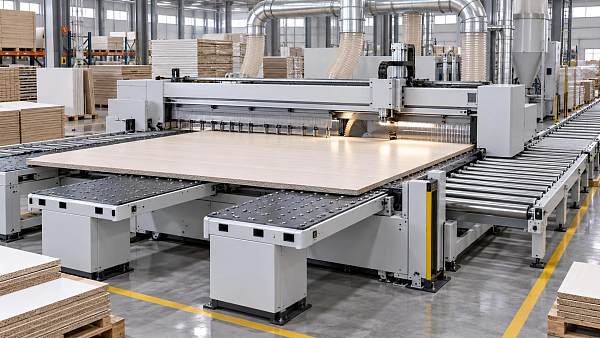
 3300mm CNC Beam Saw Sheet Capacity: Layout Checks Before PurchaseCNC Machining AnalystZhongding ZD330 beam saw specifications: assess 3300mm sheet capacity, layout clearances, handling flow, and acceptance checks before buying.
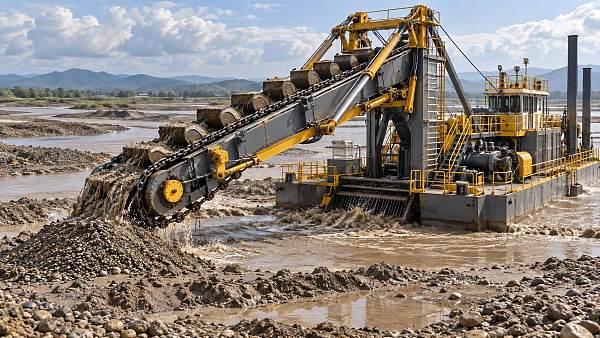
 How Bucket Chain Diamond Dredgers Meet ISO 12100 Safety Requirements in Alluvial Mining ProjectsMining Infrastructure ExpertBucket chain diamond dredger safety made real: how ISO 12100 compliance ensures operator protection, reliability & zero lost-time injuries in alluvial mining.
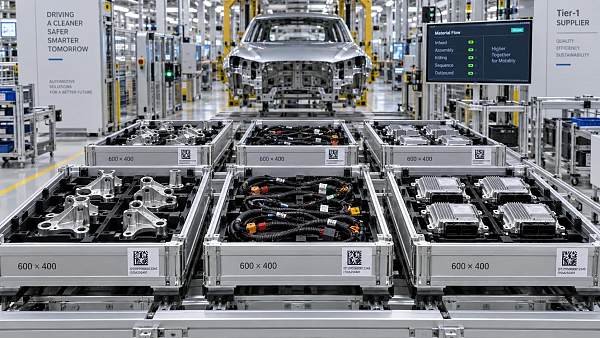
 Modular Packaging for High-Mix Automotive Assembly Lines: How Standardized Load Units Reduce Line Changeover Time by 37% — Case Study from Tier-1 Supplier in GuangdongHeavy Lifting Systems AnalystModular packaging slashes automotive line changeover time by 37%—discover how standardized load units boost OEE, cut labor costs, and enable seamless high-mix assembly.