Chile Mining Equipment Imports Jump 32% in Q2 2026




On July 14, 2026, the latest quarterly update cited from Cochilco pointed to a clear acceleration in Chile’s mine expansion cycle: the country’s mining equipment imports reached USD 870 million in the second quarter of 2026, up 32% year on year, with notably higher purchases of hydraulic drill jumbos, underground loaders, and intelligent ventilation systems. For equipment manufacturers, export-oriented suppliers, procurement teams, and mining service providers, this is worth close attention because it signals a concrete shift in current purchasing activity rather than a purely abstract investment expectation.
What the latest Chile data confirms
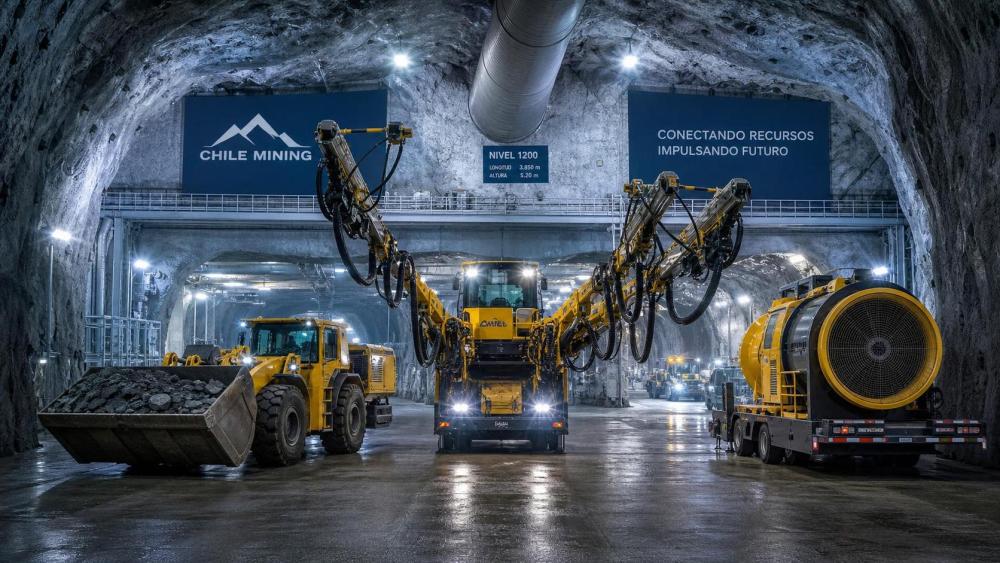
The confirmed facts are limited but meaningful. According to the quarterly report referenced from Cochilco, Chile imported a total of USD 870 million in mining equipment in Q2 2026, representing a 32% increase from the same period a year earlier. Within that total, procurement rose significantly in three equipment categories: hydraulic drill jumbos, underground loaders, and intelligent ventilation systems.
The information provided also indicates that this change is being read as a sign of an upward cycle in South American mining capital expenditure, with particular relevance for Chinese mining equipment manufacturers seeking incremental market opportunities.
Where the impact is likely to be felt first
Equipment manufacturers face a clearer demand signal
From an industry perspective, manufacturers of underground mining equipment are the most directly exposed to this development. The reason is straightforward: the categories showing stronger procurement are not general industrial goods but specialized mining systems tied to active project execution. The impact is likely to appear first in product planning, quotation activity, production scheduling, and export coordination.
What deserves closer attention is whether this demand remains concentrated in a few equipment categories or broadens into a wider procurement cycle. That distinction matters for capacity allocation and market prioritization.
Export traders and channel partners may see faster project-led inquiries
For trading companies and regional channel partners, the change may show up through a higher volume of project-based inquiries and shorter response windows for technical and commercial communication. If buyers are moving from planning into procurement, the pressure point is not only price, but also specification matching, document readiness, and delivery credibility.
Observably, these participants should focus on whether requests increasingly involve underground mining packages or system-level coordination across drilling, loading, and ventilation equipment.
Supply chain and service providers may need to prepare for execution risk
Supply chain service providers, including logistics, spare-parts support, and after-sales coordination partners, may also be affected. Analysis shows that when procurement rises in specialized mining equipment, the business risk often shifts from market access to fulfillment quality. In practical terms, that means lead times, shipment planning, technical file completeness, and service response arrangements become more commercially important.
For service-side participants, the key issue is not simply whether orders increase, but whether customers begin expecting more complete delivery and support capabilities around complex equipment categories.
What companies should watch now
Track official wording against actual purchasing behavior
Companies should closely compare future official updates with real procurement signals. The current information confirms stronger import activity and higher purchasing volumes in selected categories, but businesses still need to distinguish between a policy or investment narrative and sustained order conversion.
Prioritize the categories already showing confirmed movement
At this stage, the most defensible commercial focus is on the equipment groups explicitly mentioned in the available information: hydraulic drill jumbos, underground loaders, and intelligent ventilation systems. That is a more practical basis for market response than assuming broad-based demand across all mining equipment segments.
Prepare documentation and delivery discussions earlier
For firms already active in export or cross-border equipment supply, current attention should shift toward quotation preparedness, compliance documents, technical communication, and fulfillment timelines. Analysis shows that once procurement activity accelerates, suppliers can lose opportunities not because of product gaps alone, but because response quality and execution readiness lag behind buyer expectations.
Keep customer communication tied to project reality
Commercial teams should avoid treating the reported increase as a blanket demand boom. It is more appropriate to keep customer discussions tied to confirmed equipment needs, procurement cycles, and practical delivery conditions. That approach reduces the risk of overcommitting resources before demand patterns are fully established.
Why this looks more like a signal than a final conclusion
Analysis shows that the reported increase in Chile’s mining equipment imports is important because it reflects real purchasing activity in categories closely linked to underground mine development and operations. That gives the update more weight than a general statement about investment sentiment.
At the same time, it is more appropriate to understand this as a strong industry signal rather than a completed trend with all outcomes already determined. The information supports closer attention to an upward capex phase in South American mining, but it does not by itself confirm how broad, how long, or how evenly distributed that phase will become across equipment types and supplier groups.
How this update is best understood for now
The immediate significance of this development lies in the combination of rising total import value and stronger purchasing in specific underground mining equipment categories. For manufacturers, exporters, and service providers, the update points to a more active demand environment in Chile and potentially wider implications for South American mining procurement.
A neutral reading is the most useful one: this is not merely a short-lived headline, but neither is it a basis for unconditional market conclusions. It is best understood as a high-value indicator of current procurement momentum that deserves continued tracking in both category demand and downstream order execution.
Basis of this article
This article is based on the user-provided news title, event date, and event summary. The content has been written from the supplied information concerning Cochilco’s latest quarterly report reference, the Q2 2026 import value of Chile’s mining equipment, and the reported rise in purchases of hydraulic drill jumbos, underground loaders, and intelligent ventilation systems.
For this type of industry update, commonly relevant source categories may include official announcements, company disclosures, industry association releases, authoritative media reporting, and standards or regulatory documents. A specific official source link was not provided in the input, so continued verification remains necessary. Follow-up attention should remain on later official statements, whether procurement strength continues in the same equipment categories, and whether the observed capex signal translates into sustained business execution.
Related News
 What is driving consolidation in the global equipment supplier market?IEG Heavy Machinery & Automation AnalystGlobal equipment supplier market consolidation is accelerating through technology, service, and supply-chain demands. Discover how buyers can capture value while managing risk.
 When does capital equipment investment pay back in manufacturing?IEG Heavy Machinery & Automation AnalystCapital equipment investment manufacturing: learn when equipment truly pays back by evaluating full costs, cash flow, ramp-up, operational risks, and lifecycle value.
 When does a distribution center need an automated pallet handling system?Heavy Lifting Systems AnalystPallet handling systems help distribution centers overcome labor shortages, bottlenecks, safety risks, and storage constraints. Discover the key signs it’s time to automate.
 How to build a machinery investment plan around payback periodIEG Heavy Machinery & Automation AnalystMachinery investment planning manufacturing guide: build a credible payback plan with full costs, ramp-up assumptions, lifecycle risks, and scenario-based cash benefits.
 How to Specify a Modular Packaging Line for Fast Changeovers and Scalable OutputRobotics EngineerModular packaging line specification guide: achieve faster changeovers, scalable output, reliable controls, and lower lifecycle costs with practical planning.
 How industrial IoT devices reduce unplanned downtime in factoriesRobotics EngineerIndustrial IoT devices help factories detect early equipment issues, plan maintenance, and reduce costly unplanned downtime before production is disrupted.
 What is driving industrial machinery market demand in manufacturing?IEG Heavy Machinery & Automation AnalystIndustrial machinery market manufacturing demand is rising as factories pursue automation, energy efficiency, resilient supply chains, and lifecycle productivity gains.
 316L Stainless Steel Pipe Tube Technical Factors That Shape Buyer DecisionsCNC Machining AnalystA technical analysis for 316L stainless steel pipe tube buyers, covering corrosion expectations, pipe route choice, tolerance, surface, and inspection.
 How ground conditions determine crawler piling equipment selectionConstruction Equipment SpecialistCrawler piling equipment selection starts with ground conditions. Learn how soil, rock, groundwater and site constraints shape safer, more productive piling solutions.
 3300mm CNC Beam Saw Sheet Capacity: Layout Checks Before PurchaseCNC Machining AnalystZhongding ZD330 beam saw specifications: assess 3300mm sheet capacity, layout clearances, handling flow, and acceptance checks before buying.
 How Bucket Chain Diamond Dredgers Meet ISO 12100 Safety Requirements in Alluvial Mining ProjectsMining Infrastructure ExpertBucket chain diamond dredger safety made real: how ISO 12100 compliance ensures operator protection, reliability & zero lost-time injuries in alluvial mining.
 Modular Packaging for High-Mix Automotive Assembly Lines: How Standardized Load Units Reduce Line Changeover Time by 37% — Case Study from Tier-1 Supplier in GuangdongHeavy Lifting Systems AnalystModular packaging slashes automotive line changeover time by 37%—discover how standardized load units boost OEE, cut labor costs, and enable seamless high-mix assembly.