Dust Control Systems That Reduce Mine Safety Risks




Why Dust Control Changes Mine Safety Priorities
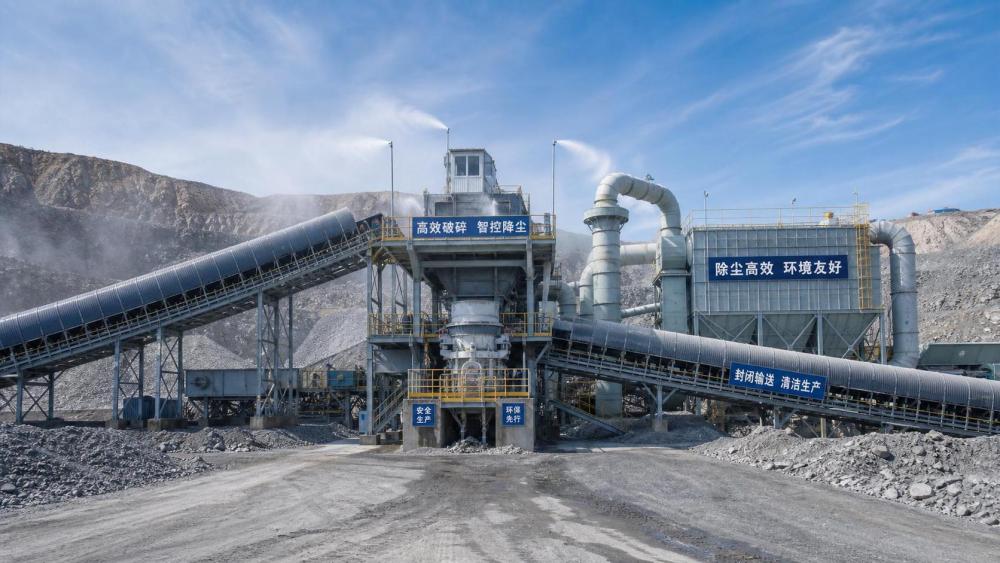
Dust control systems are often discussed as air management tools.
In mining, their role is broader.
They support mine safety equipment dust control strategies by limiting ignition risk, reducing sightline loss, and lowering exposure to respirable particles.
That matters in blasting zones, crushing stations, haul roads, transfer points, and enclosed processing areas.
The practical question is not whether dust is present.
It is how dust behaves at each stage of production.
Some operations release coarse visible dust that affects traffic control.
Others generate fine particles that stay airborne and create long-term health pressure.
That difference shapes how mine safety equipment dust control should be selected, installed, and maintained.
Within industrial equipment analysis, this is also a lifecycle issue.
A dust system affects uptime, maintenance frequency, water use, power demand, and compliance performance.
That is why Industrial Edge Global often frames safety equipment as part of operating reliability, not only regulation.
Different Mining Areas Create Different Dust Risks
A common mistake is treating all mine dust as one problem.
In practice, the source, particle size, airflow pattern, and process timing can be very different.
That is why mine safety equipment dust control should start with location-based judgment.
Drilling and blasting zones need fast suppression
These areas produce short, intense dust events.
The main concern is immediate worker exposure and temporary loss of visibility.
Water spray systems, drill shrouds, and localized extraction usually matter more than centralized collection.
Response speed is often more important than maximum filtration efficiency.
Crushing and screening lines need continuous capture
Here, dust release is repetitive and tied to machine throughput.
Transfer chutes, feed hoppers, and screens generate predictable emission points.
Enclosures, bag filters, and negative-pressure extraction often fit better than general spraying.
The key is to match system capacity with peak material flow, not average output.
Haul roads and loading areas need visibility control
This scenario affects mobile equipment safety more directly.
Poor dust control can weaken braking judgment, collision avoidance, and roadside awareness.
Road spray trucks, chemical suppressants, and speed-linked traffic management are common solutions.
In dry climates, surface binding performance often matters more than simple water volume.
What the Main Scenarios Usually Demand
The table below helps compare where mine safety equipment dust control priorities begin to diverge.
This comparison also shows why no single device defines strong mine safety equipment dust control.
The system has to follow the production path.
Underground and Surface Mines Rarely Need the Same Approach
Surface mines usually deal with wind, traffic movement, and large open emission zones.
Underground sites face tighter airflow control and less tolerance for suspended fine dust.
That changes both the equipment choice and the safety logic behind it.
In an open pit, dust suppression may be distributed across roads, stockpiles, and loading points.
The challenge is often scale and coverage.
Underground, the stronger concern is concentration inside restricted spaces.
Here, mine safety equipment dust control must work with fans, ducts, scrubbers, and escape planning.
A system that adds moisture without managing drainage can create secondary hazards.
A filter unit that ignores ventilation balance can reduce overall airflow efficiency.
This is where industrial automation also starts to matter.
Sensor-driven monitoring, interlocked suppression, and alarm integration help connect dust control with broader mine safety equipment performance.
Where Projects Often Misjudge Dust Control Needs
The most frequent error is buying for dust volume alone.
Visible dust can look severe, yet finer particles may create the larger health and compliance problem.
Another issue is treating water spray as a universal fix.
Sprays can help, but they are less effective when droplet size, nozzle placement, or airflow direction are wrong.
They can also affect downstream handling if moisture limits are tight.
There is also a capital planning mistake.
Some installations compare upfront equipment cost but ignore service access, consumables, water availability, and downtime during maintenance.
From an asset perspective, weak mine safety equipment dust control can shorten component life around conveyors, motors, sensors, and operator cabins.
That broader impact is often more expensive than the initial control system itself.
- Do not size extraction by nominal throughput only.
- Do not separate dust control from ventilation and traffic design.
- Do not assume similar ores behave the same after crushing or transfer.
- Do not overlook maintenance access around hoods, ducts, and filters.
A Practical Way to Match Systems to Site Conditions
A useful starting point is to map dust generation against operating steps.
That shows whether the site needs suppression, capture, enclosure, or a combined approach.
In many operations, the best result comes from layering methods rather than relying on one technology.
Confirm the physical conditions first
- Particle size profile and material moisture.
- Wind or ventilation behavior at release points.
- Duty cycle, seasonal changes, and peak loading.
- Water supply, drainage, and power constraints.
Then connect control choices to mine safety equipment goals
If collision risk rises on roads, prioritize visibility stability.
If exposure readings rise near crushers, prioritize capture efficiency and sealing.
If combustible dust is a concern, housekeeping, ignition control, and monitoring should be evaluated together.
This is also where structured industrial information becomes valuable.
Comparing systems by lifecycle value, automation compatibility, and maintenance burden gives a better basis for investment than nameplate data alone.
What to Review Before the Next Upgrade Decision
Strong mine safety equipment dust control is rarely the result of one purchase.
It comes from matching control methods to real operating conditions and then checking how those methods perform over time.
The most reliable next step is to review dust points by process stage, compare site constraints, and identify where safety risk is driven by exposure, visibility, or ignition potential.
After that, verify implementation difficulty, spare parts needs, utility demand, and integration with existing mine safety equipment.
That approach makes dust control a measurable part of operational reliability, not a separate compliance task.
For complex industrial projects, that is usually the difference between a temporary fix and a durable safety improvement.
Related News
 What is driving consolidation in the global equipment supplier market?IEG Heavy Machinery & Automation AnalystGlobal equipment supplier market consolidation is accelerating through technology, service, and supply-chain demands. Discover how buyers can capture value while managing risk.
 When does capital equipment investment pay back in manufacturing?IEG Heavy Machinery & Automation AnalystCapital equipment investment manufacturing: learn when equipment truly pays back by evaluating full costs, cash flow, ramp-up, operational risks, and lifecycle value.
 When does a distribution center need an automated pallet handling system?Heavy Lifting Systems AnalystPallet handling systems help distribution centers overcome labor shortages, bottlenecks, safety risks, and storage constraints. Discover the key signs it’s time to automate.
 How to build a machinery investment plan around payback periodIEG Heavy Machinery & Automation AnalystMachinery investment planning manufacturing guide: build a credible payback plan with full costs, ramp-up assumptions, lifecycle risks, and scenario-based cash benefits.
 How to Specify a Modular Packaging Line for Fast Changeovers and Scalable OutputRobotics EngineerModular packaging line specification guide: achieve faster changeovers, scalable output, reliable controls, and lower lifecycle costs with practical planning.
 How industrial IoT devices reduce unplanned downtime in factoriesRobotics EngineerIndustrial IoT devices help factories detect early equipment issues, plan maintenance, and reduce costly unplanned downtime before production is disrupted.
 What is driving industrial machinery market demand in manufacturing?IEG Heavy Machinery & Automation AnalystIndustrial machinery market manufacturing demand is rising as factories pursue automation, energy efficiency, resilient supply chains, and lifecycle productivity gains.
 316L Stainless Steel Pipe Tube Technical Factors That Shape Buyer DecisionsCNC Machining AnalystA technical analysis for 316L stainless steel pipe tube buyers, covering corrosion expectations, pipe route choice, tolerance, surface, and inspection.
 How ground conditions determine crawler piling equipment selectionConstruction Equipment SpecialistCrawler piling equipment selection starts with ground conditions. Learn how soil, rock, groundwater and site constraints shape safer, more productive piling solutions.
 3300mm CNC Beam Saw Sheet Capacity: Layout Checks Before PurchaseCNC Machining AnalystZhongding ZD330 beam saw specifications: assess 3300mm sheet capacity, layout clearances, handling flow, and acceptance checks before buying.
 How Bucket Chain Diamond Dredgers Meet ISO 12100 Safety Requirements in Alluvial Mining ProjectsMining Infrastructure ExpertBucket chain diamond dredger safety made real: how ISO 12100 compliance ensures operator protection, reliability & zero lost-time injuries in alluvial mining.
 Modular Packaging for High-Mix Automotive Assembly Lines: How Standardized Load Units Reduce Line Changeover Time by 37% — Case Study from Tier-1 Supplier in GuangdongHeavy Lifting Systems AnalystModular packaging slashes automotive line changeover time by 37%—discover how standardized load units boost OEE, cut labor costs, and enable seamless high-mix assembly.