How Long Does a Drilling Machine Last in Mining Operations?




A drilling machine can look perfectly serviceable at the start of a shift and still become the source of a costly production interruption before the day ends. A feed system begins to move unevenly, penetration slows in a harder band of rock, or the operator notices that vibration has changed. The immediate question is usually whether the machine needs a repair, a major rebuild, or replacement planning.
This is why asking how long does a drilling machine typically last in mining operations is more complicated than looking for a single number. A surface blasthole rig, a development jumbo, and a small exploration drill may all work in mining, but they experience very different loads, duty cycles, and maintenance demands. Two similar rigs can also have very different remaining value if one has received disciplined inspections and the other has spent years working through abrasive ground with delayed repairs.
The practical goal is not to predict an exact retirement date. It is to understand the condition of the machine, identify the parts of its life that are being consumed fastest, and make decisions before unplanned downtime forces the issue.
The point at which “old” becomes a production problem
Mining equipment is often kept in service for many years because the main structure is robust and major systems can be rebuilt. That does not mean every aging drill remains economical to operate. A machine can continue drilling while gradually creating hidden costs through lower availability, higher fuel or power use, repeated hose and fitting failures, poor hole accuracy, and long waits for parts.
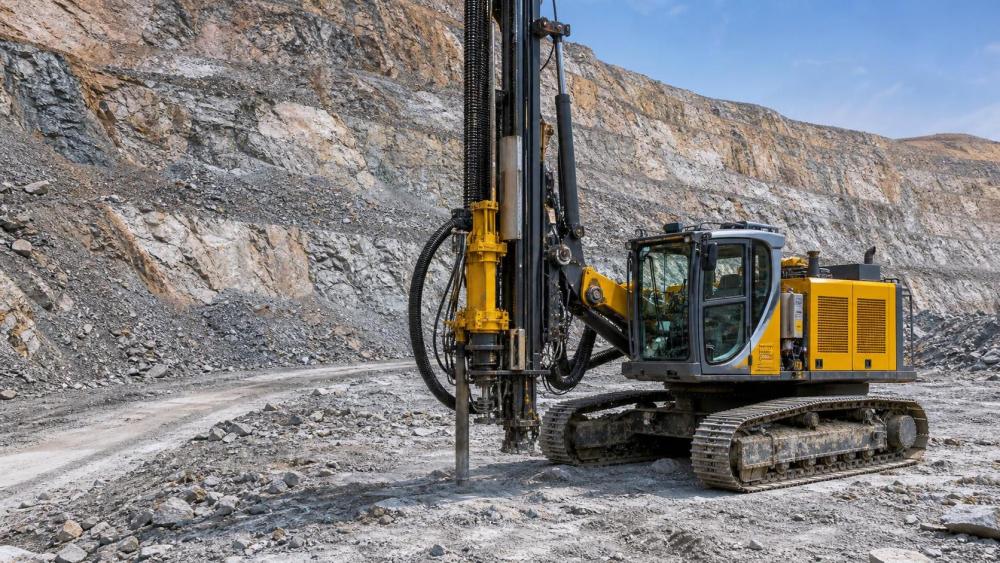
The useful life of a drilling machine is best viewed in layers. The carrier, mast, frame, and major structural components may have a long service potential if they have not suffered serious fatigue, corrosion, collision damage, or chronic overstress. Consumable drilling tools wear much faster. Components such as rock drills, rotary heads, feed cylinders, hydraulic pumps, compressors, electrical harnesses, and control modules sit between those two extremes. They can often be repaired or exchanged, but their condition strongly affects daily performance.
A common mistake is to judge life by the machine’s calendar age alone. A rig that worked intermittently in favorable ground may be in better condition than a newer machine operating long shifts in dusty, wet, highly abrasive conditions. Engine hours, percussion hours, drilling meters, impact exposure, service records, and previous rebuild quality all provide more useful evidence than age by itself.
Start with the drilling environment, not the nameplate
Before estimating remaining life, describe the work the machine actually performs. This prevents broad lifespan assumptions from being applied to the wrong operating situation.
Hard, abrasive rock accelerates wear on consumables, drill strings, rotary assemblies, and components exposed to vibration. Broken or fractured ground may create binding, collaring problems, rod-handling stress, and shock loads that are not obvious in ordinary hour readings. Wet conditions can increase corrosion risk and contaminate lubricants or hydraulic systems if seals and filtration are not maintained. Fine dust places added pressure on cooling, filtration, electrical connections, and operator-enclosure systems.
Duty cycle matters just as much. A machine used mainly for short, controlled drilling intervals has a different load profile from one operating continuously in a production drilling pattern. Frequent relocation across uneven benches adds stress to undercarriage, steering, hoses, and structural joints. Underground machines may encounter constrained access, water, heat, ventilation limits, and accidental contact with walls or services. Surface rigs may face weather exposure and long idle periods between campaigns.
When reviewing a fleet, it helps to separate machines by application rather than treating all drilling hours as equivalent. Grouping production rigs, development equipment, geotechnical drills, and auxiliary units together can hide the reason one group is aging faster.
Signs that the machine is using up its remaining life faster
A drilling machine rarely moves directly from normal operation to complete failure without warning. The warnings may be scattered across operations, maintenance, and cost records, which is why they are easy to overlook.
Performance drift during ordinary work
Declining penetration rate does not automatically mean the rig is nearing the end of its life; ground conditions and tooling must be considered first. But a persistent drop under comparable conditions deserves investigation. Look for unstable rotation, reduced impact energy, inconsistent feed pressure, excessive flushing losses, or repeated difficulty maintaining hole alignment. When operators compensate by pushing the machine harder, wear can accelerate across several systems at once.
Repeat repairs in the same system
A replaced hose is normal maintenance. Repeated hose failures in the same zone may point to poor routing, excessive vibration, pressure spikes, damaged clamps, or a larger hydraulic issue. The same principle applies to recurring electrical faults, leaking cylinders, premature bearing wear, or repeated failures of drill-control components. Counting repair events without tracing the cause can make a rig appear maintainable when it is actually becoming unreliable.
Structural clues that should not be postponed
Cracks near mast pivots, feed beams, welds, mounting points, and high-load joints need prompt assessment. So do unusual movement at pins and bushings, deformation around drilled or repaired areas, and signs that the mast no longer tracks as intended. Structural concerns are different from routine component wear because they may affect safe operation and can become more expensive if the machine continues working under load.
Maintenance time that grows without restoring availability
Every mature machine needs more attention than a new one. The concern begins when maintenance hours rise but dependable operating time does not recover. If planned service increasingly turns into fault-finding, or if parts replacement is followed quickly by another related issue, the operation should compare the cost of continued repair with the value of a defined rebuild or replacement plan.
A workable way to estimate remaining service life
Instead of asking whether a rig is “good” or “bad,” build a condition picture from four sources: operating history, physical inspection, performance data, and supportability. This approach is more useful when preparing a budget, deciding whether to move a machine to lighter work, or evaluating used equipment.
Begin with service records, but do not assume missing records mean the machine has been neglected. They mean uncertainty is higher, and the inspection needs to be more thorough. Match repair invoices and work orders to the machine’s operating history. Repeated attention to the same component family may reveal a weak point. A documented major rebuild can add value, but only if the scope, parts used, and work quality are clear.
Next, observe the rig while it performs a representative task. Static inspection cannot show poor drilling behavior, pressure instability, delayed responses, or an operator’s need to make constant corrections. Compare actual operation against the machine’s expected setup and performance for that application. If possible, involve both the person who operates the machine and the technician responsible for its maintenance; each sees different early symptoms.
Then divide findings into three categories: items that require immediate repair, items that can be scheduled during the next maintenance window, and items that need trend monitoring. This distinction is important. Treating every defect as an emergency creates unnecessary disruption, while treating every defect as routine can expose the operation to avoidable failure.
When a rebuild makes more sense than replacement
A rebuild can be sensible when the base machine remains structurally sound, the application is stable, and reliable parts and technical support remain available. Common candidates include machines with a healthy carrier and mast but worn hydraulic, drilling, electrical, or powertrain systems. A planned rebuild also allows work to be coordinated instead of performed piecemeal during breakdowns.
However, a rebuild should be evaluated as an operating decision, not simply a repair decision. Ask whether the machine will still meet drilling depth, hole diameter, automation, safety, emissions, and site-integration requirements after the work is complete. Consider whether the control system can be supported, whether the rig can communicate with fleet systems if that is required, and whether operators will face an increasingly difficult parts situation.
Replacement planning becomes more compelling when structural repair is recurring, critical components are obsolete or difficult to source, downtime disrupts production schedules, or the machine no longer fits the mine plan. A rig may still be usable in a less demanding role, but that does not automatically make reassignment economical. Transport, reconfiguration, training, and maintenance support should be considered before moving an aging unit to another site.
Maintenance practices that have the strongest effect on longevity
Most drilling machines do not lose life because of one dramatic event. They lose it through accumulated contamination, misalignment, inadequate lubrication, heat, vibration, and delayed correction of small faults. A practical maintenance program focuses on the sources of that accumulation.
Hydraulic cleanliness deserves close attention because drilling rigs depend heavily on stable hydraulic performance. Follow the equipment manufacturer’s specified fluid, filtration, sampling, and change practices. Investigate contamination rather than merely replacing filters more often. Water ingress, damaged breathers, poor storage of service fluids, and worn seals can all shorten the life of expensive components.
Lubrication systems for the rock drill, drill string, and moving joints should be checked for correct delivery rather than assumed to be working. Insufficient lubrication can cause rapid wear; excessive or unsuitable lubricant can create different problems. Operators should also report changes in sound, vibration, heat, or drilling response early. These observations are valuable only when the reporting process is simple enough that they are not ignored during a busy shift.
Tooling management is another overlooked factor. Worn bits, damaged rods, poor thread condition, and mismatched consumables can raise load on the drill machine itself. Replacing tooling at the right time may protect more expensive assemblies and improve drilling consistency. The same applies to correct feed force, rotation settings, flushing practice, and alignment. Improper operating settings can make a sound machine appear weak while quietly increasing wear.
Use lifecycle cost to avoid the wrong decision
The cheapest immediate repair is not always the lowest-cost choice. Conversely, replacing a drill solely because it has accumulated many hours can discard a machine that still has a solid and supportable future. The decision should include repair cost, expected downtime, production impact, spare-parts exposure, operator familiarity, energy or fuel use, and the probability that another major system will soon require attention.
Keep the analysis tied to conditions that can be verified. If a major repair is proposed, define what it includes, which related components should be inspected at the same time, and what condition remains outside the scope. If replacement is being considered, compare the expected operating requirements of the next mine phase rather than comparing purchase price alone.
A drilling machine lasts longest when its use, maintenance, and replacement decisions are connected. The frame may be capable of many more working years, while a particular hydraulic circuit, control system, or drilling assembly may not be. Treating the rig as a collection of condition-managed systems gives mine teams a clearer basis for deciding whether to repair, rebuild, redeploy, or retire it before reliability becomes a daily struggle.
Related News
 What is driving consolidation in the global equipment supplier market?IEG Heavy Machinery & Automation AnalystGlobal equipment supplier market consolidation is accelerating through technology, service, and supply-chain demands. Discover how buyers can capture value while managing risk.
 When does capital equipment investment pay back in manufacturing?IEG Heavy Machinery & Automation AnalystCapital equipment investment manufacturing: learn when equipment truly pays back by evaluating full costs, cash flow, ramp-up, operational risks, and lifecycle value.
 When does a distribution center need an automated pallet handling system?Heavy Lifting Systems AnalystPallet handling systems help distribution centers overcome labor shortages, bottlenecks, safety risks, and storage constraints. Discover the key signs it’s time to automate.
 How to build a machinery investment plan around payback periodIEG Heavy Machinery & Automation AnalystMachinery investment planning manufacturing guide: build a credible payback plan with full costs, ramp-up assumptions, lifecycle risks, and scenario-based cash benefits.
 How to Specify a Modular Packaging Line for Fast Changeovers and Scalable OutputRobotics EngineerModular packaging line specification guide: achieve faster changeovers, scalable output, reliable controls, and lower lifecycle costs with practical planning.
 How industrial IoT devices reduce unplanned downtime in factoriesRobotics EngineerIndustrial IoT devices help factories detect early equipment issues, plan maintenance, and reduce costly unplanned downtime before production is disrupted.
 What is driving industrial machinery market demand in manufacturing?IEG Heavy Machinery & Automation AnalystIndustrial machinery market manufacturing demand is rising as factories pursue automation, energy efficiency, resilient supply chains, and lifecycle productivity gains.
 316L Stainless Steel Pipe Tube Technical Factors That Shape Buyer DecisionsCNC Machining AnalystA technical analysis for 316L stainless steel pipe tube buyers, covering corrosion expectations, pipe route choice, tolerance, surface, and inspection.
 How ground conditions determine crawler piling equipment selectionConstruction Equipment SpecialistCrawler piling equipment selection starts with ground conditions. Learn how soil, rock, groundwater and site constraints shape safer, more productive piling solutions.
 3300mm CNC Beam Saw Sheet Capacity: Layout Checks Before PurchaseCNC Machining AnalystZhongding ZD330 beam saw specifications: assess 3300mm sheet capacity, layout clearances, handling flow, and acceptance checks before buying.
 How Bucket Chain Diamond Dredgers Meet ISO 12100 Safety Requirements in Alluvial Mining ProjectsMining Infrastructure ExpertBucket chain diamond dredger safety made real: how ISO 12100 compliance ensures operator protection, reliability & zero lost-time injuries in alluvial mining.
 Modular Packaging for High-Mix Automotive Assembly Lines: How Standardized Load Units Reduce Line Changeover Time by 37% — Case Study from Tier-1 Supplier in GuangdongHeavy Lifting Systems AnalystModular packaging slashes automotive line changeover time by 37%—discover how standardized load units boost OEE, cut labor costs, and enable seamless high-mix assembly.