Mining Project Development Risks That Delay Production Startups




Where mining project development usually starts slipping
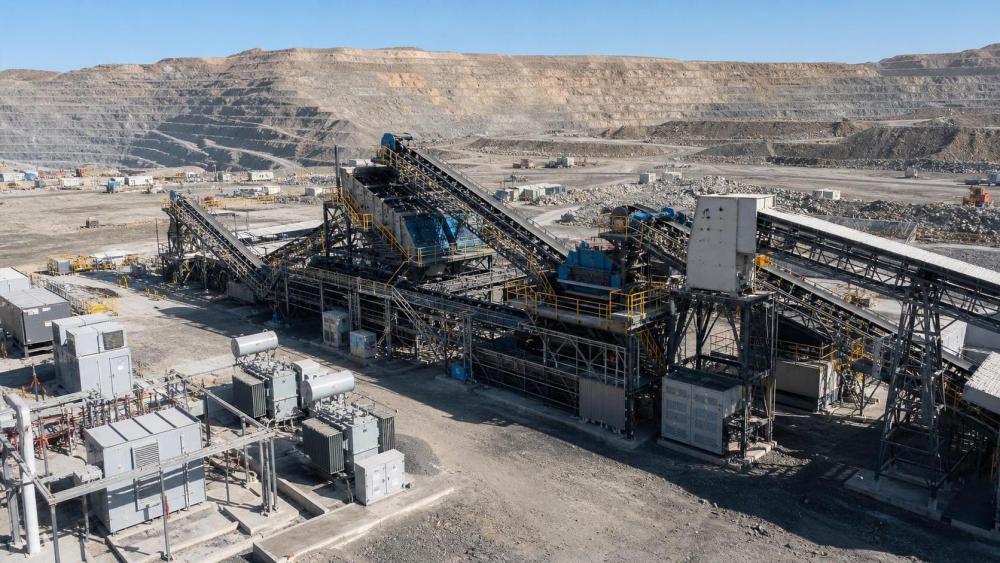
Mining project development rarely falls behind because of one obvious failure.
More often, startup dates move when early assumptions look reasonable on paper but break under field conditions.
Permitting, access roads, power supply, process equipment delivery, and contractor interfaces tend to interact long before commissioning.
That is why mining project development needs a scenario-based review, not a single master schedule and a generic contingency line.
In practical industrial planning, risk decisions change with ore body location, infrastructure maturity, processing complexity, and equipment integration depth.
This matters beyond mining alone.
Heavy machinery, automation systems, material handling equipment, and control architecture all shape whether production startup is merely delayed or structurally compromised.
A technical intelligence approach, similar to how Industrial Edge Global frames capital equipment decisions, helps connect specifications, lifecycle risk, and real project conditions.
Different mine settings create different schedule risks
Mining project development looks very different in a greenfield copper site than in a brownfield expansion beside an operating plant.
The first usually struggles with enabling infrastructure.
The second often struggles with shutdown windows, tie-ins, and interference with current production.
Underground projects add ventilation, geotechnical sequencing, and tighter access constraints.
Open-pit developments usually feel more flexible early, yet they can be heavily exposed to haul road readiness and fleet mobilization timing.
Processing routes also matter.
A simple crushing and screening line has different startup risks than flotation, leaching, or high-pressure grinding circuits with deeper automation dependency.
When capital equipment has long lead times or complex interfaces, the risk is no longer only delayed delivery.
The real issue becomes sequence compression during installation and testing.
A quick comparison of where delays tend to build
This is where mining project development benefits from structured equipment and system comparison rather than isolated package decisions.
In remote projects, infrastructure becomes the real plant predecessor
Remote mining project development often treats roads, substations, water pipelines, and temporary facilities as supporting work.
In reality, these packages often determine whether major equipment can even arrive and be installed.
A mill can be mechanically complete and still sit idle if reagent storage, tailings access, or diesel backup is unresolved.
More common than expected is a mismatch between transport assumptions and actual module dimensions.
Bridges, turning radii, weather windows, and crane capacity can shift delivery by weeks.
The better judgment method is to map every oversized component against the route, season, and unload method before final procurement release.
Power is another recurring blind spot.
Temporary power may support construction, yet fail to support dry commissioning, control room testing, and early ore handling under realistic load.
For projects using advanced drives, conveyors, pumps, and process control, the transition from temporary supply to permanent power deserves its own milestone gate.
Brownfield mining project development is often delayed by interface density
Brownfield work appears safer because roads, utilities, workshops, and labor access already exist.
Yet mining project development inside an operating site introduces a different risk profile.
The startup date depends on what can be isolated, when production can stop, and how fast new systems can be tied into existing ones.
A frequent mistake is assuming that shared infrastructure automatically reduces risk.
Shared pumps, substations, control rooms, or conveyors can turn one delayed modification into a plant-wide bottleneck.
This is especially true when legacy automation has undocumented logic or obsolete spare parts.
In these cases, schedule protection comes from interface ownership.
Every tie-in should have one accountable lead, one shutdown window, and one tested fallback path.
Without that discipline, mechanical completion can look on time while startup readiness is already slipping.
Equipment lead times only matter when they affect system readiness
Mining project development teams often track long-lead packages carefully, but still misread schedule exposure.
The issue is not simply whether a crusher, stacker, or filter press ships late.
The issue is whether that delay blocks adjacent works, cable routing, software integration, or operator training.
Industrial projects with deeper automation content show this clearly.
Sensors, drives, PLC hardware, communication modules, and HMI configuration may come from different suppliers with different revision cycles.
If these packages are purchased as separate cost items, startup risk can hide between contracts.
A stronger approach is to review equipment by operational dependency:
- What must be energized first for safe commissioning.
- Which vendor packages need common data structures or control logic.
- Where spare parts and specialist technicians may become startup constraints.
- Which components cannot be fully tested until live ore is introduced.
This kind of lifecycle view is increasingly important across heavy machinery and industrial control systems, not only in mining.
Contractor alignment changes by construction and commissioning phase
Not every delay in mining project development begins with engineering or procurement.
Many emerge when civil, mechanical, electrical, and automation contractors work to different definitions of completion.
In field execution, one package may be called complete because installation ended.
Another package may require punch closure, loop checks, and interlock testing before handover.
That gap is where startup dates quietly erode.
The pattern is even more visible where modular construction is used.
Factory-assembled skids can reduce site work, but only if foundation tolerances, cable interfaces, and piping standards were aligned early.
Otherwise, off-site speed is lost during on-site rework.
A practical control is to create phase-specific readiness criteria instead of one generic progress measure.
Common misjudgments that make mining project development look healthier than it is
Several errors appear repeatedly across industrial capital projects.
They are especially costly in mining project development because startup revenue is tied directly to throughput and recovery timing.
- Treating permit issuance as the end of regulatory risk, while discharge, blasting, or tailings conditions still affect sequence.
- Selecting equipment on nameplate capacity without checking maintainability, spare parts reach, or site service access.
- Assuming similar ore bodies justify the same flowsheet, even when water chemistry or hardness changes startup behavior.
- Looking at procurement savings without pricing later rework, training gaps, and commissioning standby time.
- Using one schedule for reporting while real field logic lives in separate contractor spreadsheets.
These are not abstract planning flaws.
They directly affect startup reliability, working capital exposure, and long-term operating stability.
How to make the next risk review more useful
A better mining project development review starts by separating headline risk from sequence risk.
Some issues look serious but have workarounds.
Others look minor until they stop energization, ore feed, or safe occupancy.
The next step is to test each critical package against actual startup conditions, not only contract milestones.
- Map infrastructure readiness against equipment arrival and installation logic.
- Review control systems, instrumentation, and heavy equipment as connected operating assets.
- Check where brownfield interfaces, shutdown windows, or legacy systems create hidden dependencies.
- Confirm that training, spare parts, and vendor support align with the commissioning curve.
- Build one scenario-based risk register that reflects field reality, not only package ownership.
For mining project development, the real advantage comes from seeing how permitting, machinery, automation, logistics, and lifecycle support connect before startup pressure rises.
That is usually where delayed projects could have protected time, capital efficiency, and operational confidence much earlier.
Related News
 What is driving consolidation in the global equipment supplier market?IEG Heavy Machinery & Automation AnalystGlobal equipment supplier market consolidation is accelerating through technology, service, and supply-chain demands. Discover how buyers can capture value while managing risk.
 When does capital equipment investment pay back in manufacturing?IEG Heavy Machinery & Automation AnalystCapital equipment investment manufacturing: learn when equipment truly pays back by evaluating full costs, cash flow, ramp-up, operational risks, and lifecycle value.
 When does a distribution center need an automated pallet handling system?Heavy Lifting Systems AnalystPallet handling systems help distribution centers overcome labor shortages, bottlenecks, safety risks, and storage constraints. Discover the key signs it’s time to automate.
 How to build a machinery investment plan around payback periodIEG Heavy Machinery & Automation AnalystMachinery investment planning manufacturing guide: build a credible payback plan with full costs, ramp-up assumptions, lifecycle risks, and scenario-based cash benefits.
 How to Specify a Modular Packaging Line for Fast Changeovers and Scalable OutputRobotics EngineerModular packaging line specification guide: achieve faster changeovers, scalable output, reliable controls, and lower lifecycle costs with practical planning.
 How industrial IoT devices reduce unplanned downtime in factoriesRobotics EngineerIndustrial IoT devices help factories detect early equipment issues, plan maintenance, and reduce costly unplanned downtime before production is disrupted.
 What is driving industrial machinery market demand in manufacturing?IEG Heavy Machinery & Automation AnalystIndustrial machinery market manufacturing demand is rising as factories pursue automation, energy efficiency, resilient supply chains, and lifecycle productivity gains.
 316L Stainless Steel Pipe Tube Technical Factors That Shape Buyer DecisionsCNC Machining AnalystA technical analysis for 316L stainless steel pipe tube buyers, covering corrosion expectations, pipe route choice, tolerance, surface, and inspection.
 How ground conditions determine crawler piling equipment selectionConstruction Equipment SpecialistCrawler piling equipment selection starts with ground conditions. Learn how soil, rock, groundwater and site constraints shape safer, more productive piling solutions.
 3300mm CNC Beam Saw Sheet Capacity: Layout Checks Before PurchaseCNC Machining AnalystZhongding ZD330 beam saw specifications: assess 3300mm sheet capacity, layout clearances, handling flow, and acceptance checks before buying.
 How Bucket Chain Diamond Dredgers Meet ISO 12100 Safety Requirements in Alluvial Mining ProjectsMining Infrastructure ExpertBucket chain diamond dredger safety made real: how ISO 12100 compliance ensures operator protection, reliability & zero lost-time injuries in alluvial mining.
 Modular Packaging for High-Mix Automotive Assembly Lines: How Standardized Load Units Reduce Line Changeover Time by 37% — Case Study from Tier-1 Supplier in GuangdongHeavy Lifting Systems AnalystModular packaging slashes automotive line changeover time by 37%—discover how standardized load units boost OEE, cut labor costs, and enable seamless high-mix assembly.