Industrial Control Panels: When to Repair or Replace




Industrial Control Panels: When to Repair or Replace
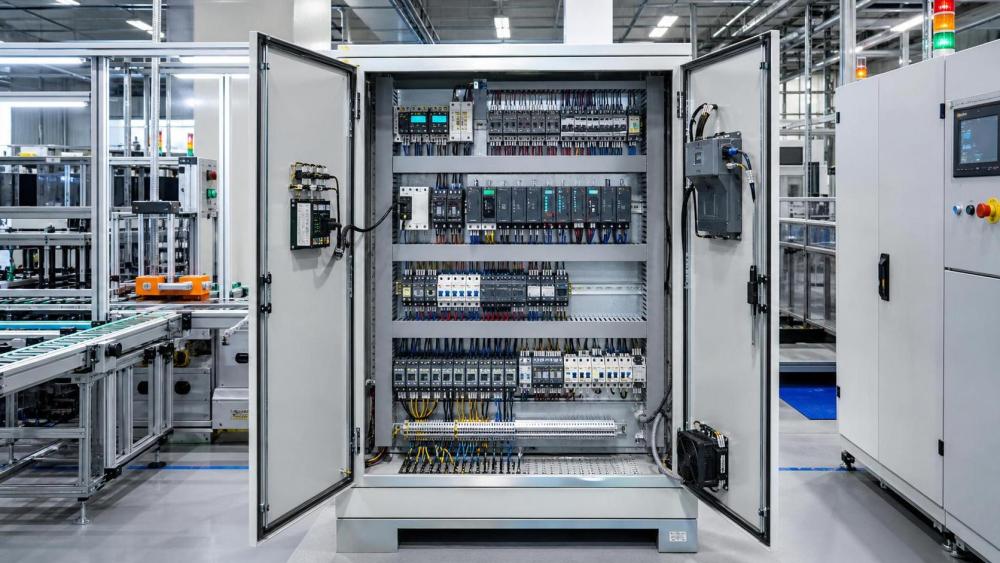
Industrial control panels sit at the center of machine control, operator safety, and process continuity.
When they fail, downtime spreads fast across production lines, utilities, and material handling systems.
The difficult part is not spotting a fault.
The difficult part is deciding whether a repair still makes sense or whether replacement is the smarter move.
In practical maintenance work, that decision rarely depends on one damaged component alone.
It usually depends on failure frequency, panel age, spare parts access, compliance exposure, and production impact.
This guide breaks down how to evaluate industrial control panels in a way that supports uptime and controls lifecycle cost.
Why the Repair-or-Replace Decision Matters
A weak decision on industrial control panels can create repeat breakdowns, hidden safety risks, and unplanned retrofit costs.
A low-cost repair may look attractive today, yet become expensive after two more stoppages next quarter.
On the other hand, replacing industrial control panels too early can waste usable assets and stretch maintenance budgets.
That is why the decision should focus on business value, not only the immediate repair ticket.
In many facilities, panel reliability affects more than one machine.
It can affect upstream feeding, downstream packaging, utilities, conveyors, alarms, and production reporting.
From a lifecycle perspective, industrial control panels should be treated as production assets, not just electrical enclosures.
Start With the Condition of the Panel
The first step is a structured inspection.
Do not begin with assumptions based only on panel age.
Some older industrial control panels remain stable because the environment is clean and loading is predictable.
Others degrade quickly because of heat, moisture, vibration, dust, or frequent load changes.
A useful inspection checklist should cover these points:
- Burn marks, discoloration, or insulation damage
- Loose terminals, worn contactors, or relay fatigue
- Corrosion on busbars, terminals, or grounding points
- Cooling fan failure, blocked filters, or heat buildup
- PLC, HMI, or drive faults that repeat under load
- Unauthorized wiring changes or undocumented modifications
- Damaged door seals, enclosure weakness, or ingress risk
If most problems are isolated and clearly repairable, repair often remains a sound option.
If several systems show age-related degradation together, replacement becomes more realistic.
Look at Failure Patterns, Not Single Events
One failure does not automatically mean industrial control panels are at end of life.
What matters more is the pattern behind the event.
A failed power supply after years of service is different from recurring faults across relays, drives, wiring, and communications.
Repeated issues usually point to declining reliability across the whole control architecture.
Review maintenance history for the last 12 to 24 months.
Track not only the number of incidents, but also downtime duration and root cause quality.
More frequent alarms, nuisance trips, and intermittent signal losses are stronger warning signs than a single hard failure.
In actual service work, unstable industrial control panels often consume labor before they fully fail.
That hidden labor cost should be part of the decision.
Check Spare Parts Availability Early
Spare parts availability is one of the clearest decision points for industrial control panels.
If core components are obsolete, repair may solve today's problem while increasing tomorrow's risk.
This is especially true for PLC CPUs, legacy HMIs, communication cards, drives, and proprietary I/O modules.
A repair strategy becomes fragile when parts only exist through broker channels or used inventories.
That does not always force immediate replacement.
But it does change the risk profile of industrial control panels significantly.
Ask these questions during evaluation:
- Are original components still supported by the manufacturer?
- Can equivalent parts be validated without redesign?
- What is the lead time for critical replacement items?
- Will the repair create mixed-generation control hardware?
- Can the site stock critical spares at reasonable cost?
If the answer to most of these is unfavorable, replacement deserves serious attention.
Consider Safety and Compliance Exposure
Industrial control panels cannot be judged on uptime alone.
Safety and compliance often turn a repair decision into a replacement case.
This becomes more visible when equipment has been modified over years without updated drawings or verified protection settings.
Panels may still run, yet no longer meet current safety expectations.
Common compliance triggers include short-circuit rating gaps, arc flash concerns, weak grounding, and missing isolation practices.
Ingress protection and thermal performance may also fall short after enclosure wear or layout changes.
When industrial control panels create unresolved safety exposure, replacement often delivers cleaner risk reduction than repeated patch repairs.
That is particularly true in regulated plants or customer-facing production environments.
Compare Total Cost, Not Just Repair Cost
The direct repair bill is only one part of the equation.
A better comparison looks at total cost over the next three to five years.
For industrial control panels, that includes labor, production loss, emergency callouts, spare parts carrying cost, and retrofit interruptions.
It should also include the cost of keeping outdated software tools, communication protocols, and technician knowledge in service.
This kind of comparison usually produces a more defensible answer than repair price alone.
Replacement Makes More Sense During Upgrades
A planned upgrade window often changes the economics of industrial control panels.
If a line already needs new drives, sensors, energy monitoring, or network integration, panel replacement may fit naturally.
That approach reduces repeated shutdowns and avoids building new automation onto weak legacy foundations.
More importantly, new industrial control panels can improve layout clarity, heat management, diagnostics, and service access.
From a maintenance standpoint, cleaner wiring and standardized components shorten troubleshooting time later.
This also supports better documentation, easier training, and more stable spare parts planning.
A Practical Decision Framework
When deciding on industrial control panels, use a simple scoring model.
Score each area from low risk to high risk.
- Physical condition
- Failure recurrence
- Spare parts support
- Safety and compliance
- Downtime consequence
- Upgrade compatibility
If one area scores high, repair may still be acceptable with controls in place.
If three or more areas score high, replacement is usually the more reliable path.
This method helps make decisions consistent across different industrial control panels and sites.
It also improves communication with operations, procurement, and management teams.
Final Takeaway
The best decision on industrial control panels is rarely based on age alone.
It comes from looking at reliability trends, spare parts risk, compliance exposure, and future production needs together.
Repair is often right when the fault is isolated, the design remains supportable, and downtime risk is manageable.
Replacement is often right when industrial control panels show repeated instability, obsolete hardware, or unresolved safety concerns.
In day-to-day maintenance planning, the most useful move is to document condition now, score the risk, and act before the next forced outage.
That approach leads to better uptime, clearer budgeting, and more predictable control system performance.
Related News
 What is driving consolidation in the global equipment supplier market?IEG Heavy Machinery & Automation AnalystGlobal equipment supplier market consolidation is accelerating through technology, service, and supply-chain demands. Discover how buyers can capture value while managing risk.
 When does capital equipment investment pay back in manufacturing?IEG Heavy Machinery & Automation AnalystCapital equipment investment manufacturing: learn when equipment truly pays back by evaluating full costs, cash flow, ramp-up, operational risks, and lifecycle value.
 When does a distribution center need an automated pallet handling system?Heavy Lifting Systems AnalystPallet handling systems help distribution centers overcome labor shortages, bottlenecks, safety risks, and storage constraints. Discover the key signs it’s time to automate.
 How to build a machinery investment plan around payback periodIEG Heavy Machinery & Automation AnalystMachinery investment planning manufacturing guide: build a credible payback plan with full costs, ramp-up assumptions, lifecycle risks, and scenario-based cash benefits.
 How to Specify a Modular Packaging Line for Fast Changeovers and Scalable OutputRobotics EngineerModular packaging line specification guide: achieve faster changeovers, scalable output, reliable controls, and lower lifecycle costs with practical planning.
 How industrial IoT devices reduce unplanned downtime in factoriesRobotics EngineerIndustrial IoT devices help factories detect early equipment issues, plan maintenance, and reduce costly unplanned downtime before production is disrupted.
 What is driving industrial machinery market demand in manufacturing?IEG Heavy Machinery & Automation AnalystIndustrial machinery market manufacturing demand is rising as factories pursue automation, energy efficiency, resilient supply chains, and lifecycle productivity gains.
 316L Stainless Steel Pipe Tube Technical Factors That Shape Buyer DecisionsCNC Machining AnalystA technical analysis for 316L stainless steel pipe tube buyers, covering corrosion expectations, pipe route choice, tolerance, surface, and inspection.
 How ground conditions determine crawler piling equipment selectionConstruction Equipment SpecialistCrawler piling equipment selection starts with ground conditions. Learn how soil, rock, groundwater and site constraints shape safer, more productive piling solutions.
 3300mm CNC Beam Saw Sheet Capacity: Layout Checks Before PurchaseCNC Machining AnalystZhongding ZD330 beam saw specifications: assess 3300mm sheet capacity, layout clearances, handling flow, and acceptance checks before buying.
 How Bucket Chain Diamond Dredgers Meet ISO 12100 Safety Requirements in Alluvial Mining ProjectsMining Infrastructure ExpertBucket chain diamond dredger safety made real: how ISO 12100 compliance ensures operator protection, reliability & zero lost-time injuries in alluvial mining.
 Modular Packaging for High-Mix Automotive Assembly Lines: How Standardized Load Units Reduce Line Changeover Time by 37% — Case Study from Tier-1 Supplier in GuangdongHeavy Lifting Systems AnalystModular packaging slashes automotive line changeover time by 37%—discover how standardized load units boost OEE, cut labor costs, and enable seamless high-mix assembly.