When does higher precision in automated assembly systems pay off?




In automated assembly systems, precision is never just a technical upgrade—it is a financial decision. For business leaders evaluating capital investment, the real question is not whether higher precision sounds better, but when automated assembly systems precision delivers measurable gains in quality, throughput, scrap reduction, and lifecycle cost. Understanding where tighter tolerances create real operational value helps manufacturers invest with greater confidence and avoid overengineering.
When Does Higher Precision Actually Create Business Value?
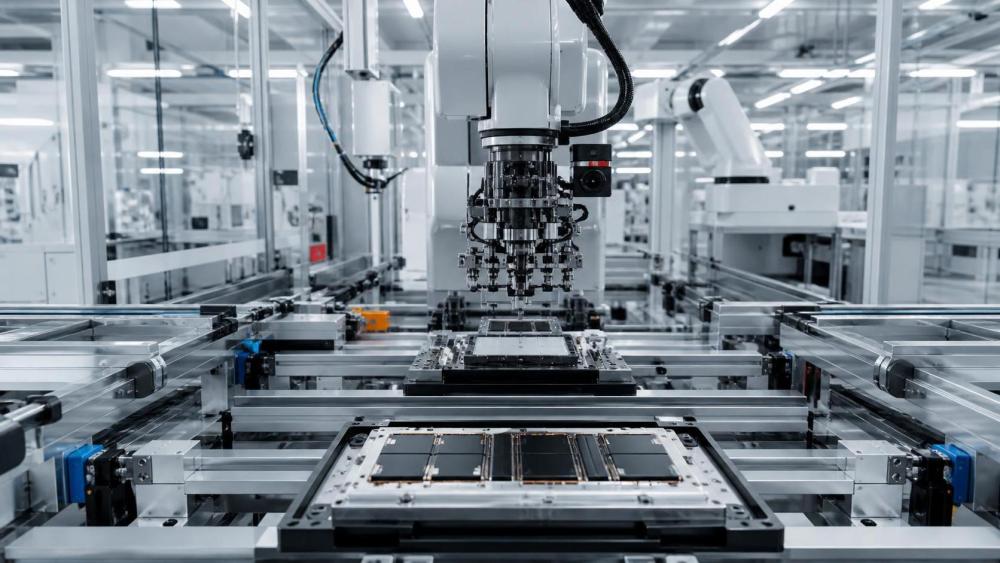
Higher precision pays off when assembly accuracy directly affects yield, product function, compliance, or downstream process stability. It matters most where small deviations create expensive defects or rework.
For decision-makers, the key issue is not maximum capability. It is whether tighter automated assembly systems precision improves commercial performance enough to justify higher capital and operating cost.
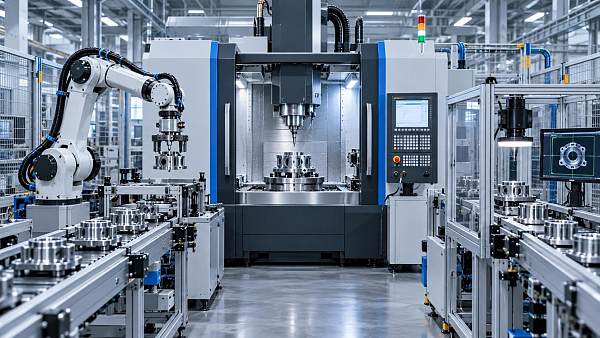
That threshold is usually reached in products with tight fit requirements, miniature components, safety-critical assemblies, or automated lines where one positioning error can disrupt multiple stations.
Examples include electronics modules, medical devices, battery packs, precision automotive components, connectors, sensors, and assemblies that depend on controlled force, alignment, or calibrated fastening.
In these settings, precision can reduce hidden losses that are larger than many buyers expect. Those losses often include scrap, warranty claims, inspection burden, production interruptions, and delayed customer approval.
By contrast, higher precision has weaker economic value in assemblies with wide tolerance windows, forgiving materials, manual correction steps, or low product value relative to equipment investment.
If a process can already meet specification comfortably, upgrading to much tighter tolerances may improve a technical metric without materially improving margin, output, or customer satisfaction.
What Problems Are Executives Really Trying to Solve?
Enterprise buyers rarely pursue precision for its own sake. They are trying to solve quality instability, rising labor dependence, costly rework, weak traceability, and output limitations.
Many assembly operations appear acceptable until growth increases pressure on consistency. As volumes rise, small placement errors, fastening variation, and alignment drift become larger commercial problems.
Management teams usually want answers to five practical questions. Will better precision lower total defect cost, support faster cycle times, reduce operator intervention, protect brand reputation, and scale production reliably?
They also want to understand the risk side. Higher precision equipment often brings stricter maintenance needs, more demanding fixturing, better environmental control, and higher integration complexity.
That is why the investment decision should be linked to business pain points. The strongest case appears when defects are expensive and process variation is already constraining growth.
In short, precision becomes valuable when it removes a bottleneck that affects financial performance. Without that link, the purchase can become an engineering upgrade with weak payback.
Where Automated Assembly Systems Precision Delivers the Best Return
The return on precision is highest where tolerance control directly protects product performance. Assemblies involving sealing, electrical contact, torque integrity, optical alignment, or thermal interfaces fit this profile.
Battery manufacturing is a clear example. Cell placement, tab welding position, adhesive application, and module alignment all influence safety, reliability, and pack consistency.
Automotive suppliers also benefit when higher precision improves press-fit quality, sensor positioning, gear alignment, or fastener control across high-volume repetitive production environments.
Electronics assembly gains value from precision because component density is high and error recovery can be difficult. Minor placement variation may cause latent defects or testing failures.
Medical and regulated industries often justify tighter precision through compliance risk reduction. A failed audit, field issue, or recall can outweigh equipment cost very quickly.
Precision also pays off when it enables more automation overall. If tighter control removes the need for manual adjustment, inspection, or sorting, the total value extends beyond accuracy alone.
Another strong case appears in multi-station lines. Better positioning at an early station improves success rates downstream, which multiplies the benefit across the system.
When Higher Precision Does Not Pay Off
Not every production line should chase tighter tolerances. In some cases, the process variation that matters most comes from material inconsistency, unstable incoming parts, or poor upstream preparation.
If component quality is inconsistent, a more precise assembly platform may simply expose supply problems rather than solve them. The investment then underperforms expectations.
Low-value products with generous fit tolerance may also struggle to justify the cost. If defects are inexpensive and output is not constrained, premium precision can be excessive.
Another weak case is low-volume production with frequent design changes. Complex precision systems may require longer setup, expensive retooling, and more engineering support than the business can absorb.
There is also a human capability issue. If maintenance teams cannot sustain calibration, cleanliness, sensor reliability, and fixture discipline, theoretical precision will not translate into stable results.
Overengineering is common when buyers evaluate machines mainly by specification sheets. A tighter repeatability figure looks attractive, but financial return depends on process context, not headline numbers.
How to Evaluate the Payback of Precision Investment
Decision-makers should assess precision through a structured value model rather than a single equipment quote. The practical question is how much loss current variation creates each year.
Start with measurable quality costs. Include scrap, rework labor, retesting, warranty exposure, line stoppages, customer complaints, and containment actions tied to assembly inaccuracy.
Next, estimate throughput effects. Better automated assembly systems precision can shorten cycle time when machines spend less time correcting position, verifying placement, or handling exceptions.
Labor savings should also be included carefully. Precision may eliminate manual alignment, reduce inspection staffing, or cut dependence on experienced operators during changeovers and peak demand.
Then consider lifecycle costs. Higher precision equipment may require better tooling, stricter environmental control, more frequent calibration, and premium spare parts, all of which affect real ownership cost.
Executives should also include the value of future capability. Precision can support new product launches, tighter customer specifications, or expansion into sectors with higher quality requirements.
A simple payback model often works well at the screening stage. Compare annual savings from defect reduction, labor efficiency, and throughput gain against added capital, integration, and support cost.
For strategic projects, net present value and scenario analysis are better tools. They capture demand uncertainty, ramp-up curves, maintenance risk, and the long life of capital equipment.
Which Technical Factors Matter More Than a Repeatability Number?
Many buyers focus too heavily on nominal accuracy specifications. In reality, precision performance depends on the full production environment, not just the robot or station rating.
Fixture design is often as important as motion capability. If workholding is unstable or datum strategy is weak, a high-precision actuator cannot produce reliable assembly results.
Part-to-part variation matters as well. Sensors, machine vision, force control, and adaptive programming are often necessary to convert mechanical precision into consistent process outcomes.
Environmental conditions can also affect results. Temperature change, vibration, contamination, compressed air quality, and floor stability all influence actual line performance over time.
System integration quality is another major factor. Precision at one station can be lost through poor transfer handling, inaccurate feeding, or inconsistent upstream orientation.
For that reason, buyers should evaluate process capability, gauge repeatability, calibration strategy, and maintenance procedures alongside machine accuracy claims. These elements determine usable precision.
What Risks Should Buyers Consider Before Upgrading?
Higher precision systems can fail financially when the organization underestimates implementation difficulty. Integration delays, tooling refinement, and debugging can extend ramp-up beyond budget assumptions.
There is also a utilization risk. If demand volume stays low or product mix shifts, the business may never use the full capability it purchased.
Supplier dependence deserves attention as well. Specialized precision equipment may require proprietary software, certified service support, or long-lead replacement components that reduce operational flexibility.
Another risk is mismatch between line precision and plant discipline. A system designed for micron-level control will not perform well in a factory environment that lacks basic process stability.
Training should be treated as part of the capital project, not an afterthought. Operators, technicians, and quality teams need clear procedures for setup, verification, and fault recovery.
Decision-makers should ask vendors for evidence from comparable applications. Proven results in similar materials, cycle times, and tolerance conditions are more valuable than generic performance claims.
How Should Business Leaders Make the Final Decision?
The most effective approach is to treat precision as an application-specific economic lever. A good decision connects tolerance improvement to measurable business outcomes and implementation readiness.
Leaders should approve higher precision when three conditions are present. Current variation creates meaningful financial loss, process control improvements can capture that loss, and the organization can sustain the system.
If one of those conditions is missing, a staged approach may be better. Companies can improve fixturing, part consistency, sensing, or operator discipline before buying a more advanced platform.
Pilot validation is often worthwhile for large projects. Running capability studies on representative parts can reveal whether precision is the true constraint or only one part of a larger process issue.
For many manufacturers, the best outcome is not the highest-specification machine. It is the system with enough precision to reliably meet quality targets at the lowest total lifecycle cost.
Conclusion
Higher precision in automated assembly systems pays off when it protects product quality, stabilizes throughput, reduces expensive defects, and supports scalable production with clear financial impact.
It does not pay off simply because tighter tolerances look impressive on a specification sheet. The value comes from matching automated assembly systems precision to process risk, product requirement, and business economics.
For industrial decision-makers, the right question is straightforward: where does additional precision remove a costly source of variation that the business can quantify and sustain? That is where investment becomes justified.
Related News
 What is driving consolidation in the global equipment supplier market?IEG Heavy Machinery & Automation AnalystGlobal equipment supplier market consolidation is accelerating through technology, service, and supply-chain demands. Discover how buyers can capture value while managing risk.
 When does capital equipment investment pay back in manufacturing?IEG Heavy Machinery & Automation AnalystCapital equipment investment manufacturing: learn when equipment truly pays back by evaluating full costs, cash flow, ramp-up, operational risks, and lifecycle value.
 When does a distribution center need an automated pallet handling system?Heavy Lifting Systems AnalystPallet handling systems help distribution centers overcome labor shortages, bottlenecks, safety risks, and storage constraints. Discover the key signs it’s time to automate.
 How to build a machinery investment plan around payback periodIEG Heavy Machinery & Automation AnalystMachinery investment planning manufacturing guide: build a credible payback plan with full costs, ramp-up assumptions, lifecycle risks, and scenario-based cash benefits.
 How to Specify a Modular Packaging Line for Fast Changeovers and Scalable OutputRobotics EngineerModular packaging line specification guide: achieve faster changeovers, scalable output, reliable controls, and lower lifecycle costs with practical planning.
 How industrial IoT devices reduce unplanned downtime in factoriesRobotics EngineerIndustrial IoT devices help factories detect early equipment issues, plan maintenance, and reduce costly unplanned downtime before production is disrupted.
 What is driving industrial machinery market demand in manufacturing?IEG Heavy Machinery & Automation AnalystIndustrial machinery market manufacturing demand is rising as factories pursue automation, energy efficiency, resilient supply chains, and lifecycle productivity gains.
 316L Stainless Steel Pipe Tube Technical Factors That Shape Buyer DecisionsCNC Machining AnalystA technical analysis for 316L stainless steel pipe tube buyers, covering corrosion expectations, pipe route choice, tolerance, surface, and inspection.
 How ground conditions determine crawler piling equipment selectionConstruction Equipment SpecialistCrawler piling equipment selection starts with ground conditions. Learn how soil, rock, groundwater and site constraints shape safer, more productive piling solutions.
 3300mm CNC Beam Saw Sheet Capacity: Layout Checks Before PurchaseCNC Machining AnalystZhongding ZD330 beam saw specifications: assess 3300mm sheet capacity, layout clearances, handling flow, and acceptance checks before buying.
 How Bucket Chain Diamond Dredgers Meet ISO 12100 Safety Requirements in Alluvial Mining ProjectsMining Infrastructure ExpertBucket chain diamond dredger safety made real: how ISO 12100 compliance ensures operator protection, reliability & zero lost-time injuries in alluvial mining.
 Modular Packaging for High-Mix Automotive Assembly Lines: How Standardized Load Units Reduce Line Changeover Time by 37% — Case Study from Tier-1 Supplier in GuangdongHeavy Lifting Systems AnalystModular packaging slashes automotive line changeover time by 37%—discover how standardized load units boost OEE, cut labor costs, and enable seamless high-mix assembly.