When does warehouse robotics palletizing deliver a real ROI?




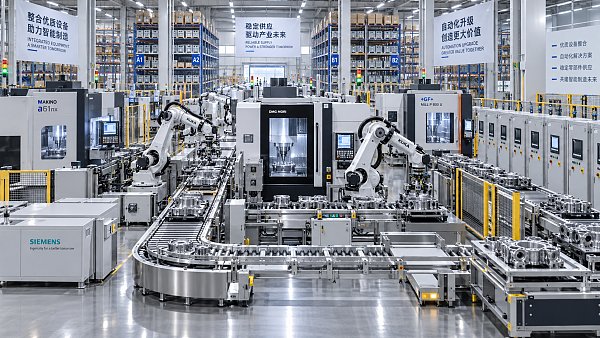
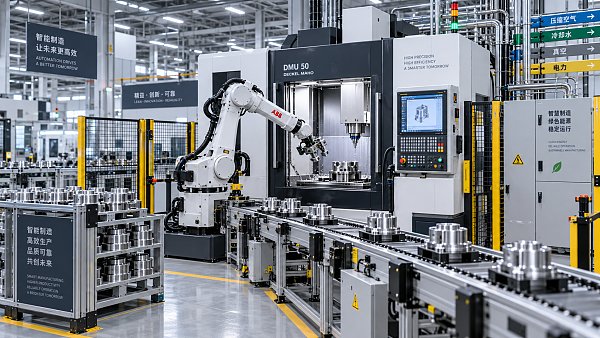
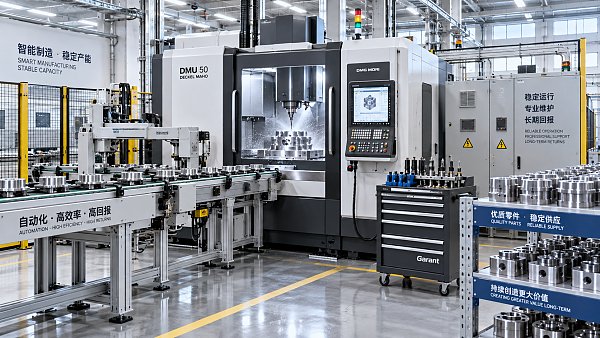
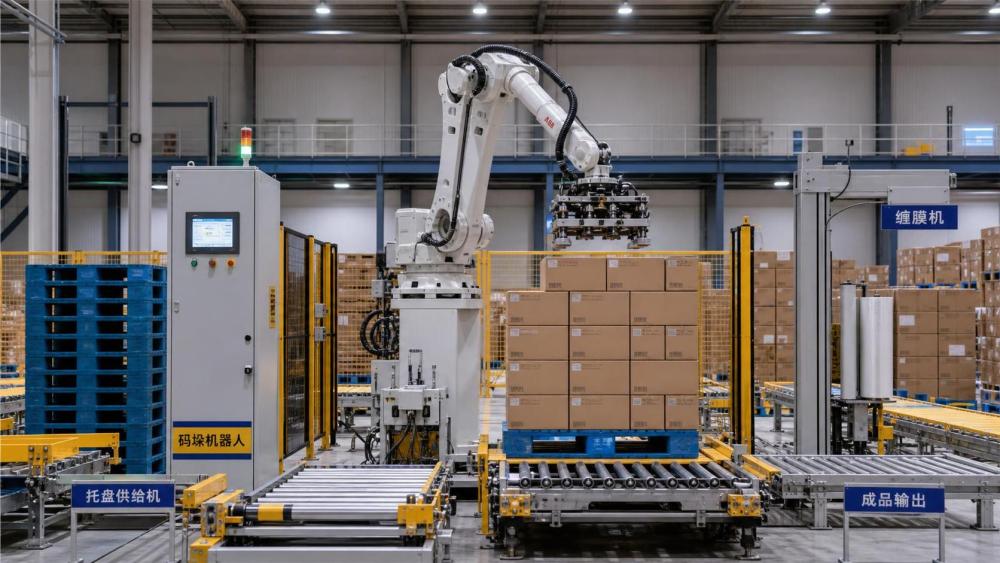
Warehouse robotics palletizing delivers a real ROI when it removes a recurring operating constraint rather than adding automation to a stable manual process. The strongest cases usually appear where pallet output is uneven across shifts, labor availability changes week to week, product handling quality affects claims or rework, or end-of-line flow is already limited by the speed and consistency of stacking. In those conditions, the investment case is built on throughput stability, packaging integrity, safer movement around the pallet cell, and fewer interruptions between production and shipping.
A common mistake is to judge the project only by headcount replacement. That narrows the analysis too early. Manual palletizing cost is tied not just to direct labor hours, but also to overtime exposure, line stoppages when staffing is thin, product drops, mixed-pallet errors, stretch-wrap waste caused by unstable loads, and the management time required to rebalance people across lines. If those issues are already controlled, warehouse robotics palletizing may still be useful, but the payback period often becomes harder to defend. If they appear repeatedly, automation starts to solve a wider cost problem.
Where the return tends to become visible
ROI usually becomes clearer when pallet patterns are repeatable, case dimensions are reasonably consistent, and shift volume is high enough to keep the robot cell active for long periods. A line that runs only occasionally, handles many unstable package types, or changes SKUs constantly without structured recipes may struggle to justify the engineering effort. By contrast, operations with regular carton flow, predictable pallet footprints, and steady dispatch cycles are easier to automate without excessive custom tooling or ongoing manual intervention.
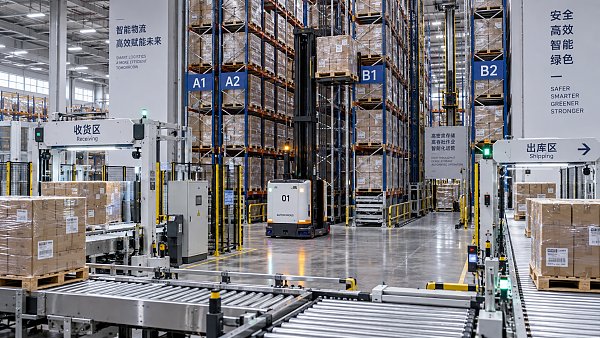
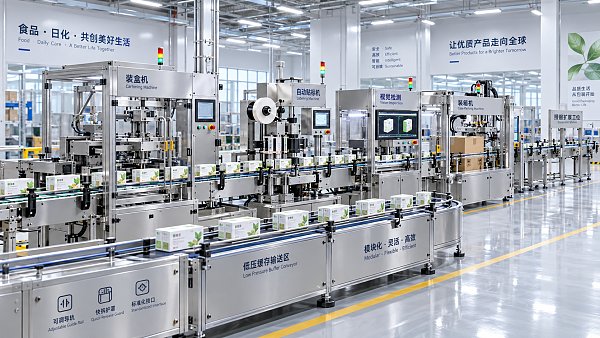
The value also rises when the palletizing point sits close to a bottleneck. If finished cartons accumulate because the stacking area cannot keep pace with upstream production, the true cost is not limited to the palletizing station. It can spread back into conveyor congestion, machine idle time, delayed wrapping, forklift waiting, and missed loading windows. In this situation, a robotic cell does more than stack boxes. It can stabilize the rhythm of the entire outbound process, especially when paired with conveyors, pallet dispensers, barcode checks, and wrapper handoff.
Another favorable condition is product damage sensitivity. Cartons containing fragile components, high-value packed goods, bagged material with shift risk, or products that must keep a strict orientation often justify automation sooner than basic bulk cartons. Consistent placement pressure, repeatable layer alignment, and controlled pallet build height can reduce leaning loads and secondary handling damage. The savings may appear in fewer returns, less repacking, and fewer rejected loads at the shipping dock, but only if pallet quality is measured before and after installation.
Throughput matters, but usable throughput matters more
Suppliers often emphasize cycle time, picks per minute, or nominal payload. Those figures matter, but they can mislead if they are detached from the actual mix of products and interruptions on site. A cell that looks fast in a demonstration can still underperform if infeed spacing is irregular, carton squareness varies, pallets arrive late, or recipe changeovers are awkward. Real ROI comes from usable throughput: the output rate maintained across a normal shift with the actual packaging materials, pallet types, label positions, and operator routines already present in the building.
That is why pre-purchase testing should focus on the difficult cases rather than the best ones. Deformed corrugated cases, glossy shrink bundles, low-friction bags, partial layers, half-pallet runs, and line restart conditions reveal more about financial value than ideal cartons moving in a clean pattern. If a robotic palletizer requires frequent manual correction whenever packaging quality drifts, the investment case weakens quickly because labor is not actually removed from the process; it is simply moved into exception handling.
End effectors deserve more scrutiny than many capital reviews give them. Vacuum tooling may be efficient for sealed cartons with reliable top surfaces, while clamp or fork-style grippers can suit other load types better. The wrong gripper can create misses, crushed cartons, product scuffing, or a need for speed reduction. Since tooling wear affects uptime directly, replacement parts availability, adjustment time, and cleaning access belong in the ROI discussion, not only in maintenance notes after purchase.
Labor economics are wider than wage comparison
Manual palletizing is often evaluated through hourly labor cost versus robot depreciation and service cost. That comparison is incomplete. The financial effect changes significantly when the operation depends on temporary labor, struggles with shift fill rates, or experiences variable productivity by crew. In those cases, the hidden cost lies in inconsistency. One shift builds clean, stable pallets; another leaves uneven loads that slow wrapping and create forklift issues later. A robotic system tends to flatten that variability if cartons are presented correctly and the line is engineered with enough buffering.
There is also a safety cost dimension, even where direct injury numbers are not part of the business case. Repetitive lifting, twisting at speed, pallet corner reach, and handling at the end of long shifts create exposure that affects staffing resilience. If experienced people rotate away from that station or new workers require frequent retraining, the process becomes expensive in ways that accounting categories may scatter across departments. Warehouse robotics palletizing delivers better ROI when it reduces dependence on physically punishing work that is hard to staff reliably over time.
Still, labor savings should never be counted as if the robot runs unattended in all conditions. Someone will clear jams, replenish pallets, manage film and labels, respond to sensor faults, and oversee recipe changes. A serious evaluation subtracts that residual labor and asks whether the remaining manual work is simpler, safer, and easier to cover. If the answer is yes, the investment logic is much stronger than a basic “one robot equals several people” assumption.
Integration cost is usually the point where ROI is won or lost
The purchase price of the robot is only one layer. Integration can consume the value if the site needs major conveyor rework, additional guarding, floor reinforcement, compressed air upgrades, new electrical distribution, or software links to line controls and warehouse systems. A palletizing project that looks attractive on a vendor quote can turn weak after these items are added. That is especially true in older plants where available space is tight and line layouts were never designed for robotic access, pallet magazines, or maintenance clearance.
Floor space is often treated as a simple footprint question, but the relevant measure is operational space. A compact cell that forces awkward pallet delivery, blocks forklift circulation, or limits safe access to adjacent machines may create friction elsewhere. In some facilities, the better ROI comes from a larger but cleaner layout that separates pedestrian paths, pallet staging, and service areas. Lost flexibility in a crowded corner can become more expensive than the extra square meters originally avoided.
Software integration should also be valued in practical terms. Recipe management, SKU changeover logic, pallet pattern selection, barcode verification, reject handling, and fault visibility determine whether the cell supports normal production discipline. If every change requires specialist intervention, the operating cost rises and line supervisors start bypassing the system whenever schedules tighten. The strongest projects are usually the ones where changeovers fit naturally into existing production routines instead of introducing a new layer of dependency.
Application fit matters more than robot type
A high-payload articulated robot may suit heavy cases and multi-line feed, while a cobot palletizer may fit lower speeds, limited footprints, and simpler deployment. Neither is automatically the better financial choice. The real question is whether the selected architecture matches load weight, case rigidity, target stack height, future SKU variation, and the speed relationship between upstream equipment and outbound dispatch. Overspecifying the system ties up capital and sometimes increases maintenance complexity. Underspecifying it leads to frequent slowdowns and early replacement pressure.
Mixed-SKU operations require special caution. If order profiles change often and pallets are built to customer-specific sequences, robotic palletizing can still make sense, but only when product identification, sequencing logic, and layer planning are controlled upstream. Without that structure, the robot spends too much time waiting for the right item or handling unstable layer combinations. In those environments, the ROI may depend less on the robot itself and more on whether order release, conveyor zoning, and data discipline are mature enough to support it.
Bagged goods, pails, trays, open-top cartons, and slippery packaging each change the economics. Some applications require slip sheets, layer pads, corner boards, or special gripping methods. These additions may improve pallet stability, but they also affect consumable use, cycle time, and operator intervention. A realistic investment review maps those material flows in detail. If secondary packaging quality is inconsistent, the palletizer may end up compensating for a packaging problem that should have been fixed earlier in the line.
Signals that the business case is weaker
There are situations where the return is possible on paper but fragile in practice. Very low daily volume, frequent product launches with changing pack formats, unstable corrugated supply quality, and short facility lease horizons all increase risk. So does a site that lacks maintenance depth for servo systems, sensors, safety circuits, and robot recovery procedures. When technical support is distant, spare parts are slow to source, or the internal team is already stretched, downtime cost can erase projected savings faster than expected.
Another weak signal is when manual palletizing is not the actual bottleneck. If upstream case packing, labeling, or wrapping causes most of the delays, automating the pallet station may improve appearance more than performance. The same applies when outbound loading is constrained by yard scheduling or trailer availability. In those cases, the robot may produce neat pallets without materially changing the cost of shipped output.
Vendor comparisons also become distorted when one proposal includes commissioning, training, pattern programming, and spare wear parts while another leaves those items as later extras. The cheaper option at quotation stage may carry more startup risk. Commercial terms around response time, remote diagnostics, software access, and post-installation support affect ROI because they shape how fast the cell returns to service after an interruption.
What a disciplined ROI review should actually examine
The most reliable evaluations look at the full palletizing path from carton discharge to wrapped, labeled, movable pallet. That includes carton presentation, buffer accumulation, pallet supply, stack pattern quality, handoff to wrapping, forklift pickup, and exception handling. A robot may perform well in isolation yet still fail to improve the whole flow if one of those links remains unstable.
- Observe whether the line loses output during shift changes, breaks, or labor reassignments. If palletizing performance drops sharply at those moments, automation may remove a recurring source of interruption.
- Review the real packaging mix: carton sizes, compressive strength, surface condition, bag stiffness, and pallet dimensions. A technically compatible robot can still be a poor fit if product presentation is inconsistent.
- Measure how often pallets need rework before shipping, how often wrappers stop due to poor load shape, and whether forklifts need to handle loads cautiously because they are unstable.
- Map every integration item, including guarding, controls, floor anchors, utilities, network access, and maintenance clearance. Hidden site work changes the investment logic more than brochure specifications do.
- Look at the startup period honestly. Recipe creation, operator familiarization, and debugging usually create a ramp phase. If the operation cannot absorb that learning period, the timing of the project may be wrong even if the long-term fit is good.
Warehouse robotics palletizing delivers a real ROI when the operation has enough repeatable volume, enough labor friction, and enough downstream sensitivity to pallet quality that consistency itself becomes valuable. Where those conditions are absent, the equipment can still function well, but the financial case tends to rely on assumptions that are harder to sustain once installation, support, and day-to-day exceptions are fully counted.
Related News
 What is driving consolidation in the global equipment supplier market?IEG Heavy Machinery & Automation AnalystGlobal equipment supplier market consolidation is accelerating through technology, service, and supply-chain demands. Discover how buyers can capture value while managing risk.
 When does capital equipment investment pay back in manufacturing?IEG Heavy Machinery & Automation AnalystCapital equipment investment manufacturing: learn when equipment truly pays back by evaluating full costs, cash flow, ramp-up, operational risks, and lifecycle value.
 When does a distribution center need an automated pallet handling system?Heavy Lifting Systems AnalystPallet handling systems help distribution centers overcome labor shortages, bottlenecks, safety risks, and storage constraints. Discover the key signs it’s time to automate.
 How to build a machinery investment plan around payback periodIEG Heavy Machinery & Automation AnalystMachinery investment planning manufacturing guide: build a credible payback plan with full costs, ramp-up assumptions, lifecycle risks, and scenario-based cash benefits.
 How to Specify a Modular Packaging Line for Fast Changeovers and Scalable OutputRobotics EngineerModular packaging line specification guide: achieve faster changeovers, scalable output, reliable controls, and lower lifecycle costs with practical planning.
 How industrial IoT devices reduce unplanned downtime in factoriesRobotics EngineerIndustrial IoT devices help factories detect early equipment issues, plan maintenance, and reduce costly unplanned downtime before production is disrupted.
 What is driving industrial machinery market demand in manufacturing?IEG Heavy Machinery & Automation AnalystIndustrial machinery market manufacturing demand is rising as factories pursue automation, energy efficiency, resilient supply chains, and lifecycle productivity gains.
 316L Stainless Steel Pipe Tube Technical Factors That Shape Buyer DecisionsCNC Machining AnalystA technical analysis for 316L stainless steel pipe tube buyers, covering corrosion expectations, pipe route choice, tolerance, surface, and inspection.
 How ground conditions determine crawler piling equipment selectionConstruction Equipment SpecialistCrawler piling equipment selection starts with ground conditions. Learn how soil, rock, groundwater and site constraints shape safer, more productive piling solutions.
 3300mm CNC Beam Saw Sheet Capacity: Layout Checks Before PurchaseCNC Machining AnalystZhongding ZD330 beam saw specifications: assess 3300mm sheet capacity, layout clearances, handling flow, and acceptance checks before buying.
 How Bucket Chain Diamond Dredgers Meet ISO 12100 Safety Requirements in Alluvial Mining ProjectsMining Infrastructure ExpertBucket chain diamond dredger safety made real: how ISO 12100 compliance ensures operator protection, reliability & zero lost-time injuries in alluvial mining.
 Modular Packaging for High-Mix Automotive Assembly Lines: How Standardized Load Units Reduce Line Changeover Time by 37% — Case Study from Tier-1 Supplier in GuangdongHeavy Lifting Systems AnalystModular packaging slashes automotive line changeover time by 37%—discover how standardized load units boost OEE, cut labor costs, and enable seamless high-mix assembly.