Asia-Europe Freight Eases, but Lifting Costs Stay Elevated




On July 1, 2026, a clearer split emerged in the Asia-Europe container market: congestion-linked equipment space pressure on the Shanghai-Rotterdam route has eased, but the cost structure for Material Handling & Lifting exports has not returned to prior levels. For exporters of cranes, forklifts, and stackers, as well as logistics planners and buyers, the key issue is no longer simple slot scarcity. It is that a handling-related surcharge has now been absorbed into base freight, changing how transport costs appear in quotations and how shipping plans should be evaluated.
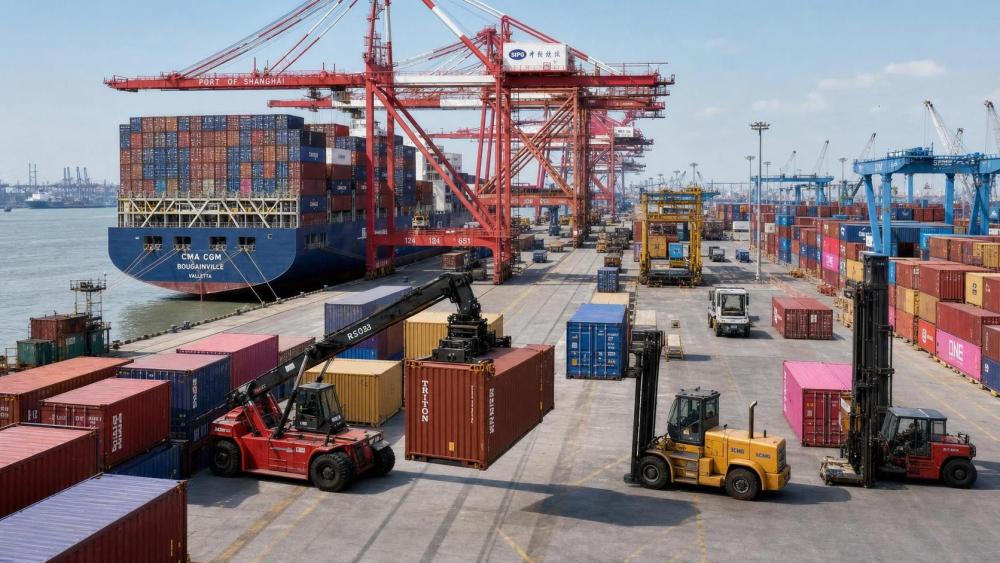
What Has Changed on the Shanghai-Rotterdam Route
According to joint monitoring by Alphaliner and Sea-Intelligence, container equipment and slot supply on the main Asia-Europe corridor had returned to normal by July 4, 2026. On the Shanghai-Rotterdam route, spot freight fell to $1,850 per FEU, down 63% from its peak. At the same time, the Lift & Load Surcharge that took effect on July 1 under the U.S. Federal Maritime Commission framework has been fully integrated into carriers' base freight systems. As a result, the actual transport cost for lifting and handling equipment, including cranes, forklifts, and stackers, remains 19% higher than in the same period of 2025. The reported impact is direct for export pricing and logistics design in the Material Handling & Lifting segment.
Where the Pressure Has Shifted Across the Chain
Export quotations now face a different cost baseline
From an industry perspective, direct trading companies and manufacturers shipping lifting and handling equipment may see some relief from the disappearance of equipment-space premiums on the route itself. However, that does not automatically translate into proportional savings in customer quotations, because part of the cost burden has been restructured into main freight. The practical impact is on pricing logic, margin calculation, and the way freight changes are communicated to overseas customers.
Logistics service providers need to recheck routing economics
For freight forwarders and supply chain service providers, the development affects route comparison, cost presentation, and shipment planning. A lower spot rate can create the impression of a broader normalization, but the embedded Lift & Load Surcharge means the real delivered cost for relevant equipment categories may remain elevated. What deserves closer attention is whether internal costing models still separate temporary congestion effects from structural freight components.
Buyers and channel partners may reassess landed-cost expectations
Procurement teams, distributors, and downstream commercial partners linked to Material Handling & Lifting equipment are likely to feel the change through landed-cost discussions rather than through visible surcharge lines alone. Because the surcharge is now part of base freight, cost transparency becomes a larger issue in contract review, budget planning, and shipment timing decisions.
What Companies Should Watch in Current Operations
Do not equate lower spot rates with fully normalized shipping costs
Analysis shows that the drop in Shanghai-Rotterdam spot freight and the normalization of slot supply address one problem, but not the entire export cost picture. Companies handling cranes, forklifts, and stackers should review whether internal pricing assumptions still rely too heavily on visible market-rate declines.
Check how freight is shown in supplier and carrier quotations
Because the Lift & Load Surcharge has been folded into main freight, the presentation of shipping charges matters more in day-to-day execution. Exporters and procurement teams should pay closer attention to quotation structure, contract wording, and whether freight comparisons are being made on a like-for-like basis.
Revisit logistics plan design for equipment categories under pressure
The reported effect is direct for export quotation and logistics design in the Material Handling & Lifting segment. In practice, that means companies should recheck shipment planning for the affected equipment categories rather than assuming that route normalization alone resolves cost pressure.
Keep watching the gap between regulatory language and commercial application
Observably, one of the main business issues is how a surcharge framework becomes embedded in carrier pricing systems. Companies should continue monitoring official wording, carrier implementation, and the commercial treatment of these charges in actual booking and billing processes.
Why This Looks Like Cost Restructuring, Not Full Relief
Analysis shows that this development is better understood as a shift in cost composition than as a simple freight-market recovery story. The disappearance of equipment-space premiums on the Shanghai-Rotterdam route is a meaningful signal that port and slot conditions have improved on the Asia-Europe mainline. But the continued 19% year-on-year increase in actual transport costs for lifting and handling equipment suggests that part of the earlier disruption cost has been absorbed into a new pricing structure. That is why the market signal is mixed: operational pressure has eased, while commercial cost pressure remains.
How the Market Should Read This Stage
It is more appropriate to understand this as a partial normalization with a continuing need for verification. The immediate shortage signal on the route has weakened, which matters for planning and shipping confidence. Yet for Material Handling & Lifting exporters, the more relevant takeaway is that lower visible freight does not necessarily mean lower effective transport cost. For now, this is best read as an industry development that reduces one short-term constraint while leaving a longer-running pricing issue in place.
Basis of This Article and Ongoing Verification
This article is based on the user-provided news title, event date, and event summary. The factual basis cited in the input references monitoring by Alphaliner and Sea-Intelligence, as well as the July 1 effective treatment of the Lift & Load Surcharge under the U.S. Federal Maritime Commission context. For this type of industry update, relevant source categories typically include official regulatory notices, carrier announcements, industry association updates, and reporting by established trade media. A specific official source link was not provided in the input, so further verification remains necessary. Continued attention should focus on any updated official wording, carrier pricing treatment, and the ongoing effect on export quotations and logistics planning for Material Handling & Lifting equipment.
Related News
 What is driving consolidation in the global equipment supplier market?IEG Heavy Machinery & Automation AnalystGlobal equipment supplier market consolidation is accelerating through technology, service, and supply-chain demands. Discover how buyers can capture value while managing risk.
 When does capital equipment investment pay back in manufacturing?IEG Heavy Machinery & Automation AnalystCapital equipment investment manufacturing: learn when equipment truly pays back by evaluating full costs, cash flow, ramp-up, operational risks, and lifecycle value.
 When does a distribution center need an automated pallet handling system?Heavy Lifting Systems AnalystPallet handling systems help distribution centers overcome labor shortages, bottlenecks, safety risks, and storage constraints. Discover the key signs it’s time to automate.
 How to build a machinery investment plan around payback periodIEG Heavy Machinery & Automation AnalystMachinery investment planning manufacturing guide: build a credible payback plan with full costs, ramp-up assumptions, lifecycle risks, and scenario-based cash benefits.
 How to Specify a Modular Packaging Line for Fast Changeovers and Scalable OutputRobotics EngineerModular packaging line specification guide: achieve faster changeovers, scalable output, reliable controls, and lower lifecycle costs with practical planning.
 How industrial IoT devices reduce unplanned downtime in factoriesRobotics EngineerIndustrial IoT devices help factories detect early equipment issues, plan maintenance, and reduce costly unplanned downtime before production is disrupted.
 What is driving industrial machinery market demand in manufacturing?IEG Heavy Machinery & Automation AnalystIndustrial machinery market manufacturing demand is rising as factories pursue automation, energy efficiency, resilient supply chains, and lifecycle productivity gains.
 316L Stainless Steel Pipe Tube Technical Factors That Shape Buyer DecisionsCNC Machining AnalystA technical analysis for 316L stainless steel pipe tube buyers, covering corrosion expectations, pipe route choice, tolerance, surface, and inspection.
 How ground conditions determine crawler piling equipment selectionConstruction Equipment SpecialistCrawler piling equipment selection starts with ground conditions. Learn how soil, rock, groundwater and site constraints shape safer, more productive piling solutions.
 3300mm CNC Beam Saw Sheet Capacity: Layout Checks Before PurchaseCNC Machining AnalystZhongding ZD330 beam saw specifications: assess 3300mm sheet capacity, layout clearances, handling flow, and acceptance checks before buying.
 How Bucket Chain Diamond Dredgers Meet ISO 12100 Safety Requirements in Alluvial Mining ProjectsMining Infrastructure ExpertBucket chain diamond dredger safety made real: how ISO 12100 compliance ensures operator protection, reliability & zero lost-time injuries in alluvial mining.
 Modular Packaging for High-Mix Automotive Assembly Lines: How Standardized Load Units Reduce Line Changeover Time by 37% — Case Study from Tier-1 Supplier in GuangdongHeavy Lifting Systems AnalystModular packaging slashes automotive line changeover time by 37%—discover how standardized load units boost OEE, cut labor costs, and enable seamless high-mix assembly.