How Industrial Drives Improve Pump Control Efficiency




Why industrial drives pump control matters in real operations
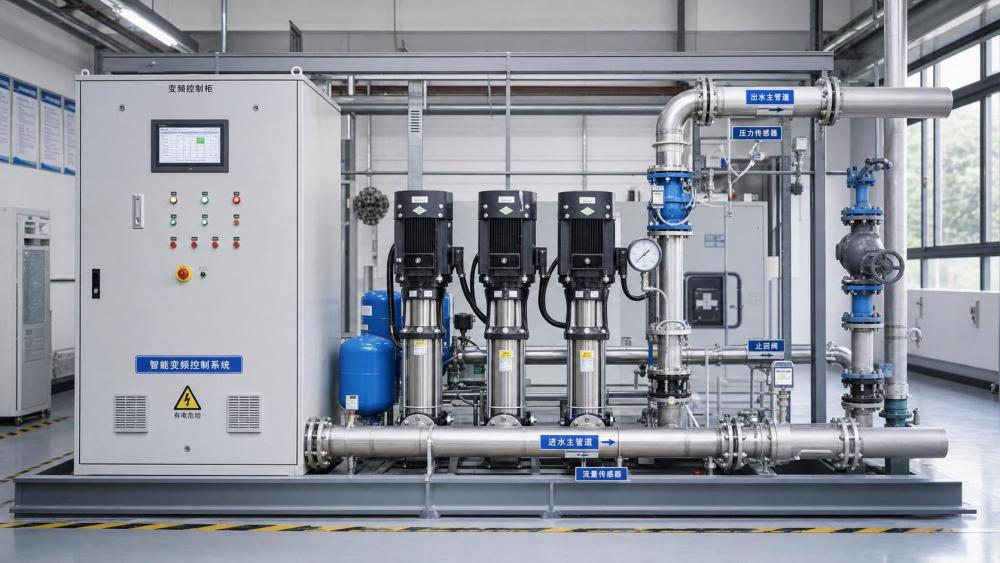
Industrial drives pump control is no longer a narrow motor topic. It directly affects energy cost, process consistency, maintenance intervals, and asset life across production and infrastructure systems.
That matters because pumps rarely operate at one fixed demand point. Flow changes with shift patterns, product mix, weather, tank levels, pipeline pressure, and upstream process variation.
In those conditions, throttling valves and across-the-line starting often create waste. Motors run harder than necessary, pressure fluctuates, and repeated shock loads shorten the life of seals, bearings, and couplings.
A well-matched drive changes that behavior. It adjusts motor speed to actual demand, softens start and stop cycles, and gives tighter flow or pressure control without forcing the pump into constant mechanical stress.
For platforms that track industrial automation and capital equipment value, this is where technical detail becomes commercially useful. Industrial drives pump control decisions influence lifecycle cost more than nameplate power alone suggests.
The practical question is not whether a drive can improve a pump. The better question is where the improvement comes from, and under which operating conditions it is large enough to justify the change.
Different pump duties create different control priorities
In actual projects, industrial drives pump control performance depends heavily on duty profile. A cooling water loop behaves differently from a booster station, a slurry line, or a chemical dosing system.
Where the process needs stable pressure, response speed and sensor feedback usually matter more than maximum speed range. Where the load is cyclical, smooth acceleration and deceleration may create more value.
Some systems prioritize energy reduction. Others care more about avoiding water hammer, protecting pipework, or keeping production quality within a narrow process window. Similar pumps can therefore require different drive settings and control logic.
This is why structured equipment comparison is useful. It connects operating context with drive capability instead of treating every variable frequency drive as interchangeable.
Closed-loop process lines
In closed-loop cooling, circulation, or filtration systems, demand often shifts gradually. Industrial drives pump control works well here because speed can follow real load instead of forcing excess flow through bypass paths.
The key judgment point is part-load operation. If the pump spends long periods below peak demand, the energy saving potential is usually meaningful, especially on large motors running continuously.
Pressure-sensitive transfer systems
Booster sets, water distribution lines, and transfer systems often face pressure spikes during sudden starts. In this setting, industrial drives pump control is valued as much for protection as for efficiency.
A softer ramp reduces stress on valves, joints, and tanks. The benefit becomes more visible where the network is long, elevation changes are significant, or downstream demand is irregular.
Viscous, abrasive, or unstable media
Mining slurries, wastewater streams, and heavy process fluids create a different challenge. Here, stable torque delivery and protection functions can be more important than simple kilowatt reduction.
The drive must tolerate load variation, detect abnormal current patterns, and support controlled restart behavior. A basic drive may run the motor, but not necessarily protect the system.
Where the efficiency gains usually come from
Energy savings from industrial drives pump control are often discussed in broad terms, but the source of those savings should be checked carefully. Not every installation benefits in the same way.
The most common gains come from matching pump speed to demand. When flow is reduced by speed control instead of throttling, power consumption can fall sharply during partial-load operation.
Another gain comes from reduced mechanical wear. Less shock at startup means fewer seal failures, lower coupling stress, and more predictable bearing life. That lowers unplanned maintenance exposure.
There is also a process benefit. More stable pressure and flow can reduce quality variation in washing, dosing, cooling, and material transport systems where consistency matters as much as speed.
In capital equipment analysis, these combined effects matter. A drive may improve operating cost, uptime stability, and service life at the same time, which changes the payback picture.
The same drive strategy does not fit every pump system
A quick comparison helps clarify where industrial drives pump control should be judged differently. The table below focuses on practical selection logic rather than generic benefits.
This kind of comparison is especially useful when evaluating pumps as long-term production assets. The right industrial drives pump control setup depends on duty cycle, fluid behavior, and control architecture together.
What often gets missed before implementation
One common mistake is treating the drive as a stand-alone efficiency device. In practice, industrial drives pump control only performs well when the pump curve, motor characteristics, and process requirement align.
Another mistake is looking only at nominal savings. If sensors are unreliable, control loops are poorly tuned, or minimum safe flow is ignored, energy savings can be offset by unstable operation.
Cable length, harmonics, cooling conditions, and enclosure selection are also easy to underestimate. These issues matter more in retrofit projects, outdoor installations, and dusty or high-temperature environments.
There is also a lifecycle blind spot. A lower-cost drive may appear competitive, yet create higher downtime risk if spare parts, local support, and parameter backup procedures are weak.
- Do not assume two pumps with similar flow ratings need the same drive setup.
- Do not judge industrial drives pump control only by purchase price or peak efficiency claims.
- Do not ignore communication compatibility with PLC, HMI, and plant monitoring systems.
- Do not skip commissioning quality, because tuning strongly affects the final result.
A practical way to match industrial drives pump control to site conditions
A better evaluation path starts with the operating profile. Check how often the pump runs, how widely demand changes, and whether the process values stable flow, stable pressure, or simple load reduction.
Then review the mechanical side. Confirm minimum flow limits, suction conditions, pipe layout, and the likely effect of lower speed on cooling, solids handling, or process timing.
Next, look at control integration. Industrial drives pump control performs best when feedback signals are reliable and when alarms, trend data, and remote diagnostics are easy to access.
For investment decisions, it is useful to compare four numbers together: annual energy use, estimated maintenance reduction, expected downtime impact, and commissioning complexity.
That approach fits broader industrial equipment analysis. It links technical selection with lifecycle value, which is more meaningful than comparing component specifications in isolation.
Recommended evaluation checkpoints
- Map the real operating range instead of using only design-point data.
- Check whether variable speed control affects process quality or pump protection limits.
- Verify motor-drive compatibility, harmonic mitigation needs, and environmental protection level.
- Estimate payback using energy, maintenance, and uptime together.
- Require commissioning records and parameter documentation for future support.
The useful next step is a scenario-based comparison
Industrial drives pump control creates the strongest value when it is assessed in context. The right choice depends on how the pump behaves across real operating conditions, not on a generic efficiency promise.
A practical next step is to separate pump applications by duty pattern, pressure sensitivity, fluid characteristics, and automation requirements. That quickly shows where speed control delivers measurable operational advantage.
From there, compare site constraints, implementation difficulty, and support requirements before finalizing the control strategy. That produces a more reliable basis for investment, retrofit planning, and long-term asset performance.
Related News
 What is driving consolidation in the global equipment supplier market?IEG Heavy Machinery & Automation AnalystGlobal equipment supplier market consolidation is accelerating through technology, service, and supply-chain demands. Discover how buyers can capture value while managing risk.
 When does capital equipment investment pay back in manufacturing?IEG Heavy Machinery & Automation AnalystCapital equipment investment manufacturing: learn when equipment truly pays back by evaluating full costs, cash flow, ramp-up, operational risks, and lifecycle value.
 When does a distribution center need an automated pallet handling system?Heavy Lifting Systems AnalystPallet handling systems help distribution centers overcome labor shortages, bottlenecks, safety risks, and storage constraints. Discover the key signs it’s time to automate.
 How to build a machinery investment plan around payback periodIEG Heavy Machinery & Automation AnalystMachinery investment planning manufacturing guide: build a credible payback plan with full costs, ramp-up assumptions, lifecycle risks, and scenario-based cash benefits.
 How to Specify a Modular Packaging Line for Fast Changeovers and Scalable OutputRobotics EngineerModular packaging line specification guide: achieve faster changeovers, scalable output, reliable controls, and lower lifecycle costs with practical planning.
 How industrial IoT devices reduce unplanned downtime in factoriesRobotics EngineerIndustrial IoT devices help factories detect early equipment issues, plan maintenance, and reduce costly unplanned downtime before production is disrupted.
 What is driving industrial machinery market demand in manufacturing?IEG Heavy Machinery & Automation AnalystIndustrial machinery market manufacturing demand is rising as factories pursue automation, energy efficiency, resilient supply chains, and lifecycle productivity gains.
 316L Stainless Steel Pipe Tube Technical Factors That Shape Buyer DecisionsCNC Machining AnalystA technical analysis for 316L stainless steel pipe tube buyers, covering corrosion expectations, pipe route choice, tolerance, surface, and inspection.
 How ground conditions determine crawler piling equipment selectionConstruction Equipment SpecialistCrawler piling equipment selection starts with ground conditions. Learn how soil, rock, groundwater and site constraints shape safer, more productive piling solutions.
 3300mm CNC Beam Saw Sheet Capacity: Layout Checks Before PurchaseCNC Machining AnalystZhongding ZD330 beam saw specifications: assess 3300mm sheet capacity, layout clearances, handling flow, and acceptance checks before buying.
 How Bucket Chain Diamond Dredgers Meet ISO 12100 Safety Requirements in Alluvial Mining ProjectsMining Infrastructure ExpertBucket chain diamond dredger safety made real: how ISO 12100 compliance ensures operator protection, reliability & zero lost-time injuries in alluvial mining.
 Modular Packaging for High-Mix Automotive Assembly Lines: How Standardized Load Units Reduce Line Changeover Time by 37% — Case Study from Tier-1 Supplier in GuangdongHeavy Lifting Systems AnalystModular packaging slashes automotive line changeover time by 37%—discover how standardized load units boost OEE, cut labor costs, and enable seamless high-mix assembly.