When does low-maintenance lifting machinery reduce total operating cost?




For procurement teams, the real question is not whether low-maintenance lifting machinery sounds attractive on paper. It is whether simpler service design, longer service intervals, easier parts replacement, and lower dependence on specialist technicians actually reduce total operating cost across the life of the asset. In many lifting applications, the answer is yes—but not in every fleet, not in every duty cycle, and not at any price premium.
That distinction matters because lifting equipment is rarely judged only by acquisition cost once it enters operation. Cranes, hoists, gantry systems, jib cranes, truck-mounted lifting units, and other material handling machines generate value only when they are available, compliant, and safe to use. A machine that costs less to buy but creates recurring downtime, frequent service interruptions, hard-to-source spare parts, or heavy technician dependency can become the more expensive choice surprisingly quickly.
For buyers, the practical issue is timing and operating context: when does a low-maintenance design begin to outweigh a higher upfront price?
Low maintenance is not just fewer repairs
In procurement discussions, “low maintenance” is often used too loosely. It should not be confused with “maintenance-free,” and it does not simply mean the machine has fewer breakdowns. In lifting machinery, low-maintenance value usually comes from a combination of design and support factors:
- longer lubrication or inspection intervals;
- sealed or protected components in dusty, wet, or corrosive conditions;
- better access to wear parts for routine service;
- fewer adjustment points;
- modular replacement of motors, brakes, wire ropes, chains, controls, or hydraulic elements;
- diagnostic systems that shorten troubleshooting time;
- standardized components with predictable spare parts availability.
The cost benefit does not come from one feature alone. It comes from reducing the labor hours, downtime hours, emergency service costs, and planning disruption associated with keeping the equipment in safe operating condition.
That is why procurement should evaluate low-maintenance lifting machinery as an operating model, not as a marketing label.
The strongest savings appear where uptime is expensive
Low-maintenance lifting systems usually reduce total operating cost fastest in facilities where downtime has a visible production or logistics penalty. This includes steel processing plants, fabrication shops, ports, warehouses with constrained material flow, precast yards, mining support operations, and assembly environments where lifting is integrated into throughput.
In these environments, every unplanned stoppage can trigger wider losses:
- production interruption;
- missed loading or unloading windows;
- idle labor and equipment waiting on the lift point;
- contractual delay exposure;
- rescheduling of maintenance or shift plans.
If a lifting unit is on the critical path, even modest reductions in maintenance intervention can have an outsized economic effect. A hoist that needs fewer shutdowns, or a crane with faster inspection access, may generate more value through avoided disruption than through direct maintenance savings alone.
By contrast, where equipment utilization is low, duty cycles are light, and a backup machine is readily available, the payback from a higher-cost low-maintenance model may be slower. Procurement should therefore link maintenance design to operational criticality, not treat it as a universal benefit.
Where buyers often underestimate the cost impact
Many purchasing teams compare quotations with a strong focus on rated capacity, span, lift height, speed, controls, and initial price. Those are necessary comparisons, but they rarely capture the full cost pattern. The following cost items are frequently underestimated when selecting lifting machinery:
- planned service labor over five to ten years;
- production losses during preventive maintenance windows;
- emergency technician call-out rates;
- access equipment required for inspection or component change;
- spare parts inventory burden for non-standard components;
- compliance-related inspection delays;
- training needs for operation and maintenance personnel.
A machine that requires specialist intervention for routine tasks may look acceptable in a factory located close to the OEM or a strong service partner. The same machine becomes much more expensive in a remote site, an export market with weak service coverage, or a multi-country fleet where response times are inconsistent.
For cross-border procurement, this is especially important. The technical design may be sound, but lifecycle cost can deteriorate if parts lead time, documentation quality, or local service capability is weak.
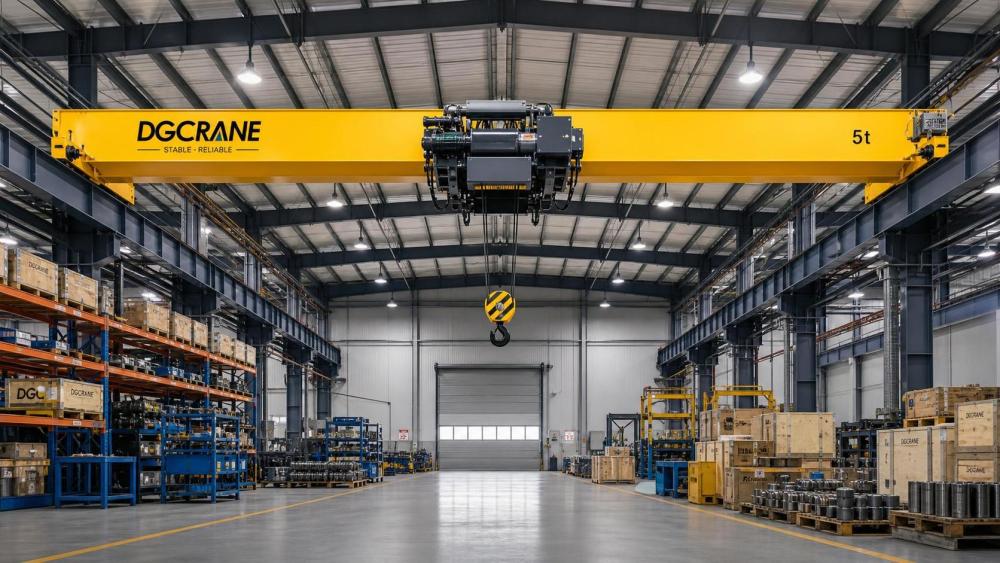
When a higher purchase price is usually justified
There are several operating situations where paying more for lifting machinery low maintenance design is usually commercially rational.
High utilization equipment. If the machine operates across multiple shifts or near daily capacity, maintenance frequency matters more. A premium paid upfront is spread across more operating hours, and every avoided stoppage carries greater value.
Hard-to-access installation environments. Overhead cranes in high-bay plants, lifts installed above process lines, or machinery positioned in hazardous or congested zones create expensive service conditions. Easier access, longer intervals, and modular service parts can materially reduce maintenance execution cost.
Remote or service-constrained sites. Quarries, mining support zones, ports, inland logistics hubs, and overseas project sites often face longer technician travel times and less predictable spare parts support. In such cases, a maintenance-friendly design reduces dependence on external intervention.
Labor-scarce operations. Plants struggling to recruit or retain experienced maintenance technicians often benefit from equipment that simplifies routine service and troubleshooting. This is not only a labor cost issue but also a continuity issue.
Compliance-sensitive industries. In sectors where lifting equipment inspections are tightly managed, simpler inspection access and better condition visibility can lower the risk of overdue maintenance, failed audits, or extended safety-related stoppages.
Under these conditions, buyers should not ask whether low-maintenance equipment saves money in theory. They should ask how quickly the maintenance burden of the lower-cost alternative begins to exceed the upfront premium.
When low-maintenance claims do not automatically translate into lower total cost
There are also cases where the premium is harder to justify.
If the lifting machinery is lightly used, non-critical, or deployed with ample redundancy, direct maintenance savings may be too small to offset a meaningful price difference. The same applies when the low-maintenance configuration relies on proprietary components that are expensive or locked to a single supplier network. Reduced intervention frequency does not always mean lower lifecycle cost if replacement parts carry a significant premium.
Another common issue is overbuying. Procurement teams sometimes specify premium-duty lifting equipment with advanced diagnostics, extensive enclosure protection, or unusually long service-life components for applications that do not require them. In these cases, the buyer pays for resilience that the operation may never fully use.
The decision becomes even less favorable when the supplier cannot support the machine consistently in the destination market. Good design cannot compensate for weak after-sales execution.
The most important procurement test: what maintenance cost is being removed?
A useful buying discipline is to force every low-maintenance claim into a cost-removal statement. Instead of accepting broad language such as “reduced service needs,” ask what exact cost line is expected to fall.
Examples of valid cost-removal logic include:
- fewer gearbox oil changes over a defined operating period;
- reduced brake adjustment time per maintenance cycle;
- faster wire rope replacement due to access design;
- sealed electrical enclosures that reduce contamination-related failures;
- condition monitoring that prevents emergency downtime rather than planned service;
- standard bearings, motors, or contactors that reduce spare parts cost and lead time risk.
If the supplier cannot connect design features to actual maintenance events, labor hours, downtime frequency, or parts consumption, the claim has limited procurement value.
What to request from suppliers before comparing offers
For a meaningful lifecycle comparison, procurement teams should ask suppliers for structured information beyond the technical datasheet.
- Recommended preventive maintenance schedule by operating hours or calendar period
- List of routine wear parts and typical replacement intervals
- Estimated annual maintenance labor hours under the stated duty class
- Spare parts availability by region and expected lead times
- Breakdown of proprietary versus standard components
- Service access requirements, including tools, platform access, and technician count
- Warranty scope and exclusions related to wear, environment, and operating practice
- Applicable standards and certifications for the target market
On standards and compliance, requirements vary by country and machine category. Buyers should confirm the relevant local regulatory framework, inspection obligations, and certification expectations for the destination market rather than relying on generic statements. If any claimed conformity cannot be confirmed at sourcing stage, it should be treated as 【待核实】.
Duty class matters more than brochure language
One of the most common procurement mistakes is evaluating maintenance expectation without properly checking duty classification. Lifting machinery used for infrequent loads behaves very differently from equipment exposed to repetitive cycles, peak loads, shock loading, outdoor weather, abrasive dust, or corrosive atmospheres.
A machine may be “low maintenance” only relative to equipment in the same duty class. If it is underspecified for the actual workload, maintenance frequency and failure risk will rise regardless of the original sales promise.
This is where procurement should work closely with operations and engineering. The supplier needs a realistic profile covering:
- daily operating hours;
- load spectrum rather than only maximum load;
- number of starts/stops and lift cycles;
- indoor or outdoor installation;
- temperature, dust, moisture, or chemical exposure;
- available maintenance windows;
- criticality of downtime.
Without this, maintenance cost projections are little more than assumptions.
Total cost should include maintenance organization, not just machine design
Procurement often treats maintenance as a property of the machine alone. In practice, total operating cost is shaped by the match between equipment design and the buyer’s maintenance organization.
A plant with strong in-house electrical and mechanical capability may comfortably own a more complex lifting system if parts are accessible and documentation is good. Another site may need a simpler architecture because it relies on general maintenance staff and has limited diagnostic capability.
This is why two buyers can reach different conclusions about the same machine. Low-maintenance value is highest when it reduces dependence on scarce internal skills or inconsistent outside service.
For multinational buyers and distributors, standardization also matters. A fleet built around common controls, motors, brakes, and service procedures can reduce training burden and parts complexity across sites. That operating simplification often produces savings beyond the individual machine itself.
How to build a practical comparison model
For procurement decisions, a simple lifecycle framework is usually more useful than a highly theoretical total cost model. Compare candidate machines across five cost blocks:
- purchase and installation cost;
- planned maintenance labor and consumables;
- expected wear parts and spare parts cost;
- downtime cost, both planned and unplanned;
- end-of-life support risk, including obsolescence and parts continuity.
Then stress-test the result with three questions:
- What happens if annual utilization is 20% higher than planned?
- What happens if local service response takes longer than promised?
- What happens if one critical component has a long replenishment lead time?
If the low-maintenance option remains favorable under these conditions, the premium is usually defensible.
The procurement signal to watch: predictable cost beats low advertised cost
In lifting equipment, the most valuable cost outcome is often predictability rather than the absolute lowest headline number. Procurement teams are rarely damaged by a machine that costs slightly more but performs as expected. They are damaged by assets that generate unstable maintenance expense, uncertain downtime, compliance disruptions, and spare parts surprises after commissioning.
That is where low-maintenance machinery can create real value. Not because it eliminates service, but because it makes cost, labor demand, and uptime more controllable over time.
So when does low-maintenance lifting machinery reduce total operating cost? Usually when the equipment is heavily used, difficult to service, operationally critical, deployed in labor- or service-constrained environments, or expected to remain in service long enough for maintenance design to compound into savings. In those conditions, the procurement focus should shift from purchase price alone to cost predictability, service burden, and downtime exposure.
For buyers, that is the more useful decision framework: not “Is low maintenance worth paying for?” but “Which maintenance costs, risks, and interruptions are we actually removing—and how credible is that reduction in our operating environment?”
Related News
 What is driving consolidation in the global equipment supplier market?IEG Heavy Machinery & Automation AnalystGlobal equipment supplier market consolidation is accelerating through technology, service, and supply-chain demands. Discover how buyers can capture value while managing risk.
 When does capital equipment investment pay back in manufacturing?IEG Heavy Machinery & Automation AnalystCapital equipment investment manufacturing: learn when equipment truly pays back by evaluating full costs, cash flow, ramp-up, operational risks, and lifecycle value.
 When does a distribution center need an automated pallet handling system?Heavy Lifting Systems AnalystPallet handling systems help distribution centers overcome labor shortages, bottlenecks, safety risks, and storage constraints. Discover the key signs it’s time to automate.
 How to build a machinery investment plan around payback periodIEG Heavy Machinery & Automation AnalystMachinery investment planning manufacturing guide: build a credible payback plan with full costs, ramp-up assumptions, lifecycle risks, and scenario-based cash benefits.
 How to Specify a Modular Packaging Line for Fast Changeovers and Scalable OutputRobotics EngineerModular packaging line specification guide: achieve faster changeovers, scalable output, reliable controls, and lower lifecycle costs with practical planning.
 How industrial IoT devices reduce unplanned downtime in factoriesRobotics EngineerIndustrial IoT devices help factories detect early equipment issues, plan maintenance, and reduce costly unplanned downtime before production is disrupted.
 What is driving industrial machinery market demand in manufacturing?IEG Heavy Machinery & Automation AnalystIndustrial machinery market manufacturing demand is rising as factories pursue automation, energy efficiency, resilient supply chains, and lifecycle productivity gains.
 316L Stainless Steel Pipe Tube Technical Factors That Shape Buyer DecisionsCNC Machining AnalystA technical analysis for 316L stainless steel pipe tube buyers, covering corrosion expectations, pipe route choice, tolerance, surface, and inspection.
 How ground conditions determine crawler piling equipment selectionConstruction Equipment SpecialistCrawler piling equipment selection starts with ground conditions. Learn how soil, rock, groundwater and site constraints shape safer, more productive piling solutions.
 3300mm CNC Beam Saw Sheet Capacity: Layout Checks Before PurchaseCNC Machining AnalystZhongding ZD330 beam saw specifications: assess 3300mm sheet capacity, layout clearances, handling flow, and acceptance checks before buying.
 How Bucket Chain Diamond Dredgers Meet ISO 12100 Safety Requirements in Alluvial Mining ProjectsMining Infrastructure ExpertBucket chain diamond dredger safety made real: how ISO 12100 compliance ensures operator protection, reliability & zero lost-time injuries in alluvial mining.
 Modular Packaging for High-Mix Automotive Assembly Lines: How Standardized Load Units Reduce Line Changeover Time by 37% — Case Study from Tier-1 Supplier in GuangdongHeavy Lifting Systems AnalystModular packaging slashes automotive line changeover time by 37%—discover how standardized load units boost OEE, cut labor costs, and enable seamless high-mix assembly.