Equipment Reliability in Mining Canada: What Causes Downtime Most Often?




Equipment Reliability in Mining Canada: What Causes Downtime Most Often?
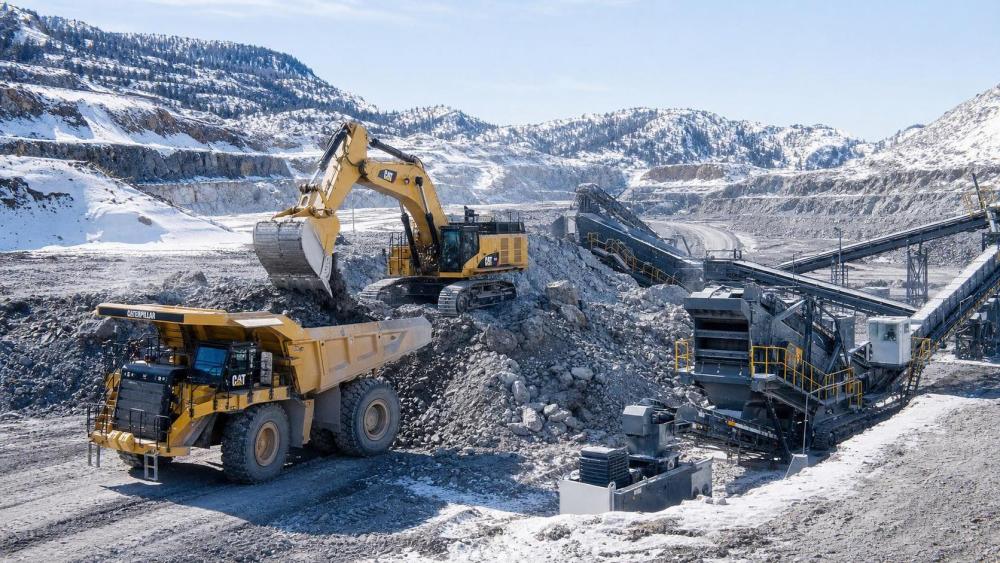
Equipment reliability in mining Canada faces a difficult operating environment every day.
Cold weather, long haul routes, abrasive ore, and remote site logistics create constant stress on fleets and fixed assets.
When one critical machine stops, production losses can spread fast across loading, hauling, crushing, and processing stages.
That is why equipment reliability in mining Canada is not only a maintenance issue.
It is also a planning, procurement, staffing, and risk-control issue.
In practical terms, the biggest downtime drivers are usually predictable.
The problem is that many operations react after the failure instead of controlling the conditions that create it.
A clearer view of the common causes helps reduce maintenance cost, improve availability, and protect output.
Why Downtime Hits Mining Operations So Hard
Mining assets often work in tightly linked production chains.
If a haul truck fails, shovels may wait, crushers may starve, and shift plans quickly lose accuracy.
In remote Canadian sites, even small repairs can take longer because parts, tools, or specialist support are not immediately available.
This makes equipment reliability in mining Canada especially sensitive to response time.
Unplanned downtime also affects fuel efficiency, labor utilization, contractor scheduling, and safety exposure.
From a business perspective, reliability losses tend to multiply beyond the repair event itself.
The Most Common Causes of Equipment Downtime
Most repeated failures fall into a few categories.
These categories appear across surface mines, underground operations, and mineral processing plants.
1. Harsh Climate and Thermal Stress
Canadian mining equipment must perform through freezing starts, snow, ice, and rapid temperature swings.
Cold conditions thicken fluids, reduce battery performance, and increase startup wear.
Seals, hoses, electrical connectors, and sensors can become more failure-prone under repeated thermal cycling.
For equipment reliability in mining Canada, winter readiness is a core maintenance discipline, not a seasonal add-on.
2. Abrasive Materials and Contamination
Ore, dust, slurry, and fine particles attack wear surfaces continuously.
Contamination shortens the life of bearings, hydraulic systems, engines, pumps, and gearboxes.
Once dirt enters lubrication or hydraulic circuits, failure risk rises quickly.
This is one of the most common reasons equipment reliability in mining Canada falls below target.
3. Poor Maintenance Planning
Many failures begin as delayed inspections, missed lubrication, or incomplete shutdown tasks.
When preventive work is pushed aside for production pressure, hidden defects stay in service too long.
The result is often a more expensive repair, a longer outage, and extra damage to nearby components.
4. Operator Practices and Equipment Misuse
Aggressive driving, poor warm-up habits, overloading, and avoidable idling all affect machine life.
Even well-built assets lose reliability when daily operating practices are inconsistent.
This matters because equipment reliability in mining Canada depends on actual field behavior, not only design specifications.
5. Parts Delays and Supply Chain Gaps
A simple component failure can become a major outage when spares are unavailable.
Remote mines cannot rely on fast replacement cycles for every critical item.
Long lead times for hydraulics, powertrain parts, electronics, and specialized wear components remain a serious risk.
6. Electrical and Automation Failures
Modern mines depend on sensors, controls, communication systems, and machine diagnostics.
These systems improve performance, but they also add more failure points.
Moisture, vibration, cable damage, software faults, or calibration issues can stop assets unexpectedly.
Where Reliability Breakdowns Usually Start
The first warning signs rarely appear as major failures.
More often, they appear as small operating changes that teams normalize over time.
- Higher fluid consumption than normal
- Repeated alarms that are reset without root-cause action
- Longer startup times in cold conditions
- Rising vibration, heat, or noise levels
- Uneven tire, track, liner, or bucket wear
- Frequent temporary fixes during shifts
In actual operations, these weak signals are where reliability programs win or lose.
Equipment reliability in mining Canada improves when teams capture these signals early and act before breakdowns spread.
A Practical Way to Reduce Downtime
There is no single fix for mining equipment downtime.
The strongest results usually come from combining maintenance discipline, operating standards, and parts strategy.
- Rank assets by production criticality, not by replacement value alone.
- Use seasonal maintenance plans with winter-specific checks and startup procedures.
- Tighten contamination control for lubrication, filtration, storage, and rebuild practices.
- Track repeat failures by component, shift, site condition, and operator pattern.
- Hold critical spares on site when outage cost exceeds carrying cost.
- Train operators to spot early symptoms, not only react to alarms.
- Review OEM recommendations against actual duty cycles and mine conditions.
These steps are practical because they address the conditions behind failure, not just the repair event.
What Decision-Makers Should Measure
Improving equipment reliability in mining Canada requires better visibility, not more raw data.
A small set of useful measures often gives a clearer picture than dozens of disconnected reports.
When these metrics are reviewed together, patterns become easier to act on.
The Procurement and Investment Angle
Reliability decisions start well before equipment enters the mine.
Purchase price alone does not explain lifecycle performance.
For equipment reliability in mining Canada, evaluation should include cold-weather suitability, service access, local support, and spare parts coverage.
It should also include rebuild economics, automation compatibility, and component standardization across the fleet.
A lower upfront cost can become expensive if downtime risk, service delays, or parts complexity are underestimated.
From a capital planning view, reliability is a cash-flow variable as much as an engineering one.
Turning Reliability Into a Competitive Advantage
The mines that perform better over time usually treat reliability as an operating system.
They connect maintenance planning, operator behavior, procurement standards, and site data into one decision framework.
That approach is especially relevant for equipment reliability in mining Canada, where conditions magnify small weaknesses very quickly.
The most common downtime causes are rarely mysterious.
They usually come from climate stress, contamination, weak planning, inconsistent operation, delayed parts, and avoidable control failures.
The practical next step is straightforward: identify the top failure patterns, measure them consistently, and align maintenance and sourcing around the assets that protect output most.
That is how equipment reliability in mining Canada moves from reactive repair toward stable, lower-risk production performance.
Related News
 What is driving consolidation in the global equipment supplier market?IEG Heavy Machinery & Automation AnalystGlobal equipment supplier market consolidation is accelerating through technology, service, and supply-chain demands. Discover how buyers can capture value while managing risk.
 When does capital equipment investment pay back in manufacturing?IEG Heavy Machinery & Automation AnalystCapital equipment investment manufacturing: learn when equipment truly pays back by evaluating full costs, cash flow, ramp-up, operational risks, and lifecycle value.
 When does a distribution center need an automated pallet handling system?Heavy Lifting Systems AnalystPallet handling systems help distribution centers overcome labor shortages, bottlenecks, safety risks, and storage constraints. Discover the key signs it’s time to automate.
 How to build a machinery investment plan around payback periodIEG Heavy Machinery & Automation AnalystMachinery investment planning manufacturing guide: build a credible payback plan with full costs, ramp-up assumptions, lifecycle risks, and scenario-based cash benefits.
 How to Specify a Modular Packaging Line for Fast Changeovers and Scalable OutputRobotics EngineerModular packaging line specification guide: achieve faster changeovers, scalable output, reliable controls, and lower lifecycle costs with practical planning.
 How industrial IoT devices reduce unplanned downtime in factoriesRobotics EngineerIndustrial IoT devices help factories detect early equipment issues, plan maintenance, and reduce costly unplanned downtime before production is disrupted.
 What is driving industrial machinery market demand in manufacturing?IEG Heavy Machinery & Automation AnalystIndustrial machinery market manufacturing demand is rising as factories pursue automation, energy efficiency, resilient supply chains, and lifecycle productivity gains.
 316L Stainless Steel Pipe Tube Technical Factors That Shape Buyer DecisionsCNC Machining AnalystA technical analysis for 316L stainless steel pipe tube buyers, covering corrosion expectations, pipe route choice, tolerance, surface, and inspection.
 How ground conditions determine crawler piling equipment selectionConstruction Equipment SpecialistCrawler piling equipment selection starts with ground conditions. Learn how soil, rock, groundwater and site constraints shape safer, more productive piling solutions.
 3300mm CNC Beam Saw Sheet Capacity: Layout Checks Before PurchaseCNC Machining AnalystZhongding ZD330 beam saw specifications: assess 3300mm sheet capacity, layout clearances, handling flow, and acceptance checks before buying.
 How Bucket Chain Diamond Dredgers Meet ISO 12100 Safety Requirements in Alluvial Mining ProjectsMining Infrastructure ExpertBucket chain diamond dredger safety made real: how ISO 12100 compliance ensures operator protection, reliability & zero lost-time injuries in alluvial mining.
 Modular Packaging for High-Mix Automotive Assembly Lines: How Standardized Load Units Reduce Line Changeover Time by 37% — Case Study from Tier-1 Supplier in GuangdongHeavy Lifting Systems AnalystModular packaging slashes automotive line changeover time by 37%—discover how standardized load units boost OEE, cut labor costs, and enable seamless high-mix assembly.