How to compare different mining safety management system providers




A mining site can appear well controlled on paper while critical safety information remains scattered across shift logs, inspection forms, training records, maintenance systems, and supervisor spreadsheets. The problem becomes visible after an incident, a missed inspection, or an audit request: teams cannot quickly show who identified a hazard, what corrective action was assigned, whether it was completed, or whether the same risk is recurring elsewhere.
To compare different mining safety management system providers, start with the operational workflows the system must control, not with a generic feature list. A suitable provider should make incident reporting, risk assessment, inspections, corrective actions, training records, contractor oversight, and audit evidence work as connected processes. The best choice is usually the platform that fits the site’s risk profile, workforce conditions, existing data sources, and accountability structure with the least need for unsafe workarounds.
Begin with the safety failures the system must prevent
Before reviewing demonstrations, define the situations that currently create delay, uncertainty, or weak accountability. A surface mine, underground operation, processing plant, and exploration program may all use “safety management,” but their daily controls can be very different. A provider that works well for office-based compliance reporting may be unsuitable for supervisors working in low-connectivity areas, operators completing pre-start checks, or teams managing mobile equipment hazards.
Useful starting questions include:
- Can workers report hazards, near misses, and incidents during a shift without relying on paper or later data entry?
- Are equipment inspections linked to the responsible asset, location, defect severity, and maintenance follow-up?
- Can supervisors see overdue corrective actions before they become repeat findings?
- Does the system distinguish between a routine observation and an event requiring escalation, investigation, or work stoppage?
- Can safety records be retrieved by site, department, contractor, work area, asset, or date range when evidence is needed?
- Will the platform work where users share devices, wear gloves, have limited time, or lack continuous network access?
These questions turn a broad procurement exercise into a practical comparison. They also prevent a common mistake: selecting a provider because its dashboard looks complete while the underlying field process remains slow or difficult to use.
Compare the workflow, not just the modules
Most providers can claim incident management, audits, training, and inspections. The meaningful difference lies in how information moves from the first observation to verification of a completed action. Ask each provider to demonstrate a realistic sequence using your own operating conditions.
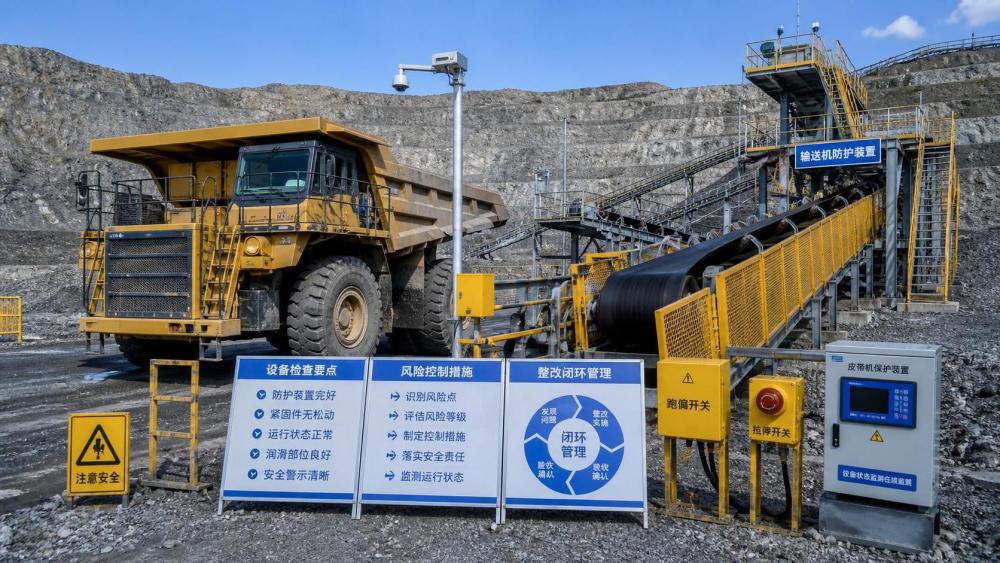
For example, a worker identifies a damaged guard on a conveyor or a defect on a mobile machine. A strong workflow should allow the person to record the issue, attach evidence where appropriate, classify its seriousness, notify the correct role, and create an action with a clear owner and due date. The system should then preserve the link between the original observation, any temporary control, the repair or investigation, and final closeout. If those stages exist in separate modules with no reliable connection, the site may still struggle to prove that the risk was controlled.
Request demonstrations for at least three scenarios: a routine field inspection, a high-potential near miss, and an overdue corrective action. Do not accept a simple overview of screens. Watch how many steps are required, what mandatory information can be configured, whether a supervisor can reassign work, and how the system prevents actions from being closed without adequate evidence.
Incident and near-miss management
Incident reporting should support timely capture without forcing workers to determine every classification detail at the point of entry. Basic reporting can be short, while trained reviewers complete investigation fields later. Examine whether the provider supports different event types, immediate notifications, investigation templates, root-cause records, contributing factors, action assignment, and lessons learned.
Pay attention to escalation logic. A system should not treat every report in the same way. Serious events may need rapid notification, management review, evidence preservation, and formal investigation. Lower-risk observations may need local correction and trend monitoring. The provider should be able to reflect these distinctions through configurable workflows rather than requiring administrators to rebuild the process through manual exports.
Risk assessments and change control
Mining risks change with ground conditions, weather, production schedules, equipment configuration, contractor activity, and work location. Compare how each system handles task-based risk assessments, recurring assessments, controls, residual risk, approvals, and review dates. A good platform makes controls visible to the people doing the work; it does not simply store completed forms.
Also assess management of change. Alterations to traffic routes, blasting arrangements, processing equipment, work methods, shift patterns, or contractor scope can introduce hazards even when no major capital project is involved. Providers differ in whether they can connect change requests to risk reviews, approvals, communications, training requirements, and post-change verification. This is especially important where site changes are frequent and responsibilities cross several departments.
Test field usability under mine conditions
A safety management system is only as reliable as the information entered into it. Field usability should therefore carry as much weight as reporting capability. Ask whether the application works offline, how it synchronizes after connectivity returns, and what happens if two people update the same record. Confirm whether users can complete core tasks on the devices actually available at the operation rather than on an idealized tablet or office workstation.
Usability testing should include the people who will report hazards, perform inspections, approve actions, and review trends. Their feedback often exposes issues that a procurement team cannot see in a scripted demonstration: overly long forms, unclear terminology, slow loading, excessive login steps, or navigation that is impractical during a shift.
Look for sensible flexibility. Different locations may need different inspection forms, while incident classifications and corporate reporting definitions may need to remain consistent. A provider should support local operating realities without allowing uncontrolled form changes that weaken comparability across sites.
Assess inspection, asset, and maintenance connections carefully
Pre-start inspections, workplace examinations, lifting equipment checks, emergency equipment inspections, and environmental observations often generate the highest volume of safety data. The provider does not necessarily need to replace a dedicated maintenance system, but it should make the safety consequences of equipment defects visible and traceable.
Determine whether inspection findings can be connected to an asset register, equipment identifier, location, or maintenance request. When a defect affects safe operation, users should be able to apply the site’s defined response: remove equipment from service, impose a temporary control, notify maintenance, or escalate to a supervisor. The exact workflow depends on the operation, but the record should show what decision was made and by whom.
Integration claims require close examination. “Integrates with maintenance systems” can mean anything from a scheduled spreadsheet export to a reliable two-way connection. Ask what data is exchanged, how frequently it updates, which system owns the master asset record, how failed transfers are identified, and whether action status remains visible to safety personnel. A weak integration can create duplicate work and conflicting records precisely when quick decisions are needed.
Look beyond completion rates in reporting and analytics
Dashboards are useful when they help people act, not merely when they display a large number of charts. Compare whether providers can show trends by work area, hazard category, event severity, contractor group, equipment type, shift, or recurring control failure. The system should allow authorized users to move from a high-level indicator to the underlying records rather than relying on a chart with no supporting detail.
Ask how the platform handles data quality. A rising number of near-miss reports could indicate worsening conditions, improved reporting culture, or inconsistent classification. Reports need enough context to be interpreted responsibly. Review whether the system can identify incomplete investigations, repeated overdue actions, recurring hazards, and controls that have been selected repeatedly but are not verified.
Audit readiness is another practical test. A provider should enable teams to retrieve records, approvals, evidence, version history, action status, and training information without reconstructing a timeline from email chains. However, avoid selecting a system solely because it has a large audit library. First confirm that the system captures reliable operational evidence during ordinary work.
Review governance, permissions, and contractor access
Mining operations commonly involve employees, contractors, visitors, maintenance specialists, and project teams with different responsibilities. The provider should support role-based access that is detailed enough to protect sensitive information without preventing timely reporting. A contractor may need to submit an observation and view assigned actions, while an investigator may need broader access to event records and evidence.
Clarify who can edit, approve, reopen, delete, or close records. Safety data must remain trustworthy after an incident or audit. Look for an understandable audit trail that records material changes, including changes to classifications, due dates, action owners, and closure decisions. Also ask how former workers, inactive contractors, and transferred staff are handled so that historical records remain intact.
Data ownership and exportability should be part of the evaluation. Confirm that the organization can retrieve its own records in usable formats, understand retention options, and maintain access to essential evidence if the commercial relationship changes. These questions are less visible in a product demonstration but can materially affect long-term control of safety information.
Separate implementation capability from software capability
Two providers with similar functions may differ sharply in how they support configuration, migration, testing, training, and ongoing governance. A mining safety management system should reflect established site procedures, but copying every legacy paper form into digital fields can produce a cumbersome platform. The implementation process should identify which fields support decisions, which approvals are necessary, and which duplicative steps can be removed without weakening control.
Ask each provider to explain its approach to:
- Mapping current incident, inspection, action, and training workflows before configuration.
- Migrating historical records, open actions, asset data, and user information where needed.
- Testing permissions, notifications, offline behavior, reporting logic, and integrations before wider rollout.
- Training field users differently from supervisors, investigators, administrators, and senior reviewers.
- Controlling future changes to forms, classifications, and workflows after the system goes live.
A provider should be able to describe the responsibilities expected from the site as well as its own responsibilities. Vague promises of a rapid rollout are not enough when the system will hold investigation evidence, inspection results, and corrective-action obligations.
Use a weighted evaluation that reflects actual risk
Price, interface design, and feature count can distort selection when they are treated as equal to operational reliability. Create a weighted scoring model based on the conditions identified at the beginning of the process. A remote operation with poor connectivity may assign more weight to offline performance. A site with a large contractor population may prioritize user access, induction records, and contractor workflows. An operation experiencing repeated action delays may place greater emphasis on escalation, verification, and management visibility.
Score providers only after practical demonstrations and structured user feedback. Keep written notes on what was shown, what requires configuration, what depends on third-party integration, and what was described but not demonstrated. This distinction matters because a capability available in principle may require additional cost, long implementation work, or operational compromise.
The final decision should identify both the preferred provider and the conditions for success: required integrations, internal data ownership, approval rules, training commitments, pilot scope, and measures for checking adoption. A system cannot eliminate mining risk on its own, but a well-chosen one can make hazards, responsibilities, and unresolved actions far harder to overlook.
Related News
 What is driving consolidation in the global equipment supplier market?IEG Heavy Machinery & Automation AnalystGlobal equipment supplier market consolidation is accelerating through technology, service, and supply-chain demands. Discover how buyers can capture value while managing risk.
 When does capital equipment investment pay back in manufacturing?IEG Heavy Machinery & Automation AnalystCapital equipment investment manufacturing: learn when equipment truly pays back by evaluating full costs, cash flow, ramp-up, operational risks, and lifecycle value.
 When does a distribution center need an automated pallet handling system?Heavy Lifting Systems AnalystPallet handling systems help distribution centers overcome labor shortages, bottlenecks, safety risks, and storage constraints. Discover the key signs it’s time to automate.
 How to build a machinery investment plan around payback periodIEG Heavy Machinery & Automation AnalystMachinery investment planning manufacturing guide: build a credible payback plan with full costs, ramp-up assumptions, lifecycle risks, and scenario-based cash benefits.
 How to Specify a Modular Packaging Line for Fast Changeovers and Scalable OutputRobotics EngineerModular packaging line specification guide: achieve faster changeovers, scalable output, reliable controls, and lower lifecycle costs with practical planning.
 How industrial IoT devices reduce unplanned downtime in factoriesRobotics EngineerIndustrial IoT devices help factories detect early equipment issues, plan maintenance, and reduce costly unplanned downtime before production is disrupted.
 What is driving industrial machinery market demand in manufacturing?IEG Heavy Machinery & Automation AnalystIndustrial machinery market manufacturing demand is rising as factories pursue automation, energy efficiency, resilient supply chains, and lifecycle productivity gains.
 316L Stainless Steel Pipe Tube Technical Factors That Shape Buyer DecisionsCNC Machining AnalystA technical analysis for 316L stainless steel pipe tube buyers, covering corrosion expectations, pipe route choice, tolerance, surface, and inspection.
 How ground conditions determine crawler piling equipment selectionConstruction Equipment SpecialistCrawler piling equipment selection starts with ground conditions. Learn how soil, rock, groundwater and site constraints shape safer, more productive piling solutions.
 3300mm CNC Beam Saw Sheet Capacity: Layout Checks Before PurchaseCNC Machining AnalystZhongding ZD330 beam saw specifications: assess 3300mm sheet capacity, layout clearances, handling flow, and acceptance checks before buying.
 How Bucket Chain Diamond Dredgers Meet ISO 12100 Safety Requirements in Alluvial Mining ProjectsMining Infrastructure ExpertBucket chain diamond dredger safety made real: how ISO 12100 compliance ensures operator protection, reliability & zero lost-time injuries in alluvial mining.
 Modular Packaging for High-Mix Automotive Assembly Lines: How Standardized Load Units Reduce Line Changeover Time by 37% — Case Study from Tier-1 Supplier in GuangdongHeavy Lifting Systems AnalystModular packaging slashes automotive line changeover time by 37%—discover how standardized load units boost OEE, cut labor costs, and enable seamless high-mix assembly.