How to reduce excessive fines produced by a secondary crusher




How to reduce excessive fines produced by a secondary crusher
Excessive fines from a secondary crusher can reduce saleable aggregate yield, increase dust, and overload screens and conveyors. Opening the discharge gap may seem like the obvious correction, but it can simply send more oversize material around the circuit. The real cause may be upstream fines, uneven feeding, unsuitable liners, or a screening problem that keeps returning finished material for another pass.
The practical objective is not to eliminate fines. Some are unavoidable, and some may be saleable. It is to reduce unnecessary breakage while maintaining the required product grading, particle shape, and stable throughput. That starts with identifying where the unwanted material is actually being generated.
Confirm that the crusher is creating the problem
Define “fines” against the product specification before adjusting anything. Material below a sand separation size and material below a dust or filler limit represent different operating problems. Use the same sieve cut throughout the investigation; otherwise, comparisons between shifts or sampling points will be misleading.
During steady operation, collect representative samples of the combined crusher feed, crusher discharge, screen products, and return stream. Use approved sampling equipment and site procedures. Never reach into a moving conveyor, remove guards for sampling, or enter a crusher or chute without isolation, lockout, and verification of stored-energy control.
Compare particle-size distributions alongside measured flow rates. A high percentage of fines in the discharge does not prove that all those fines were generated inside the crusher. Much may already have arrived from the primary stage or the stockpile.
Where reliable measurements are available, estimate newly generated fines by comparing the fines mass flow entering and leaving the crusher over the same stable period. Account for separate dust extraction streams and material accumulation where relevant. A percentage comparison alone is less useful when feed rates are changing.
Remove material that does not need another crushing pass
Pre-screening is worth investigating when the feed contains a substantial quantity of material already below the required crushing size. Sending that material through the chamber uses capacity without necessarily improving the product. It may also expose particles to further breakage and abrasion.
Check the existing scalping arrangement before proposing new equipment. Blinded apertures, damaged panels, an uneven feed bed, or an overloaded screen can allow undersize material to travel into the crusher. With wet or clay-bearing feed, screening efficiency may deteriorate even though the screen drive appears to be operating normally.
Bypassing fines is not automatically acceptable, however. The bypass stream may contain clay, weathered rock, or contaminants that cannot enter the finished aggregate. Confirm its grading and cleanliness, then decide whether it belongs in a product stockpile, a washing circuit, or a separate waste stream.
Also look upstream. A change in primary crusher setting, blasting conditions, or stockpile reclaim practice can alter secondary feed dramatically. If the fines increase began after a change elsewhere, investigate that connection before treating the secondary machine as the sole cause.
Stabilize feed before changing the closed-side setting
A crusher that alternates between starvation and heavy surges is difficult to tune. Average hourly tonnage can look acceptable while chamber conditions change from minute to minute. Check feeder trends, chamber-level readings where fitted, motor load, and return-belt flow rather than relying only on shift totals.
For a secondary cone crusher, aim for the stable chamber condition specified by the manufacturer. Many cone applications require controlled choke feeding, but this does not mean allowing uncontrolled buildup in the hopper or feed chute. Correct feeding keeps the crushing chamber working consistently within its approved operating limits.
Distribution matters as much as quantity. A conveyor discharging against one side of the chamber can cause segregation, uneven loading, and asymmetric liner wear. Inspect the feed chute and distributor arrangement. Coarse rock consistently landing on one side is a reason to correct the feed path, not simply tighten the setting.
Do not transfer cone-crusher feeding rules directly to an impact crusher. Impact machines have different feed requirements and overload risks. In either case, avoid large feed-size swings and prevent material exceeding the approved inlet or chamber capacity from reaching the machine.
Adjust the setting without creating a recirculation penalty
On a cone crusher, an unnecessarily tight closed-side setting, or CSS, can increase reduction severity and fines production. A modest increase may help, but only if the resulting discharge still suits the downstream screen and product requirements. CSS is not a direct guarantee of product top size.
Verify the actual setting using the manufacturer’s procedure. A control-panel value is not a substitute for checking calibration, wear compensation, and mechanical condition. Follow the prescribed isolation or remote measurement procedure; never improvise a manual gap check near moving components.
In a closed circuit, opening the CSS may reduce fines per pass while increasing screen oversize. That return material then passes through the crusher again. The apparent improvement at the discharge can disappear when assessed across the whole plant.
Make small, documented changes within manufacturer-approved limits. Hold feed conditions as steady as practical, allow the circuit to stabilize, then compare:
- Saleable product tonnes per hour and compliance with the grading envelope.
- Fines output relative to fresh feed entering the circuit.
- Return-stream flow and screen loading.
- Crusher power, operating stability, and downstream restrictions.
The best setting is not necessarily the one producing the lowest fines percentage in a single discharge sample. It is the setting that delivers the required product with the least unnecessary reprocessing.
Check chamber selection, wear, and impact intensity
A cone chamber must suit the feed-size distribution, target reduction, and material characteristics. A cavity selected for a different duty may accept feed poorly or concentrate crushing in an unsuitable part of the chamber. Tightening the CSS cannot reliably compensate for that mismatch.
During a planned shutdown, inspect mantle and concave wear profiles, uneven wear, seating condition, and signs of abnormal movement. Record operating hours and approximate tonnes processed against the wear pattern. If product grading deteriorates repeatedly at a similar point in liner life, discuss the profile and replacement criteria with the equipment supplier.
Worn liners do not produce a single predictable outcome. Their effect depends on how the chamber geometry changes and how operators compensate. Repeatedly closing the setting to recover product size can conceal a deteriorating crushing profile while increasing load or reducing capacity.
For an impact-type secondary crusher, examine rotor speed, apron settings, blow-bar condition, and internal wear. Higher impact intensity can increase fragmentation, particularly with friable rock. Reducing speed or changing apron clearance may reduce fines, but can also increase oversize or affect shape. Check the permitted combinations with the manufacturer before making changes.
Treat the screen and return conveyor as part of the crushing system
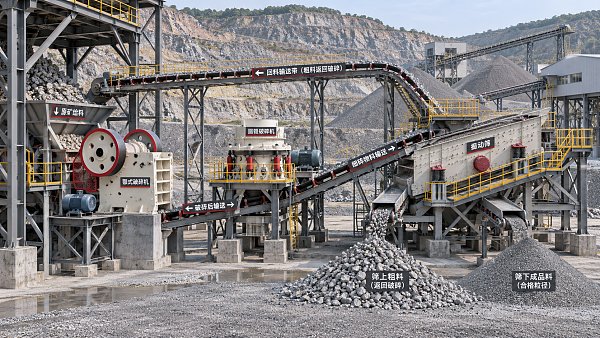
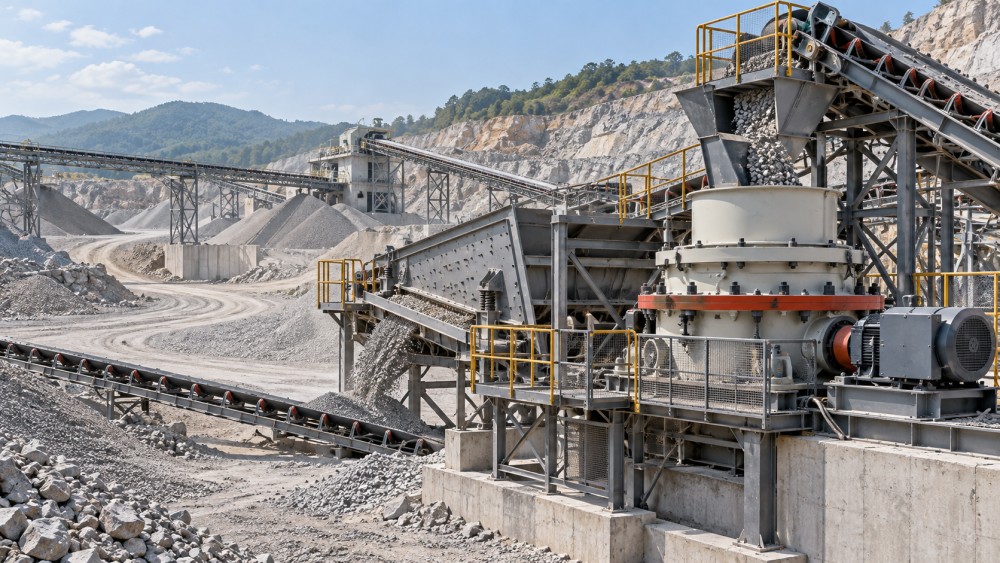
A secondary crusher can appear to be over-crushing when the real problem is inefficient classification. If correctly sized particles remain in the screen oversize stream, they return to the crusher and receive breakage they did not need.
Sample the return material rather than judging it from a distance. A meaningful quantity of undersize in that stream should trigger a screen inspection. Check aperture condition, blinding or pegging, feed distribution, bed depth, panel installation, and operating settings against the screen manufacturer’s requirements.
Wet weather is a useful diagnostic clue. If fines and circulating load rise together after rain, moisture and clay may be restricting separation. Closing the crusher setting in response can make matters worse by generating more small material while the screen remains the bottleneck.
Keep the load calculation consistent. Crusher feed includes fresh feed plus returned material; it is not equivalent to new plant production. Monitor both streams where possible. Otherwise, a busy crusher and a heavily loaded return conveyor can be mistaken for productive throughput.
Run a controlled trial, then decide what is worth changing
Rock strength alone does not predict fines production. Weathering, bedding, mineral composition, and existing fractures also influence breakage. A friable feed may generate unwanted fines even when the machine is correctly maintained and operated. Record material source and moisture alongside operating settings so geological changes are not mistaken for equipment faults.
Use one controlled adjustment at a time. Begin with a baseline covering feed grading, CSS, throughput, return load, product grading, and relevant wear condition. Correct obvious feeding and screening problems before testing more aggressive machine changes. Avoid drawing conclusions from a short run during a stockpile transition.
Industrial Edge Global’s equipment-lifecycle perspective is useful here: judge an adjustment by saleable output, energy use, wear, and downtime exposure together. A reduction in fines is not an improvement if it causes unstable operation, unacceptable aggregate shape, or excessive recirculation.
If excessive fines remain after feed, screening, settings, and wear have been checked, review the reduction duty with the equipment supplier. Bring representative sieve analyses and operating records. Those measurements provide a better basis for changing a chamber, modifying the circuit, or evaluating another crushing method than a discharge photograph alone.
Related News
 MSHA Issues Mine Truck Safety Alert After One Death and 121 InjuriesMining Infrastructure ExpertMSHA mine truck safety alert reports one death and 121 lost-time injuries. Discover why mine operators should review safety practices.
 How to size a crushing plant for ore processingMining Infrastructure ExpertSize your ore processing equipment crushing plant with confidence. Learn how to calculate throughput, assess ore characteristics, and prevent bottlenecks.
 Trump Administration Rewrites Mining Policy to Spur Critical Minerals DevelopmentMining Infrastructure ExpertU.S. critical minerals mining policy is changing. Explore what faster approvals could mean for investment, equipment demand and supply chains.
 How IEC 62443 defines security zones for industrial communication systemsRobotics EngineerExplore industrial communication systems and IEC 62443: learn how security zones, conduits, and risk-based controls help protect plant operations.
 China-Peru Trade Agreement Upgrade Takes Effect, Easing Machinery CertificationConstruction Equipment SpecialistThe China-Peru trade agreement upgrade simplifies machinery certification. Discover what mutual recognition could mean for exporters entering Peru.
 How do industrial control systems regulate water treatment?Robotics EngineerDiscover how industrial control systems in water treatment use sensors, PLCs, and SCADA to regulate processes and help operators respond to changing conditions.
 Exotec Report: 25% of Supply Chain Leaders Regret Warehouse Automation DecisionsRobotics EngineerWarehouse automation regret affects 25% of surveyed supply chain leaders, according to Exotec. Explore the cost, contract and readiness risks before investing.
 How to set maintenance intervals for mining equipment in AustraliaMining Infrastructure ExpertMining equipment maintenance Australia: Learn how to set service intervals using operating hours, site conditions and equipment data to reduce downtime.
 EY Survey Ranks Complexity as Mining's Top Risk for 2027Mining Infrastructure ExpertMining risk in 2027 is led by complexity, EY's survey finds. Discover how aging mines, declining ore grades and supply chain pressures are reshaping the industry.
 Can asset lifecycle management automation reduce equipment downtime?IEG Heavy Machinery & Automation AnalystDiscover how asset lifecycle management automation can reduce equipment downtime through timely maintenance, faster repairs, and smarter service workflows.
 Caterpillar Q3 2026 Revenue Rises 17% to $20.7 Billion as Both Equipment Segments GrowConstruction Equipment SpecialistCaterpillar Q3 2026 revenue reportedly rose 17% to $20.7 billion. Explore equipment segment growth and what it could mean for procurement planning.
 How to choose a rugged industrial control panel for wet environmentsRobotics EngineerChoose a rugged industrial control panel for wet environments. Compare IP ratings, materials, seals, and condensation control to improve reliability.