How to Compare a Warehouse Robotics Supplier Beyond Price




How to Compare a Warehouse Robotics Supplier Beyond Price
Choosing a warehouse robotics supplier based on price alone can create expensive problems later. A lower quote may hide weak support, poor integration, and limited scalability.
For procurement decisions, the better question is simple. Which supplier can support output, uptime, and long-term operating value with the least risk?
That is why a serious warehouse robotics supplier comparison should go beyond unit cost. It should examine technical fit, deployment capability, service response, software compatibility, and lifecycle economics.
In real operations, robotics performance affects labor flow, order accuracy, maintenance planning, and expansion timing. Small gaps in supplier capability often become large costs after launch.
This guide explains how to compare a warehouse robotics supplier in a more practical way. The goal is to reduce selection risk and improve the quality of the automation investment.
Start with Operational Fit, Not the Quote
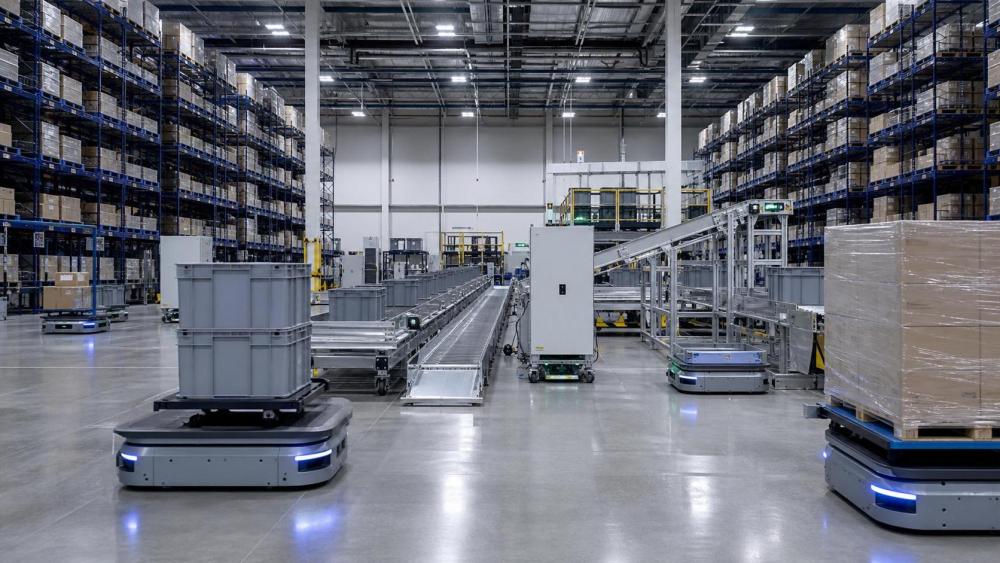
The first filter in any warehouse robotics supplier evaluation should be process fit. If the system does not match the operation, the price is irrelevant.
Look closely at the current warehouse profile. Order volume, SKU count, peak periods, aisle layout, pallet types, and picking logic all matter.
Some suppliers are strong in goods-to-person systems. Others perform better in AMRs, pallet movement, case handling, or robotic picking applications.
A capable warehouse robotics supplier should ask detailed questions early. If discovery is shallow, that is usually a warning sign.
Key points to compare at this stage include:
- Throughput per hour under normal and peak conditions
- Accuracy rates in picking, sorting, or replenishment
- Space utilization and layout flexibility
- Ability to handle product mix changes
- Safety performance in mixed human and robot environments
At this point, the goal is not to find the cheapest warehouse robotics supplier. It is to eliminate suppliers that cannot support the actual workflow.
Check Integration Depth Before You Compare Price
Integration is where many warehouse automation projects become slower and more expensive than expected. The hardware may work well, but the software layer becomes the bottleneck.
A warehouse robotics supplier should explain how its system connects with WMS, ERP, MES, inventory databases, and existing conveyor or control infrastructure.
Ask for specific details, not generic claims. APIs, middleware structure, data mapping, exception handling, and cybersecurity responsibilities should be clearly documented.
This matters even more when the operation is growing quickly. A warehouse robotics supplier with weak software architecture may force expensive rework later.
Useful integration questions include:
- What standard interfaces are already available?
- How are task priorities managed during peak traffic?
- How does the system recover from communication failure?
- Who owns integration testing and site acceptance support?
- Can future equipment be added without replacing the core platform?
From a procurement perspective, integration quality often decides the real project cost. It also affects how fast the warehouse can reach stable output.
Measure Service Capability and Uptime Risk
A warehouse robotics supplier should be evaluated as a long-term operating partner, not just an equipment vendor. Service capability directly affects uptime.
This becomes more obvious after go-live. When a robot fleet slows down, response speed matters more than the original discount.
Compare suppliers on local service coverage, spare parts stocking, remote diagnostics, preventive maintenance plans, and escalation procedures.
Ask for service metrics tied to contracts. A credible warehouse robotics supplier should be comfortable discussing uptime targets, response windows, and recovery commitments.
The most useful service indicators are often practical ones:
- Mean time to repair
- Availability of critical spare parts
- Remote troubleshooting coverage
- On-site support capability during launch
- Training quality for operators and maintenance teams
In actual business conditions, weak service support creates hidden labor costs, delayed shipments, and internal pressure on plant teams. Those costs rarely appear in the initial proposal.
Compare Lifecycle Cost, Not Just Purchase Cost
Price comparison becomes more useful when it is framed as total cost of ownership. That is the more realistic way to compare a warehouse robotics supplier.
An attractive bid may exclude software updates, site changes, training refreshers, batteries, wear parts, or support subscriptions. Those items accumulate quickly.
A better supplier comparison should include capital cost and operating cost across several years. Five-year and seven-year models are common reference points.
This view makes warehouse robotics supplier selection more commercially grounded. It shifts the conversation from quote size to return quality.
Look at Scalability, Roadmap, and Supplier Stability
Warehouse demand changes fast. More SKUs, shorter delivery windows, and seasonal volume spikes can quickly outgrow a narrowly designed system.
That is why a warehouse robotics supplier should be assessed for future fit. Can the system scale without major disruption or replacement?
Review expansion logic carefully. Adding robots is not enough if software orchestration, charging capacity, traffic control, or workstation design cannot keep up.
Supplier stability also matters. Financial weakness, limited installed base, or unclear roadmap can create support risk over the life of the asset.
Useful checkpoints include:
- Installed base in similar warehouse environments
- Reference projects with comparable throughput
- Product roadmap for software and hardware upgrades
- Regional support footprint and channel structure
- Business continuity plans for parts and support
A warehouse robotics supplier with a credible roadmap usually protects investment value better. That becomes important when automation phases expand over several years.
Use a Structured Supplier Scorecard
A structured scorecard keeps warehouse robotics supplier selection disciplined. It prevents decisions from drifting toward the lowest visible price.
The scorecard should combine technical, operational, commercial, and support factors. Weighting can vary, but the method should stay transparent.
A practical model often includes these categories:
- Operational fit and throughput performance
- Integration readiness and software openness
- Deployment capability and project governance
- Service model, uptime support, and training
- Lifecycle cost and commercial transparency
- Scalability, roadmap, and supplier stability
In many cases, the best warehouse robotics supplier is not the one with the lowest entry price. It is the one with the strongest long-term operating case.
Before final selection, request site references, validate assumptions, and review support terms line by line. That extra discipline usually saves far more than it costs.
A smart warehouse robotics supplier comparison should end with a clear business decision. Choose the supplier that fits the workflow, reduces risk, and supports growth with measurable lifecycle value.
Related News
 What is driving consolidation in the global equipment supplier market?IEG Heavy Machinery & Automation AnalystGlobal equipment supplier market consolidation is accelerating through technology, service, and supply-chain demands. Discover how buyers can capture value while managing risk.
 When does capital equipment investment pay back in manufacturing?IEG Heavy Machinery & Automation AnalystCapital equipment investment manufacturing: learn when equipment truly pays back by evaluating full costs, cash flow, ramp-up, operational risks, and lifecycle value.
 When does a distribution center need an automated pallet handling system?Heavy Lifting Systems AnalystPallet handling systems help distribution centers overcome labor shortages, bottlenecks, safety risks, and storage constraints. Discover the key signs it’s time to automate.
 How to build a machinery investment plan around payback periodIEG Heavy Machinery & Automation AnalystMachinery investment planning manufacturing guide: build a credible payback plan with full costs, ramp-up assumptions, lifecycle risks, and scenario-based cash benefits.
 How to Specify a Modular Packaging Line for Fast Changeovers and Scalable OutputRobotics EngineerModular packaging line specification guide: achieve faster changeovers, scalable output, reliable controls, and lower lifecycle costs with practical planning.
 How industrial IoT devices reduce unplanned downtime in factoriesRobotics EngineerIndustrial IoT devices help factories detect early equipment issues, plan maintenance, and reduce costly unplanned downtime before production is disrupted.
 What is driving industrial machinery market demand in manufacturing?IEG Heavy Machinery & Automation AnalystIndustrial machinery market manufacturing demand is rising as factories pursue automation, energy efficiency, resilient supply chains, and lifecycle productivity gains.
 316L Stainless Steel Pipe Tube Technical Factors That Shape Buyer DecisionsCNC Machining AnalystA technical analysis for 316L stainless steel pipe tube buyers, covering corrosion expectations, pipe route choice, tolerance, surface, and inspection.
 How ground conditions determine crawler piling equipment selectionConstruction Equipment SpecialistCrawler piling equipment selection starts with ground conditions. Learn how soil, rock, groundwater and site constraints shape safer, more productive piling solutions.
 3300mm CNC Beam Saw Sheet Capacity: Layout Checks Before PurchaseCNC Machining AnalystZhongding ZD330 beam saw specifications: assess 3300mm sheet capacity, layout clearances, handling flow, and acceptance checks before buying.
 How Bucket Chain Diamond Dredgers Meet ISO 12100 Safety Requirements in Alluvial Mining ProjectsMining Infrastructure ExpertBucket chain diamond dredger safety made real: how ISO 12100 compliance ensures operator protection, reliability & zero lost-time injuries in alluvial mining.
 Modular Packaging for High-Mix Automotive Assembly Lines: How Standardized Load Units Reduce Line Changeover Time by 37% — Case Study from Tier-1 Supplier in GuangdongHeavy Lifting Systems AnalystModular packaging slashes automotive line changeover time by 37%—discover how standardized load units boost OEE, cut labor costs, and enable seamless high-mix assembly.