Haul Trucks Manufacturer Comparison: Payload, Fuel Use, and Uptime




What matters most when comparing a haul trucks manufacturer?
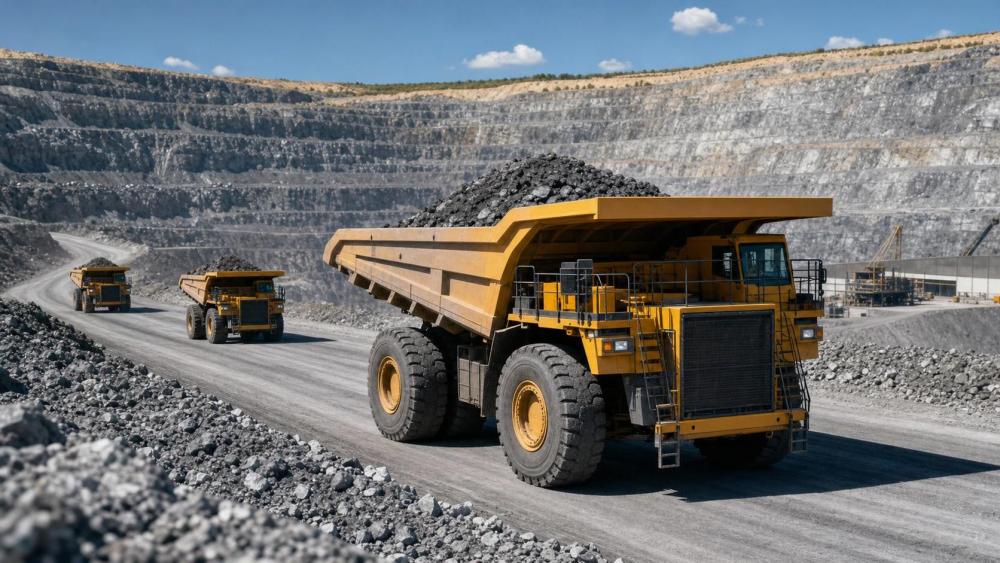
A useful haul trucks manufacturer comparison starts well before price negotiation.
Rated payload gets attention first, but it rarely explains fleet economics on its own.
In real mining and heavy earthmoving projects, fuel burn, dispatch reliability, and maintenance recovery often decide the better supplier.
That is why many equipment reviews now treat haul trucks as long-term productive assets, not simple transport units.
Industrial Edge Global follows this same logic across heavy machinery markets.
Its coverage connects technical specifications with operating value, sourcing risk, support quality, and lifecycle performance.
For a buyer, the central question is straightforward.
Which haul trucks manufacturer can keep material moving at the lowest practical cost per tonne?
That answer usually comes from a balanced review of five areas.
- Payload matched to route and loading tools
- Fuel use in actual duty cycles
- Uptime and mean time to repair
- Parts availability and field service response
- Lifecycle cost over the planned fleet period
If one supplier looks strong in only one area, the comparison is still incomplete.
Is higher payload always the better buying decision?
Not necessarily.
A larger truck can reduce cycle count, but only when the mine plan and support equipment are aligned.
If road width, ramp grade, shovel pass match, and dumping conditions are not optimized, extra payload may sit on paper.
A haul trucks manufacturer should therefore be compared by effective payload, not catalog payload.
Effective payload asks a tougher question.
How much material is moved per shift without creating tire stress, underloading, overloading, or queue delays?
More common evaluation mistakes include choosing a truck class that overwhelms current loading tools or forces expensive road upgrades.
It is often smarter to compare truck and loader pairing data.
A manufacturer with strong payload distribution, body design, and suspension stability may outperform a nominally larger competitor.
In practice, ask for application-specific productivity simulations.
Look at tonnes moved per hour, queue impact, and average cycle time under site conditions.
How should fuel use be judged in a real haul trucks manufacturer comparison?
Fuel consumption should be measured against production, not viewed as an isolated number.
A truck that burns less per hour may still cost more per tonne if it hauls slower or suffers frequent derating.
The better metric is usually liters per tonne or liters per tonne-kilometer.
That gives a fairer view across different truck sizes and route profiles.
When evaluating a haul trucks manufacturer, request fuel data under loaded uphill travel, empty return, idle time, and queue conditions.
Those conditions reveal more than brochure figures.
Engine mapping, transmission efficiency, retarding systems, and payload management all influence total consumption.
Some manufacturers also offer telematics packages that show fuel waste during idling, harsh acceleration, or repeated short loading cycles.
That can materially improve operating cost after delivery.
The table below helps organize the comparison.
A careful haul trucks manufacturer comparison should also include fuel sensitivity scenarios.
That matters when diesel prices shift or utilization increases faster than planned.
What does uptime really tell you about a haul trucks manufacturer?
Uptime is often the clearest indicator of whether the truck will create value or friction.
A strong haul trucks manufacturer should provide more than an availability claim.
Ask for evidence on scheduled maintenance intervals, failure modes, parts lead times, and field repair capability.
The key issue is not only how often failures happen.
It is how quickly the machine returns to work.
In large operations, a delayed repair can affect loading equipment, shift planning, and downstream production targets.
That is why many buyers compare mean time between failures and mean time to repair together.
A manufacturer with easier component access and local service engineers may outperform a brand with strong name recognition.
It is also worth checking digital support tools.
Remote diagnostics, predictive alerts, and integrated fleet monitoring can reduce unplanned downtime when used correctly.
This is where market intelligence platforms such as IEG are useful.
They help connect uptime claims with broader service network strength, regional support reality, and capital asset risk.
Where do lifecycle cost mistakes usually happen?
The most common mistake is treating acquisition price as the main comparison point.
A lower quote can hide higher fuel use, weaker uptime, shorter tire life, or expensive parts logistics.
A smarter haul trucks manufacturer review looks at total cost over the expected operating horizon.
That usually includes financing, fuel, planned maintenance, wear parts, operator training, rebuild strategy, and residual value.
Some projects also need to include workshop tooling, software access, and technician certification.
Those items are often missed early.
Another blind spot is spare parts strategy.
If critical components come from distant warehouses, downtime risk rises even when nominal parts pricing looks acceptable.
Before final selection, confirm these points.
- Recommended inventory for high-failure and long-lead parts
- Warranty scope and exclusions under harsh duty cycles
- Rebuild options for engines, transmissions, and suspensions
- Expected resale demand in the target region
- Training support for operators and maintenance teams
If these areas remain vague, the cost model is probably too optimistic.
How can you separate marketing claims from a practical supplier decision?
The best approach is to force the comparison into operating evidence.
A haul trucks manufacturer should be able to support its claims with field references, service data, and site-matched performance assumptions.
Instead of asking who has the strongest truck, ask who can prove lower cost per tonne under comparable conditions.
That shifts the discussion from promotion to measurable outcomes.
A short decision screen can help.
This is also where structured industrial information becomes valuable.
IEG is built around exactly these decision points across heavy equipment and capital machinery categories.
It helps translate machine features into practical questions about uptime, energy use, maintenance exposure, and sourcing risk.
When the comparison is framed that way, the better haul trucks manufacturer usually becomes easier to identify.
What should happen before the final shortlist is approved?
A final shortlist should be supported by a written evaluation standard.
Keep it simple, but make it site-specific.
Define required payload range, haul profile, target fuel intensity, uptime threshold, service response time, and parts coverage.
Then ask each haul trucks manufacturer to respond against the same framework.
That creates a cleaner comparison and reduces bias toward headline specifications.
It is also worth validating assumptions with reference sites that resemble the intended application.
Focus on terrain, climate, maintenance maturity, and production rhythm.
Those details often explain why the same truck performs differently across operations.
In the end, the strongest decision rarely comes from the biggest payload claim.
It comes from aligning payload, fuel use, uptime, and support with the actual operating model.
The next step is practical.
Build a side-by-side haul trucks manufacturer scorecard, test each assumption against field evidence, and refine the cost-per-tonne model before award.
Related News
 What is driving consolidation in the global equipment supplier market?IEG Heavy Machinery & Automation AnalystGlobal equipment supplier market consolidation is accelerating through technology, service, and supply-chain demands. Discover how buyers can capture value while managing risk.
 When does capital equipment investment pay back in manufacturing?IEG Heavy Machinery & Automation AnalystCapital equipment investment manufacturing: learn when equipment truly pays back by evaluating full costs, cash flow, ramp-up, operational risks, and lifecycle value.
 When does a distribution center need an automated pallet handling system?Heavy Lifting Systems AnalystPallet handling systems help distribution centers overcome labor shortages, bottlenecks, safety risks, and storage constraints. Discover the key signs it’s time to automate.
 How to build a machinery investment plan around payback periodIEG Heavy Machinery & Automation AnalystMachinery investment planning manufacturing guide: build a credible payback plan with full costs, ramp-up assumptions, lifecycle risks, and scenario-based cash benefits.
 How to Specify a Modular Packaging Line for Fast Changeovers and Scalable OutputRobotics EngineerModular packaging line specification guide: achieve faster changeovers, scalable output, reliable controls, and lower lifecycle costs with practical planning.
 How industrial IoT devices reduce unplanned downtime in factoriesRobotics EngineerIndustrial IoT devices help factories detect early equipment issues, plan maintenance, and reduce costly unplanned downtime before production is disrupted.
 What is driving industrial machinery market demand in manufacturing?IEG Heavy Machinery & Automation AnalystIndustrial machinery market manufacturing demand is rising as factories pursue automation, energy efficiency, resilient supply chains, and lifecycle productivity gains.
 316L Stainless Steel Pipe Tube Technical Factors That Shape Buyer DecisionsCNC Machining AnalystA technical analysis for 316L stainless steel pipe tube buyers, covering corrosion expectations, pipe route choice, tolerance, surface, and inspection.
 How ground conditions determine crawler piling equipment selectionConstruction Equipment SpecialistCrawler piling equipment selection starts with ground conditions. Learn how soil, rock, groundwater and site constraints shape safer, more productive piling solutions.
 3300mm CNC Beam Saw Sheet Capacity: Layout Checks Before PurchaseCNC Machining AnalystZhongding ZD330 beam saw specifications: assess 3300mm sheet capacity, layout clearances, handling flow, and acceptance checks before buying.
 How Bucket Chain Diamond Dredgers Meet ISO 12100 Safety Requirements in Alluvial Mining ProjectsMining Infrastructure ExpertBucket chain diamond dredger safety made real: how ISO 12100 compliance ensures operator protection, reliability & zero lost-time injuries in alluvial mining.
 Modular Packaging for High-Mix Automotive Assembly Lines: How Standardized Load Units Reduce Line Changeover Time by 37% — Case Study from Tier-1 Supplier in GuangdongHeavy Lifting Systems AnalystModular packaging slashes automotive line changeover time by 37%—discover how standardized load units boost OEE, cut labor costs, and enable seamless high-mix assembly.